
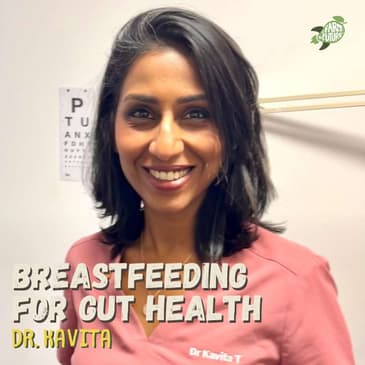
Dr. Kavita is a Family Medicine Physician, Lactation Consultant and Mother of 3. She has a wealth of medical experience spanning 17 years, including 6 years in Hospital Paediatrics at the Sydney Children’s Hospital Network including Neonatal Intensive Care (NICU) at RHW, Randwick before further training to become a General Practitioner/Family Medicine Doctor.
Despite her extensive Paediatric experience, she was shocked to see the maternal mental distress faced by new mothers. This distress is largely due to societal misconceptions about breastfeeding and newborn care and this is what ignited her passion and further training in Breastfeeding Medicine.
She is an active member of the Academy of Breastfeeding Medicine. She is experienced in the model of Neuroprotective Developmental Care and a Possums NDC Practitioner. She is also certified in the Thompson Breastfeeding method. She is passionate about improving breastfeeding support and education.
Outside of medicine, she has a strong interest in nature, martial arts and social justice. Before Medicine she did a Bachelor of Arts - majoring in Classics - Greek and Roman Literature and Political science.
For more evidence based breastfeeding knowledge head to www.letstalkbreastfeeding.com or @breastfeedingwithDrKavita
Discounts
- Get 10% off delicious local farm-fresh food delivered to your door with my link for FarmMatch: https://farmmatch.com/jane
- Get 15% off high-quality Italian olive oil with code FARMTOFUTURE: https://shop.vignolifood.com/FARMTOFUTURE
- Get 40% the CircleDNA’s Premium DNA test with code JANEZHANG: https://circledna.com/premium
Connect with Jane Z.
- Instagram: @farm.to.future
- Email: jane@farmtofuture.co
- Website: farmtofuture.co
[00:00:00] So what the formula doesn't do is it doesn't give you immune complexes.
[00:00:04] So it can't do that.
[00:00:05] So cretory, IGA, which is so important for gut health and it can't give you a microbiome.
[00:00:09] That's actually the problem.
[00:00:11] And that puts you at risk of ATP.
[00:00:13] It puts you at risk of allergy.
[00:00:15] It puts you at risk of autoimmune diseases, metabolic diseases, diabetes,
[00:00:19] rheumatoid arthritis, heart disease, asthma, all of that kind of stuff.
[00:00:24] It provides nutrition and it provides fat and you're going to grow,
[00:00:27] but it doesn't give you that extra immunity,
[00:00:31] which is so important for the growing individual.
[00:00:34] I say that with a lot of sensitivity because the one thing I can tell you for my
[00:00:38] years in this field is that no mother wants to do less than for their baby.
[00:00:42] It's the role of everybody now to help the mother learn what is best,
[00:00:46] what is truly best and then to work out how we can get back that knowledge
[00:00:51] so that they can do the best.
[00:00:53] I'm Jane Z. And this is Farm to Future.
[00:00:56] The podcast all about eating better for the planet.
[00:01:00] So I recently saw my mom for her 60th birthday, happy birthday, mom.
[00:01:05] And I got the chance to ask her whether I was breastfed as a baby.
[00:01:10] I wanted to know because we've had several experts on the show now talk about how
[00:01:14] important breast milk is for a baby's gut health and microbiome and immune
[00:01:19] system development.
[00:01:20] And I know that I was born by C-section,
[00:01:23] which is also not as good for your gut health as a vaginal birth.
[00:01:27] And as you'll know, I have had plenty of gut issues in my adulthood.
[00:01:32] So I wanted to know if formula had anything to do with that.
[00:01:36] Lo and behold, the answer was yes,
[00:01:38] I was indeed fed formula as a baby because that was the gold standard back
[00:01:43] in the day in China.
[00:01:44] This was a bit of an epiphany where I was like, oh my gosh,
[00:01:48] the puzzle pieces fit together.
[00:01:50] C-section birth, fed formula.
[00:01:53] And now I have a super sensitive gut.
[00:01:55] And of course, of course, this is not a knock on my mother,
[00:02:00] who is the best mom in the world.
[00:02:02] She did exactly what she thought was best for me.
[00:02:05] And it just so happened that the information she was given was not the best.
[00:02:09] And that's why I wanted to bring on Dr. Kavita today.
[00:02:11] She is a Melbourne based family doctor who is trained as a lactation consultant.
[00:02:17] And she's now helped thousands of families navigate breastfeeding
[00:02:21] in the first few critical months of parenthood.
[00:02:24] Today, we talk about that fascinating
[00:02:26] connection between breast milk and the infant gut going deep on the science.
[00:02:31] And we also discussed some of the most common reasons moms give up on breastfeeding
[00:02:36] and some solutions.
[00:02:38] Dr. Kavita runs an active Instagram page at breastfeeding with Dr.
[00:02:42] Kavita and she has a ton of resources on her website too.
[00:02:46] At Let's Talk Breastfeeding.com.
[00:02:48] If you are a new or expecting mom or dad,
[00:02:52] I highly encourage you to give her a follow.
[00:02:54] Dr. Kavita, welcome to Farm to Future.
[00:02:59] Welcome to the podcast, Dr. Kavita.
[00:03:02] Hi, hi, Zane.
[00:03:03] So you and I met because of an Instagram
[00:03:07] contra... oh, should I call it controversy?
[00:03:09] A real that went viral.
[00:03:12] So a couple months ago, I had chef Dr.
[00:03:15] Mike on who's one of our regulars and we were talking about how breastfeeding
[00:03:19] your baby up to two years is cardio protective for them,
[00:03:23] even up until the baby becomes an adult into their 50s and 60s.
[00:03:27] And so it was all like well intentioned advice, but people went off in the comments.
[00:03:34] And I learned very quickly that breastfeeding is very touchy topic,
[00:03:39] largely because a lot of women may want to breastfeed,
[00:03:42] but aren't able to or don't understand the benefits.
[00:03:46] And you jumped in and you reached out and we're like, hey,
[00:03:49] you know, we should do a full deep dive on breastfeeding.
[00:03:52] And I'm so happy you reached out and so excited for this chat.
[00:03:56] I'm so happy that you are responsive to it because it is such a controversial
[00:04:00] topic and it's not really understood and out there, the data is there,
[00:04:04] but it's not really talked about a lot of the problems and how they connect.
[00:04:09] So thanks for having me on to kind of disseminate this information,
[00:04:13] because like we mentioned, I'm in my 40s, so I'm not as up to date and versatile
[00:04:19] with all of the ways of spreading information, but we need to as doctors do
[00:04:22] that a bit more because there's a big disconnect between our little world
[00:04:27] and where people are and we're not traversing that very well at the moment.
[00:04:31] So that's why people are so overwhelmed with all this information too.
[00:04:35] So thank you for your role in sharing that and and helping us translate that
[00:04:40] information every day, patients help me to kind of understand it.
[00:04:44] They'll say something else.
[00:04:44] Say something to them and they'll be like, oh, what do you mean?
[00:04:46] I'm like, oh, I'm saying this every day to people.
[00:04:50] Oh, I need to explain it better.
[00:04:51] So it's such a crucial and important role what you're doing.
[00:04:54] Before we started recording, I was just mentioning how when I was born in
[00:04:59] China in the 90s, I was born by C-section mostly because I was very, very late.
[00:05:05] I was like a month late by poor mom.
[00:05:07] That's right though.
[00:05:09] Yeah, so born by C-section and then I need to double check with my mom,
[00:05:13] but I'm pretty sure I was either supplemented with formula or fully fed
[00:05:16] formula because in the 90s at the time it was sort of thought
[00:05:22] that formula is better than breast milk.
[00:05:25] And you kind of mentioned,
[00:05:26] you know, that's a big pattern you see among your patients.
[00:05:30] Yeah, I still had even, you know,
[00:05:33] every time I get this question, I still feel down because I'm in a bubble
[00:05:36] where we know what's really helpful.
[00:05:39] But again, we're not crossing that social idea.
[00:05:42] So even when you mentioned about C-section,
[00:05:44] there's so much saying and emotion around it now.
[00:05:47] What people need to know actually is the C-section,
[00:05:50] maternal mortality rates are huge.
[00:05:53] You know, we used to lose mums and babies.
[00:05:56] So much more commonly than we do now.
[00:05:59] And I think the obstetric world is still trying to catch up from that
[00:06:01] because their fields developed from trying to prevent maternal death.
[00:06:06] You know, having a baby was a bit of a Russian roulette or, you know,
[00:06:11] throw of the dice, right?
[00:06:12] It was a real gamble on how you would be alive.
[00:06:16] And even with my second baby, my second baby was very big and my health
[00:06:20] was very tall and got spiky blood.
[00:06:22] So, you know, you can cut this bit out of the podcast.
[00:06:25] That's why we're not supposed to cross breed, right?
[00:06:27] Racially.
[00:06:29] Because, yeah, because I'm an Indian, I'm supposed to have a small,
[00:06:33] you know, nice 2.5 kilo baby and she was 4.2 kilos.
[00:06:37] So we, yeah, I would have died in that delivery had we not had instrumentation.
[00:06:41] And I tried to do that one vaginally and I was a bit crazy about it.
[00:06:44] But I'm still pushing on the table when they had me ready and draped up.
[00:06:48] And my friend who was in the obstetrician was like,
[00:06:49] we're not going to get this baby out that way.
[00:06:51] Like lay back.
[00:06:53] Oh no.
[00:06:53] Yeah.
[00:06:54] Yeah. But again, it's that no form.
[00:06:56] Anyway, that's your point about these sections.
[00:06:58] It was the common way of doing things and a lot of countries are still struggling
[00:07:02] to kind of understand that we have different hygiene methods.
[00:07:06] We've got so much more information for the anti-natal period.
[00:07:11] So mothers are a lot more there in better health.
[00:07:13] That's why these sections were so common.
[00:07:16] I digress from what you were saying, which was about the formula.
[00:07:19] So, yeah, what I mentioned to you briefly was that
[00:07:22] I have had patients come and ask me this, this concept that because it's made in the
[00:07:27] lab that formula is superior to breast milk.
[00:07:31] There's this idea that women have about their bodies, which it's not going to be
[00:07:35] the best thing. It's what they're making is not going to be as good as something
[00:07:39] that can be manufactured.
[00:07:40] I had patients from China actually who asked me there was two that were
[00:07:44] first generation from China and that that attitude was still pervasive
[00:07:47] in the 2010s, that the formula is better for babies because it's scientifically
[00:07:53] formulated for them.
[00:07:54] Even the other day I had a patient ask me if the stuff they put in the formula,
[00:07:59] the DHA and the ARA, which is the fat, which helps brain development.
[00:08:03] They were like, isn't that better for them than what's in breast milk?
[00:08:06] And I had to explain that no, actually you get 19 fat in breast milk.
[00:08:10] The former companies, I have to look up just to make sure it's correct.
[00:08:14] The former companies only really have the capacity to add DHA and ARA,
[00:08:18] which are the two fat of the 19 that are in breast milk.
[00:08:21] So yeah.
[00:08:23] Yeah, that's wild.
[00:08:24] And I definitely want to have you dive deeper into the differences between breast
[00:08:29] milk and formula and also cow's milk.
[00:08:31] But I wanted to take a step back a little bit and get your backstory as a doctor.
[00:08:36] Also as a mother of three is it?
[00:08:38] And how you became so passionate about breastfeeding.
[00:08:42] Yeah. OK, so my best story was I started, yeah,
[00:08:46] I've been a doctor for 17 years now.
[00:08:48] I wasn't sure which area I wanted to go into.
[00:08:51] I wasn't interested in having children either, actually.
[00:08:53] I was all about travel and adventure and that kind of way.
[00:08:56] And once I started, then it's like fine, OK, we'll do it.
[00:08:59] But you're also a bit ruled by hormones on stuff.
[00:09:02] So when my patients say to me, do you enjoy it?
[00:09:04] And they have to ask me in 20 years when I've had the withdrawal of the
[00:09:07] hormonal influence, like because right now I think I do.
[00:09:10] But the hormones are so strong.
[00:09:12] So I started off in pediatrics and I was doing
[00:09:14] pediatrics for about six years and that's hospital pediatrics.
[00:09:18] But when I had a community medicine rotation and I started to see the distress
[00:09:24] and I actually think it's academic proportions, the postpartum
[00:09:27] depression, the postpartum anxiety faced by mothers because they're just not
[00:09:31] supportive and pediatrics is the place where you go to sick children.
[00:09:36] But there's a bit of a gap of where you go for help with well children.
[00:09:40] You know, so that was traditionally the role of the midwife or the matriarch
[00:09:44] of the family. You know, they would give you advice and that you'd have aunties
[00:09:48] and friends and things like that to kind of say, no, why don't you try this?
[00:09:51] Your baby's not sleeping. Do this.
[00:09:53] But people started to go to medical people for that advice.
[00:09:57] And we're not necessarily trained in that.
[00:09:59] You know, there's all sorts of things with sleep training and all
[00:10:02] the kind of stuff that we won't go into that.
[00:10:04] If you really want things to blow up, that's where you need to go into sleep training.
[00:10:08] But despite my kind of experience in hospital medicine, I found that
[00:10:13] I had no idea about the problems that people were facing in those first three
[00:10:18] to six months with their well babies.
[00:10:21] I ended up going into general practice or family medicine, I think it's called
[00:10:25] over there and from there, I've been able to see mum and treat both mum
[00:10:30] and baby, because it's the only time in medicine where you actually need to treat
[00:10:34] both people. You can't leave a mum with mastitis and think the baby is going to be
[00:10:40] OK or you can't leave a mum with vasosalamic or nipple pain and you can't
[00:10:44] leave a baby with any kind of infant problem and think the mum is going to be OK.
[00:10:49] So that's kind of how I've ended up around.
[00:10:51] And then I realised as well with breastfeeding
[00:10:54] that it was something that they really wanted to do.
[00:10:57] You know, the rates in Australia, 96% of women start breastfeeding and 83% quit
[00:11:02] before they want to.
[00:11:03] And the reasons why they're quitting are actually preventable if we change that
[00:11:07] generational knowledge.
[00:11:08] So it was really seeing the maternal distress and having mums cry to me every
[00:11:14] single day, I will have at least two or three mums in my room crying
[00:11:19] because it's so overwhelming and they're so unsupported.
[00:11:23] And this is the most important thing at that time for them.
[00:11:26] And they feel like I don't know what I'm doing and I don't know where to go
[00:11:30] for support and I don't know what's right because I'm getting this information
[00:11:34] from this side, I'm getting this information from this side.
[00:11:36] So that's what really got me into breastfeeding medicine.
[00:11:38] And so then after that, I tried to find places to study and find that.
[00:11:43] And I did different training and lactation training and things like that.
[00:11:47] And that's how I've ended up here.
[00:11:48] And I'm working with the Academy of Breastfeeding Medicine over there
[00:11:51] who are fantastic in America and they've got these very rigorous protocols.
[00:11:55] And they actually got a board certifiable exam now, which I'm not eligible to do.
[00:11:59] I did think about doing my USMLE so I could get the qualification.
[00:12:04] But I couldn't go back and I couldn't go back and get my USMLE just to be able
[00:12:09] to sit for the board exam.
[00:12:10] But in Canada and America, if you have an interest in this space,
[00:12:13] you can actually do a board exam now about it.
[00:12:17] And it's quite rigorous.
[00:12:18] Yeah.
[00:12:19] That's so interesting that you mentioned around the intergenerational knowledge
[00:12:24] and how, you know, when my mom had me and my siblings, she had my grandma,
[00:12:29] you know, with her the whole time teaching her about all these things.
[00:12:33] You know, try this and try that.
[00:12:35] And it's interesting now that as a culture,
[00:12:38] a lot of us have moved away from home and we don't necessarily have,
[00:12:42] you know, parents or family nearby at the time of giving birth.
[00:12:46] And so it makes it a lot harder to find that information.
[00:12:50] It's part of the problem.
[00:12:52] Yeah.
[00:12:53] And I wonder the stats around like how breastfeeding has declined over generations.
[00:12:58] I don't know if you've seen numbers like that.
[00:13:00] There is.
[00:13:01] There's actually a great graph remind me in our sender tube.
[00:13:03] It literally goes like this plummets in the 1960s and 1970s.
[00:13:08] And that's the gap that we are trying to still recover from.
[00:13:12] So it goes from the normal rate up here
[00:13:14] because there wasn't a reliable source of nutrition for babies at that point.
[00:13:19] And that's a whole lot of episode how we got to this position.
[00:13:22] And when you look at it, because you needed quite a few different things
[00:13:25] to come together at the right time, you needed safe sterile powdered milk.
[00:13:29] And then from there, you know, that's how you ended up with that.
[00:13:33] And if you look at how formula came about,
[00:13:35] it was they needed condensed milk for wartime rations in the 1800s.
[00:13:41] When that's exactly how it developed.
[00:13:43] And then from there it got adapted to try and it has at times.
[00:13:48] It is life saving and life giving.
[00:13:50] So I definitely don't want to come across as being anti formula.
[00:13:55] There are times where we need it and it has saved lives.
[00:13:58] But for the majority of people, there are other ways to optimize health.
[00:14:04] But yeah, that data would be and with the intergenerational thing,
[00:14:07] it is a massive problem.
[00:14:08] And I always say when people they look a bit sheepish
[00:14:10] and they come with their mothers or other people to help them.
[00:14:13] And I'm like, no, no, more than Mary, I bring I'm happy to have like four people
[00:14:17] in my consulting space because you can't take in, you know, studies have shown
[00:14:21] that you can only take in 30 percent of what is said to you at a consultation.
[00:14:25] So I'm like, yes.
[00:14:26] And I'll actually say now, this is what I want you to remember when she's
[00:14:29] doing this, this is what I want you to remember when she's doing this.
[00:14:32] And I'll give them all a task of what to remember to help.
[00:14:36] But yeah.
[00:14:37] So that loss of generational information is and support is hugely problematic.
[00:14:43] And yeah, I mean, it's so deep the problems that moms are facing.
[00:14:48] And we keep on bandating it with a solution.
[00:14:51] But we really have to explore why we've isolated moms at this time.
[00:14:56] So much of our food system was transformed by the war time.
[00:15:00] I mean, even if you look at the chemical fertilizers that are so probably a lot
[00:15:05] of it came about because of the war and because these chemicals were being
[00:15:09] produced for ammunition and things.
[00:15:11] So that's such an interesting kind of pattern to call out.
[00:15:15] How much of this pattern do you think is impacted by formula companies themselves
[00:15:20] marketing themselves as a superior option to breast milk?
[00:15:25] So that is a very controversial topic.
[00:15:27] I'm not the best person to speak to that.
[00:15:30] But what I do know, and I know, you know, just in chatting with
[00:15:33] different people that in the 40s and 50s and 60s and everyone seems to know
[00:15:38] that there would be companies, Nestle being one of them and a few other ones
[00:15:43] that really were pushing it on parents and saying that this is better
[00:15:47] and trying to dissuade them from it.
[00:15:48] Now, I haven't seen I'd like to actually see these campaigns,
[00:15:51] see some literature from that time to really kind of form a properly informed
[00:15:55] opinion about it rather than just hearsay because right now I only have
[00:15:58] hearsay about what was being done at the time.
[00:16:00] But there's also the WHO has a code of conduct and a lot of countries,
[00:16:06] secretaries to this about the way formula can be marketed.
[00:16:09] So for example, in baby friendly hospitals, you're not allowed to have
[00:16:13] samples of formula and you're not allowed to offer different things.
[00:16:17] The problem there is that we're saying you must breastfeed.
[00:16:20] No one has the knowledge how to breastfeed.
[00:16:21] And we're not going to give you another option.
[00:16:23] This is where most parents are sitting, you know, and that is why
[00:16:28] this level of distress is so huge in the community.
[00:16:32] And that's what my patients will say to me.
[00:16:34] They'll say, oh, everyone told me I have to breastfeed and they did this and this
[00:16:38] and this to me, but they didn't show me how there's no standard.
[00:16:41] I was way of doing it and they won't help me.
[00:16:43] Am I starving my baby?
[00:16:45] And that's the thing that a mother and myself, I've been among three
[00:16:49] time I'm still a mom, but I am that newborn phase three times.
[00:16:53] You have another drug because you actually have maternal brain changes
[00:16:55] that last for about two years.
[00:16:57] You know, your brain actually changes that drive to feed your baby.
[00:17:01] And you don't trust yourself because of the area, the emotional area where you
[00:17:06] where the changes occur.
[00:17:07] You don't trust that you know what to do for your baby.
[00:17:10] An example I always tell my patients is I was in P.
[00:17:13] I was looking after newborns every day.
[00:17:15] And when I came home, I was like, oh,
[00:17:18] I sent a picture to one of my other friends who's a P.
[00:17:20] And I was like, is this a normal baby?
[00:17:22] And then when the midwife came around, I was like,
[00:17:25] oh, does my baby have a tongue tight?
[00:17:26] I knew he didn't have a tongue tight, but I didn't trust myself.
[00:17:29] And that's part of that brain changes.
[00:17:31] I tell patients about this to explain that it's not their fault if they don't know.
[00:17:35] You know, somebody who is in the field who knew everything and I'm still
[00:17:39] overwhelmed and doctors or the doctors that, you know, all my friends
[00:17:42] who are doctors are also overwhelmed.
[00:17:44] You know, there's not anybody who's like, all right,
[00:17:46] baby's out, here we go, off we go.
[00:17:48] I know exactly what I'm doing.
[00:17:49] I have no concern.
[00:17:50] So I guess for like a new mom, someone who's just given birth at the hospital,
[00:17:56] do they leave the hospital with any consultation from the doctor or nurses
[00:18:01] or maybe they have their doula there?
[00:18:03] Or do they have to go and seek out a lactation consultant themselves?
[00:18:08] So and this is part of the systemic problem.
[00:18:11] And the hospitals are doing their best.
[00:18:13] I really want to say that.
[00:18:14] And the midwives are amazing.
[00:18:15] I learned a lot of my information from midwives.
[00:18:18] They were the ones that taught me all the different things,
[00:18:20] because I didn't get any lectures on breastfeeding and pediatric or in GP.
[00:18:24] Actually, so with the hospitals, what happens is you have the baby
[00:18:27] and everybody has a different training.
[00:18:30] So one of the things that I really want to work towards worldwide
[00:18:33] is probably going to take me 20 years is standardisation of lactation training.
[00:18:37] So a lot of the techniques being taught still add to nipple pain.
[00:18:41] And we know that if you have nipple pain,
[00:18:43] you are very, very likely to quit because it's extremely painful.
[00:18:47] The nipples are one of the most innovative areas of the body.
[00:18:50] And so if you have pain and it will be excruciating,
[00:18:55] you will most likely quit within a certain time frame.
[00:18:57] And we can prevent that.
[00:18:58] We actually have the knowledge we have the science now to prevent it.
[00:19:01] But we haven't got a system of standardised lactation training.
[00:19:05] And that's what has to happen.
[00:19:06] It has to be this is the way we're going to do this training.
[00:19:09] And this is the techniques we're going to use.
[00:19:11] And that's why do you have your water bottle there?
[00:19:14] Should we go to this bit now?
[00:19:15] Yeah, sure.
[00:19:16] I've got a water bottle.
[00:19:18] Does this work?
[00:19:19] It's it's just like a regular seltzer bottle.
[00:19:21] Yeah, yeah. Yeah.
[00:19:22] So what I wanted to show you is the two techniques that I taught,
[00:19:26] which are very harmful to breastfeeding.
[00:19:29] They grab the back of the baby.
[00:19:31] I've got my cancer test.
[00:19:32] I've got my baby here.
[00:19:34] I've got all my lactation tools here.
[00:19:37] Right.
[00:19:38] I love it.
[00:19:39] I was like, I don't know what I might need.
[00:19:41] Right. So I've got like coffee, I've got lip balm and I've got I've got
[00:19:44] two of my two different breasts and my doll, which is a five dollar doll
[00:19:51] from Kmart because the lactation doll is like eight hundred dollars.
[00:19:55] The ones that have an open mouth and things.
[00:19:57] I know. I guess.
[00:19:59] Yeah. Yeah.
[00:20:00] So the way they teach you is that you grab the baby and you shove the baby
[00:20:04] on the breast and you hold them at the back of the neck.
[00:20:08] But what I wanted to demonstrate to you is, OK,
[00:20:11] if I do this with my patients in rooms,
[00:20:13] if I get them when they're pregnant is put one hand on the back of your neck and
[00:20:17] push it down.
[00:20:19] OK, and then now with your water bottle, try and drink your water from the water bottle.
[00:20:25] Like, oh, sorry, you can unscrew it and now actually.
[00:20:27] OK.
[00:20:28] Yeah, sorry.
[00:20:30] I'm like, I'm drinking.
[00:20:32] OK, let's see.
[00:20:33] Yeah, I think this is going to be difficult.
[00:20:36] Yeah.
[00:20:37] Yeah, it's not the right position.
[00:20:40] Yeah. Correct.
[00:20:41] Yeah. And so the biggest thing that we need to change is how we position babies so
[00:20:45] that they have a little bit of neck flexion and in Western Australia,
[00:20:49] there's the Getty Hartman Institute and they get his research and they've
[00:20:53] actually got to study in 2009 showing optimal infant oral cavity function.
[00:21:00] But again, it's a problem translating that research into the common knowledge
[00:21:03] which we're struggling with.
[00:21:05] But what happens is when the baby can't drink and they have a very strong
[00:21:09] suck reflex, they then attach to the nipple and they're not supposed to.
[00:21:14] They're supposed to get a lot of about that much in the mouth so that it doesn't
[00:21:18] cause pain. But what happens is they attach to nipple here and that's how you
[00:21:22] get nipple damage.
[00:21:24] So you want them just for the audio listeners, you want them to attach
[00:21:28] like more of the breast than just the nipple.
[00:21:32] Correct. There's four things that I check and I used to kind of dismiss
[00:21:35] what I did and I call it things for medicine because one of my page friends
[00:21:38] would say that it's not really medicine or it's like I'm taking position.
[00:21:42] But but it makes a huge difference for infant outcomes with the gut and things.
[00:21:46] So the biggest thing is that the baby needs to attach.
[00:21:49] I don't know how to make this there, but it needs to put the tin on the inside
[00:21:52] of the breast. So if your breast is on this side, that's not showing it well.
[00:21:56] They need to attach that way.
[00:21:57] If you're breastfeeding on this side, then the baby needs to attach that way.
[00:22:02] And you put the tin deep in the breast here and then they can extend
[00:22:06] their neck enough to open.
[00:22:08] And that's where I use this bottle.
[00:22:10] I'm like, imagine if you're with a cup, you can see that if you drink that tin,
[00:22:15] this part has to be anchored somewhere.
[00:22:16] It's very hard to drink with no kind of grounding in that area.
[00:22:22] Yeah, but we'll go into that.
[00:22:23] We wanted to talk about the gut.
[00:22:24] So so when people leave hospital, they do have to seek their own lactation care.
[00:22:30] There is a lactation consultant in the hospital in America.
[00:22:33] You're actually quite lucky because there's quite a few hospitals that
[00:22:36] actually have a lactation department with doctors who are trained in breastfeeding
[00:22:41] medicine, but in Australia, we haven't got that yet.
[00:22:43] And I'm kind of banging my head against
[00:22:45] forwards and you're going to make it happen.
[00:22:47] I don't know.
[00:22:48] Some days I feel like giving up the uphill battle, you know, but yeah,
[00:22:53] it's a constant battle.
[00:22:55] Just there's no interest in this area.
[00:22:58] You know, it has such a big impact on maternal health.
[00:23:02] Well, let's dive into the science a little bit because so
[00:23:05] my understanding and I'm going to get the terms wrong, but my understanding is
[00:23:10] that when the baby is born, it essentially has a leaky gut, right?
[00:23:14] Or leaky junctions, as you mentioned.
[00:23:16] And that's where breast milk or colostrum and maybe you can talk about
[00:23:20] the difference between the two, but the substances in breast milk and
[00:23:23] colostrum actually help to seal the baby's gut lining.
[00:23:27] Can you talk about that process?
[00:23:29] Yes, there's a few things there.
[00:23:31] The really important thing is that when infants are born,
[00:23:35] they have what is known as that leaky gut.
[00:23:37] What it actually is, though, is that their intestinal ethereal cells are more
[00:23:42] permeable, which means that more things can get passed into the bloodstream,
[00:23:47] into the body than they can when you get that gut closure.
[00:23:50] That is essentially where the magic of breast milk and the infant gut meet.
[00:23:56] OK, so what happens at birth is that you've got quite a permeable gut
[00:24:01] and colostrum contains a lot of immune complexes and especially a magic ingredient
[00:24:08] called secretory IgA.
[00:24:10] Secretory IgA lines itself to the infant gut and actually prevents
[00:24:16] different insults and bacteria and viruses and what have you going across
[00:24:20] that intestinal woman. So that's what colostrum does.
[00:24:24] But what a lot of people, I'm not sure people know this, breast milk and
[00:24:27] colostrum contains a lot of bacteria and it also contains the food for the bacteria,
[00:24:32] which is the HMO, the oligosaccharide.
[00:24:34] And that's the food for the bacteria to form the gut microbiome,
[00:24:38] which is probably your area of specialty.
[00:24:41] I only know the basics as pertaining to the infant gut and breast milk.
[00:24:45] I haven't had time to really dive into the organisms and that lady,
[00:24:50] Susan V. Lynch, I think, like in that Bernieoff Center,
[00:24:53] they seem to have done amazing research about the microbiome and they
[00:24:56] would be the people to talk about it.
[00:24:58] But what I can tell you is the infant gut, it's very permeable.
[00:25:02] So it's exposed to different things and the breast milk gives it the perfect
[00:25:07] thing to protect the gut and to lead to gut health and general immune health,
[00:25:13] possibly for the rest of their lives.
[00:25:15] And I know I sound a bit extreme when I say that because people must think,
[00:25:20] if that's the case, why doesn't everyone know about this?
[00:25:23] And the reason is because we haven't done much research into breast milk.
[00:25:26] And to the last 15, 20 years.
[00:25:28] So there just wasn't the research into it.
[00:25:30] There's still not the interest.
[00:25:31] I could get five other projects funded.
[00:25:33] Sorry, even when I contact the schools and hospitals, they're like, oh, yeah,
[00:25:37] there's just not that interest in funding this research.
[00:25:39] These are the barriers that we're facing.
[00:25:40] And what colostrum has is it is very, very rich in those immune complexes,
[00:25:47] those immunoglobulins, those proteins.
[00:25:49] It's 90 percent that and then 10 percent the syllabus and things like that.
[00:25:54] So the purpose of this breast milk is to protect the infant gut and the infant
[00:26:01] immune system. That's kind of the magic of colostrum.
[00:26:04] And then it transitions, but that leaky gut is still there until about six months.
[00:26:09] We're an amazing thing happens because the body and I don't even ask me how
[00:26:15] the maternal breast knows how to do it.
[00:26:17] And I do know some of the signs that I'm every time I look at it,
[00:26:20] I'm blown away by how amazing the body is.
[00:26:23] What happens at six months is you get an increase in lysosomes,
[00:26:26] and that continues until whatever duration you want to breastfeed.
[00:26:29] So if you want to breastfeed until therefore
[00:26:31] you will have a lot of lysosomes which are bacteria eating enzymes, essentially.
[00:26:37] And it increases the production of that at six months because
[00:26:41] the gut closure is a lot more pronounced at six months.
[00:26:45] So that means that the baby's gut can't absorb as many immune complexes
[00:26:50] from the mother because that's outlining, which is supposed to happen,
[00:26:54] happens, but it also means that it puts in an extra defense mechanism for the baby,
[00:26:58] which is the lysosomes.
[00:27:00] So, for example, if as a mother you're exposed to a pathogen within six hours,
[00:27:07] your body will start producing antibodies that will then go into the baby,
[00:27:11] the breast milk that the baby will then inject.
[00:27:15] It doesn't mean the baby won't get sick.
[00:27:16] The baby will still get sick, but it may not get as sick as it would have
[00:27:19] got had it not had that breast milk.
[00:27:21] And I see that every day.
[00:27:22] Wow, wow.
[00:27:23] I've heard breast milk and the baby's
[00:27:26] got be described as almost a lock and key mechanism where it just fits like a glove.
[00:27:32] And it is sort of magical the way you describe it, how the mother's
[00:27:36] breast just knows what to do and knows what the baby needs at a given time.
[00:27:40] That's why even, do you know where those bacteria come from?
[00:27:43] Right?
[00:27:44] The real bacteria, you know, how you have a thousand to ten thousand units of bacteria
[00:27:49] in like each meal, do you know where they come from?
[00:27:52] They come from the mum's gut.
[00:27:53] So the mum's gut does something where and they don't really understand the mechanism yet.
[00:27:59] But somehow her bacteria goes across the bloodstream.
[00:28:03] This is the current theory.
[00:28:04] And usually it would be killed by the mum's immune system.
[00:28:07] But somehow it gets up to the breast and goes through the leaky.
[00:28:10] There's so many different lock and key mechanisms.
[00:28:13] So in those first three weeks postpartum, so after you've had your baby,
[00:28:19] the lacticide in the mammary glands are more leaky as well.
[00:28:23] So more protein can get through from the maternal bloodstream into the milk.
[00:28:27] That's why that that crucial time so much is transferred between mum and baby.
[00:28:33] And then the lacticides actually become less leaky and they don't let
[00:28:37] the same amount of proteins through once you get past that three to four weeks.
[00:28:42] Try to mark.
[00:28:43] How does breastfeeding affect the mum's gut?
[00:28:46] And we can talk about overall, what are some other benefits of breastfeeding for
[00:28:51] the mother, but do you notice in patients will the moms also have like got issues
[00:28:57] or maybe better digestion while they're breastfeeding?
[00:29:00] Yeah, so this one, I don't actually know what the research is on this.
[00:29:04] I'm not sure if there are studies on how
[00:29:07] mom's gut improve or their digestion digestion at that time.
[00:29:13] But I can tell you that generally, I don't know how to say it, but there's a looser gut.
[00:29:18] So, you know, you've had constipation up to a certain point.
[00:29:21] But that could also be with the withdrawal of progesterone,
[00:29:23] you know, prolactin inhibits progesterone.
[00:29:25] Progesterone is slows down gut motility.
[00:29:27] So maybe the withdrawal of that hormone has a big difference as well on the
[00:29:32] mother's gut, but that's actually a really interesting question.
[00:29:36] Because there is this biofeedback mechanism where from the baby's saliva,
[00:29:42] the mum gets messages of what needs to be made.
[00:29:45] And that's why present changes in composition as the baby gets older.
[00:29:49] That could explain if the mother is getting this
[00:29:53] messaging, this signaling from the baby's saliva, maybe that would change
[00:29:57] the composition of third microbiome.
[00:29:59] I'm not too well versed in this, but I do know that what the mother's gut
[00:30:05] ingest has a big difference on her microbiome, which then can affect the
[00:30:10] microbiome of the baby because there's different bacteria and viruses and fungi
[00:30:15] and all of that kind of stuff there.
[00:30:17] So, you know, when you said you were having kimchi, I was like, yay.
[00:30:20] I know that my understanding is kimchi is a really good probiotic.
[00:30:24] Is that your understanding?
[00:30:25] Yes.
[00:30:26] Yes.
[00:30:27] Yeah.
[00:30:27] Good.
[00:30:28] I always check the digestion kind of the actual practical advice because this
[00:30:32] definitely not my area of specialty, but I know that kimchi, sauerkraut,
[00:30:35] all these kind of things are really good.
[00:30:36] All the fermented foods.
[00:30:38] Yeah.
[00:30:39] Totally.
[00:30:40] So good for the bacteria.
[00:30:42] So if mums are eating that, that actually makes a difference on her gut bacteria.
[00:30:46] But I don't know if it...
[00:30:49] I don't have the answer for you on whether mum's sea improves digestion.
[00:30:53] So I guess your question is if mums have digestive issues,
[00:30:56] do they also improve when their breastfeeding?
[00:30:59] And I don't have the data on that.
[00:31:02] That'd be an interesting question to look into.
[00:31:04] It actually really is.
[00:31:06] Yeah.
[00:31:07] Really fascinating question.
[00:31:08] My brain is turning over like about 50 things going through the head and being like,
[00:31:12] oh yeah, I never thought of it that way.
[00:31:14] Yeah.
[00:31:15] What are the other sort of magical components of breast milk?
[00:31:20] You mentioned HMOs, which are kind of the sugars that oligosaccharides.
[00:31:24] There's the bacteria.
[00:31:25] What are the other components of breast milk?
[00:31:28] So the components are carbohydrates, protein and there's also a lot of water
[00:31:33] and fats and water because of the components, carbohydrates, protein, fat and then 87%
[00:31:40] water. So all that good stuff is in that 13% of the breast milk.
[00:31:46] Isn't that spectacular?
[00:31:48] So what the fat...
[00:31:50] Yeah, I know, right?
[00:31:51] So what the fat is, the fat helps the brain development.
[00:31:54] So the fats are all the amino acids.
[00:31:57] But we know that depending on what the baby and just you get different fats for
[00:32:04] the brain development and things like that.
[00:32:06] Breast milk has 19s and formula as far as I know, and I could be...
[00:32:11] I haven't checked the constitution of the formulas at the moment,
[00:32:14] but they have mainly DHA and ARA.
[00:32:17] And DHA is the omega 3s and omega 6s and all those ones which are so important
[00:32:22] for brain development and ARA.
[00:32:24] And it's so great the formula now as if it didn't for a long time.
[00:32:29] So until they knew about the importance of that, they didn't add that.
[00:32:32] And even that's the great thing.
[00:32:34] Anyone who's giving their baby formula and hasn't been able to meet their goals
[00:32:39] or didn't want to breastfeed, formula is still...
[00:32:42] I'm not supposed to say this as a lactation component.
[00:32:45] I'm not supposed to talk about the benefits.
[00:32:47] But formula, I think it's important that the mothers aren't made to feel
[00:32:50] worse about their decisions.
[00:32:52] That formula still has a lot of nutrition and it's
[00:32:54] so much better than what it was 20 years ago.
[00:32:56] They actually even add some oligosaccharides and they put in...
[00:33:00] I don't think they've got bifidates, but they've got other different strains
[00:33:03] of important bacteria that they're trying to put into the formula.
[00:33:06] They're doing their best.
[00:33:07] So these are small differences.
[00:33:10] But it's important for parents.
[00:33:11] I have some patients who are solely formula feeding.
[00:33:14] And they're some of my most loyal patients.
[00:33:16] I'm always so cautious to make sure that they don't feel judged and
[00:33:20] ashamed because what I always say is, well,
[00:33:21] mom's mental health is the most important thing.
[00:33:24] If you look after mom, maybe you'll be fine.
[00:33:26] And there are some patients who breastfeeding isn't the best option.
[00:33:29] You know, but they...
[00:33:30] The majority of patients, it would actually be the best option if they were supported.
[00:33:34] Yeah. Can you talk about some of the barriers that
[00:33:38] mom's experience where it gets to a point where breastfeeding is not
[00:33:43] the best option for them?
[00:33:45] Yeah, this is that.
[00:33:46] And that's why I've gotten into this.
[00:33:47] That's what's driven my passion here.
[00:33:49] The barriers are so many.
[00:33:51] You've got big problems in America there because basically because the lack of
[00:33:56] parental leave, so from when they have the baby,
[00:34:00] they're working out how do I feed my baby?
[00:34:03] If I'm supposed to breastfeed, how am I supposed to do this and pay my rent?
[00:34:06] There's so many problems there with that.
[00:34:08] There's so many societal factors which lead to the problems.
[00:34:11] In Australia, we have leave for 12 months that you can take.
[00:34:14] Not all of us at this age, but you have access to 12 months.
[00:34:18] But I notice a four month that's when the anxiety starts for parents.
[00:34:23] They come in and they ask me, OK, how am I going to do this?
[00:34:26] How am I going to eat my baby to take a bottle?
[00:34:28] What's my family?
[00:34:29] And what's really hard about that is babies change and grow so much every month.
[00:34:33] You know, what a baby can do at two months is very different to what a baby
[00:34:36] can do at four months.
[00:34:37] So that's one of the biggest barriers relevant to America and Canada.
[00:34:42] Actually, I think Canada has a pretty good family.
[00:34:45] Yeah, it's also 12 months split between the two parents so you can choose how much
[00:34:50] to take and it's it's not fully paid the whole time.
[00:34:53] But you do legally have access to 12 months.
[00:34:56] So the actual physical barriers that people face for breastfeeding.
[00:35:00] There's a study that was out in the mid 2000s and I'll be 83 percent.
[00:35:05] That quit 46 percent quit before they want to because of nipple pain,
[00:35:10] which we could prevent with the right lactation training.
[00:35:14] So that's half of that 83 percent of moments we would be able to help almost up.
[00:35:20] The other reason the other the other biggest
[00:35:23] sighted reason is perceived low volume.
[00:35:27] We are now at a situation where mothers have a pathological fear of low supply
[00:35:33] and there's a lack of general information about how breast milk is produced.
[00:35:37] And that's pretty much if we could change that knowledge.
[00:35:40] So my kind of misson when I started this was I want to just bust to miss
[00:35:44] that nipple pain, breastfeeding is not supposed to be painful.
[00:35:47] And the second thing is that low supply is not going to be a medical situation for
[00:35:52] most people. It's a lack of again, that generational societal knowledge
[00:35:57] about breastfeeding and newborns, which has led to this idea of a low supply.
[00:36:01] When I had my kids, I didn't know about something called cluster feeding.
[00:36:05] Now everyone knows about cluster feeding, but it wasn't known.
[00:36:09] It was and it was a midwife who told me about cluster feeding,
[00:36:11] which is basically where your baby will sit on you and feed nonstop.
[00:36:15] And they'll do this in the first three days and I'll do it at 10 days.
[00:36:18] And what happens in society is people think I'm not making enough milk,
[00:36:23] going back to that anxiety and that lack of trust that moms have in themselves.
[00:36:26] They're like, oh, my gosh, I don't have enough milk.
[00:36:28] I need to start formula.
[00:36:30] And that's the big problem that starts.
[00:36:33] And then that makes the mother not trust herself.
[00:36:36] When we break that trust that moms in that maternal instinct,
[00:36:41] it's very damaging, very damaging for babies.
[00:36:45] Cluster feeding. So does that mean like the baby feeds a lot the first three days
[00:36:51] and that day 10, but then the days in between you might be producing last milk?
[00:36:56] No, so this is something that's not understood as well.
[00:36:59] So milk volume is a very much a supply and demand.
[00:37:02] If milk is removed from the breast, you will make more milk.
[00:37:06] I have a few reels explaining that on my page to explain the cycle.
[00:37:11] But essentially what happens is we go for making zero breast milk at birth to suddenly
[00:37:16] by three weeks, the average one will be making somewhere in the vicinity of 750
[00:37:20] mills per day, seven zero to 750 mills per day.
[00:37:24] The only way the body gets the message to make that milk is by simulation
[00:37:30] at the breast. There are nerve receptors in the nipples that send messages up to
[00:37:35] your respiratory gland, which then provides prolactin, which signals to the lacticide
[00:37:40] to make the milk.
[00:37:42] So if you don't have that suction at the breast, not suckling, not suction
[00:37:48] at the breast, you will not make enough milk.
[00:37:51] So if you don't feed the baby, if the breast is not stimulated every three
[00:37:55] hours, you will not produce a full supply of breast milk.
[00:37:59] It has to be stimulated at the minimum every three hours and it can be even more
[00:38:04] sometimes. And that's also problematic because a lot of places they're told to
[00:38:08] feed them for very short periods of time.
[00:38:10] And even I have a family member in the Netherlands and she was just told,
[00:38:16] no, only breast feed your baby for 10 minutes at a time in the first three
[00:38:19] days of life and it led to a calf data problem.
[00:38:21] So breast milk will only be produced by that suction there.
[00:38:25] So that's the role of cluster feeding cluster feeding actually has a very
[00:38:28] important role of increasing your body's production of breast milk.
[00:38:32] Does pumping count as stimulating the breast?
[00:38:34] Absolutely, absolutely.
[00:38:36] So in the case of when a baby and mother are separated pumping, so that's still
[00:38:41] stimulation at the breast where the brain is getting that message that
[00:38:45] there is something happening at the breast, it will send the message to make
[00:38:49] more milk. So for example, my third baby was born premature.
[00:38:52] So I was exclusively pumping.
[00:38:54] I was able to produce milk just by that pumping, you know, every three hours.
[00:38:59] And then slowly once that has established after the three weeks,
[00:39:02] I was able to tweak it a bit and change it.
[00:39:03] But it was definitely you can still do that with pumping.
[00:39:08] And pumping is such an unregulated problem in America, but it's so
[00:39:13] important and I could see a whole other thing on cow's milk allergy
[00:39:17] and how that ends up being a problem because of the over supply.
[00:39:22] So what happens is the lactified junctions get leaky because they're letting
[00:39:25] out bigger protein and then that's getting into the baby's gut.
[00:39:28] Wait, I'm curious about that though.
[00:39:30] Yeah, yeah.
[00:39:31] Yeah, you want to say more?
[00:39:33] Yeah, I can totally say more.
[00:39:34] What happens is with pumping, I don't know if you say on social media,
[00:39:37] but people are now producing huge volumes of milk.
[00:39:40] And again, it's that supply that they want to freeze the stuff.
[00:39:43] When they've got these pathological fear of a low supply,
[00:39:46] I then don't want to be like, oh, well, there's also a problem with an
[00:39:48] over supply.
[00:39:49] But what happens is in the lactified, if you're getting that messaging to
[00:39:55] keep making milk and they're pumping too long or with too high a suction or too
[00:39:59] often, what happens then is that the lactified gets very full and then those
[00:40:04] those cell junctions become leaky and that lets out bigger proteins again,
[00:40:09] which aren't supposed to be going out.
[00:40:11] The other problem is that it causes edema in that area.
[00:40:14] And then that causes vasoconstriction to the nipple.
[00:40:18] And then that leads to this mastitis syndrome, which is actually inflamed
[00:40:23] breast tissue. It's a whole other technical thing.
[00:40:25] Interesting. Just to follow up on the first point.
[00:40:28] So letting out these bigger proteins and when the baby, you know,
[00:40:32] eats that or drinks that, that can lead to a milk allergy or issues with
[00:40:38] digesting.
[00:40:39] It can it can lead to and this is still being researched, by the way.
[00:40:43] So this is just a hypothesis, but we know that it will let out bigger
[00:40:46] protein because we're trying to explain why are we seeing a higher incidence
[00:40:51] of cow's milk protein allergy in breastfed babies.
[00:40:54] So do people know that the problem with cow's milk protein in allergy is the
[00:40:58] size of the protein? So a lot of people who have cow's milk
[00:41:02] protein allergy, especially as babies, it's the size of protein,
[00:41:05] which is too hard on the gut.
[00:41:06] And we see this more with formula because the formula doesn't provide that
[00:41:10] lining of the gut, which prevents things going across that gut barrier.
[00:41:13] Right. So which breast milk does.
[00:41:15] So because that lining isn't there, the cow's milk protein then goes across
[00:41:20] the baby's circulation and then the baby's immature immune system will make
[00:41:24] complexes, which recognizes it as an allergen.
[00:41:27] And that's how you actually end up with this cow's milk protein allergy
[00:41:30] that we see specifically in the infant, as opposed to the older children.
[00:41:34] But I couldn't understand why certain proteins were more likely
[00:41:38] because I'm a big, toastery reading person and I like my story,
[00:41:42] you know, with different things.
[00:41:43] And I would be 30 percent of people of infants that have cow's milk protein
[00:41:47] allergy or intolerance also have a reaction to soy.
[00:41:51] And then the next big issues are egg,
[00:41:54] then chicken and corn.
[00:41:57] And I haven't seen the data because we're not a big corn eating country here.
[00:42:01] But I know that it's a very dominant protein over there.
[00:42:04] And, you know, again, the size of these proteins are what's huge.
[00:42:09] So it's known that if babies have something, they're called the lamp here
[00:42:14] and rice diet, that they know that these are smaller proteins
[00:42:18] and it won't affect the baby in the same way.
[00:42:20] I want to touch on the piece on formula.
[00:42:24] And maybe you can talk about the damage that formula can do to a baby's gut.
[00:42:29] But you had mentioned, you know, because the baby's gut is not fully sealed,
[00:42:33] you know, there's leaky junctions that can allow the milk proteins to then
[00:42:38] see in between the lining and go into the bloodstream.
[00:42:42] Is that sort of the main problem?
[00:42:44] Well, other than missing out on all of the wonderful benefits of breast milk,
[00:42:49] like all the fats and, you know, all the other nutrients,
[00:42:52] what about formula can be actively harmful to a baby's development?
[00:42:57] No, I think the way I'd phrase it is it lacks the protective mechanism for the gut.
[00:43:02] What happens with the formula is that say we've got a leaky gut
[00:43:06] and now we've got one liquid that goes across and actually
[00:43:12] provides certain immune complexes and also starts giving you a microbiome
[00:43:17] to help you handle any insults.
[00:43:21] Then we've got the other liquid, which has really good composition,
[00:43:26] but it doesn't have those abilities.
[00:43:28] So what the formula doesn't do is it doesn't give you immune complexes.
[00:43:33] It can't give you any immune complexes.
[00:43:35] So it can't give you that secretory IGA, which is so important for gut health.
[00:43:39] And it can't give you a microbiome.
[00:43:41] That's actually the problem.
[00:43:43] And that puts you at risk of ATP, it puts you at risk of allergy,
[00:43:47] it puts you at risk of autoimmune diseases.
[00:43:50] It puts you at risk of a whole bunch of other metabolic diseases, diabetes,
[00:43:54] rheumatoid arthritis, heart disease, asthma, other respiratory illnesses
[00:43:59] general like allergic rhinitis, all of that kind of stuff.
[00:44:02] It puts you at risk of that.
[00:44:04] It provides nutrition and it provides fat and you're going to grow,
[00:44:08] but it doesn't give you that extra immunity, which is so important
[00:44:15] for the growing individual.
[00:44:16] And I say that with a lot of sensitivity because the one thing I can tell you
[00:44:21] from my years in this field is that no mother wants to do less than for their
[00:44:27] baby and I don't care what situation you have for the baby.
[00:44:30] You could be in a drug then you can have someone, you know,
[00:44:33] who is the most well-meaning and disconnected mother,
[00:44:37] but they still want to do the best for their baby.
[00:44:40] And that is a universal that we have to understand.
[00:44:42] It's the role of everybody now to help the mothers learn what is best,
[00:44:47] what is truly best and then to work out how we can get back that knowledge
[00:44:52] so that they can do the best.
[00:44:54] Yeah, so that's really the problem between formula and breast milk.
[00:44:59] Yes, there's all the other fats and all of that for brain development,
[00:45:03] but it's actually about the health later on.
[00:45:06] And that Bernie off Institute, you know, the other reason I contacted you
[00:45:10] was about autism in C-section and I think it was your figures, 23 percent.
[00:45:16] Yeah, it was something in that range.
[00:45:18] I mean, something like that.
[00:45:19] And it increases the risk to 23 percent or something, some figure like that.
[00:45:25] But what they don't look at is when you have a C-section, it's quite traumatic.
[00:45:29] You know, a C-section isn't just, oh, I'm just going to take the easy way out
[00:45:34] and do it.
[00:45:35] C-section is the last major abdominal surgery that we have left.
[00:45:38] Everything else is robotic and tiny little holes other than open heart surgery.
[00:45:43] But major abdominal surgery is one of the biggest surgeries that a mother undergoes.
[00:45:47] And there's also a lot of trauma coming up to that.
[00:45:50] You know, if they've been told they need it for health reasons,
[00:45:53] the mother already feels like, OK, my body's failing me.
[00:45:57] And then they have the C-section and emotionally,
[00:46:00] they're already coming from a down place, a place of just insecurity.
[00:46:05] And then you add breastfeeding on top of it and the normal breastfeeding challenges.
[00:46:10] It's a lot.
[00:46:11] So what we see is that the rates of breastfeeding after a C-section are a lot
[00:46:15] lower. And yes, we know that with a C-section,
[00:46:18] you don't get the same vaginal microbiome at all.
[00:46:21] But you could still improve that.
[00:46:23] You know, most mothers don't have a choice on C-section or not.
[00:46:27] In Australia, definitely.
[00:46:28] In the public system, we're very provagional, you know,
[00:46:30] so they get all of those kind of things.
[00:46:32] So mothers don't really have a choice on that.
[00:46:34] And I get nervous that poor mothers will go from a place of,
[00:46:37] oh, OK, I had a C-section, wasn't my choice.
[00:46:40] And now my baby's at an increased risk.
[00:46:42] You can undo that risk by breastfeeding.
[00:46:45] So actually breastfeeding would be empowering if we taught them you've got to feed
[00:46:49] every three hours or stimulate the breast every three hours for three weeks.
[00:46:53] That's it. There's no way around that.
[00:46:54] You're not going to have full milk volume if you don't do that.
[00:46:57] There is literally no physiological way.
[00:46:59] The second thing is that breastfeeding is supposed to be painless.
[00:47:02] So if we get you to understand that and the mechanism,
[00:47:05] you know, the drinking the water, you know, the way you attach to babies,
[00:47:09] yet all of those kind of things, then there's something you can do
[00:47:13] to reduce the incident where you feel this problem.
[00:47:17] And that's what I see.
[00:47:18] The mothers that I get breastfeeding and most of my moms will actually get
[00:47:21] there, there's a confidence, there's a protection to that maternal mental health.
[00:47:25] There's a trust in themselves.
[00:47:26] There's a trust in their maternal instinct that lasts for a long time.
[00:47:29] That ability to provide for your child.
[00:47:32] Yeah, yeah.
[00:47:34] And the other moms are providing too, you know, looking at.
[00:47:38] Yeah, I know, I know.
[00:47:39] I'm always just like, you know, when people come in and say,
[00:47:41] I'm returning back to work, I might throw up.
[00:47:44] Do you mean paid work?
[00:47:45] Because being a mom is actually harder.
[00:47:47] You know, being a doctor was way easier than being a stay at home mom.
[00:47:50] I can say that.
[00:47:52] That's saying something.
[00:47:54] OK, a very silly question came to mind and I want to get your thoughts
[00:47:59] as a doctor and as someone who's probably been, you know, in a lot of births.
[00:48:04] But the whole thing about vaginal birth versus C-section,
[00:48:08] the idea is that when the baby's birth naturally or through the vaginal canal,
[00:48:13] they get covered in these vaginal fluids that can help with the baby's gut.
[00:48:19] Is this a thing like, can you like scoop?
[00:48:22] If you were to do a C-section, could you scoop out the vaginal fluids and like
[00:48:26] smear that on the baby?
[00:48:28] It is. It is a thing.
[00:48:29] It is a thing.
[00:48:30] OK, I'm probably older, so I haven't seen it done much.
[00:48:34] But it's probably being done in a lot more new age kind of.
[00:48:38] I don't know any obstetricians that do that, but I can totally see the value
[00:48:42] for it, you know, but it's well known that that's something that can be done.
[00:48:45] And it can help with the microbiome.
[00:48:47] But again, it's in the secretion, you know, like amniotic fluid has its own
[00:48:52] microbiome, too. There's all of these things.
[00:48:54] So I would say to people that while, yes, that's important,
[00:48:59] we spend so much time and energy focusing on the birth,
[00:49:03] which most people, it's going to last less than three days.
[00:49:06] You know, that's the worst case scenario, three days.
[00:49:08] I've heard one last bit longer.
[00:49:11] Yeah, usually it's less than that.
[00:49:12] Usually it's 24 to 48 hours somewhere in that facility and even less
[00:49:15] than the 24 hours of the most people.
[00:49:17] I had a few nightmare ones.
[00:49:18] All of the pregnancy stuff is geared towards birth and none of it is geared
[00:49:24] towards how are you going to cope once you have the baby?
[00:49:27] How are you going to actually care for your baby?
[00:49:29] So while I think that, you know, getting the vaginal flora and all of that,
[00:49:33] I think I think everything would be fantastic.
[00:49:36] But I'm like if I had to pick one,
[00:49:39] let them think that even if I don't get the birth I want,
[00:49:43] you can still really, really, really help that microbiome,
[00:49:47] which they would get anyway from your own body because it's going across
[00:49:52] through your own intestinal barrier into your bloodstream,
[00:49:54] then into the lacticide and then into that breast milk.
[00:49:57] So there's still a way for the body to give your baby that.
[00:50:02] And I say that as a mum who had one vaginal and two caesareans
[00:50:07] and both of the caesareans were emergency ones.
[00:50:09] And it's very different to what I actually wanted.
[00:50:10] You know, before I had babies,
[00:50:11] because I'd been in so many of these labors,
[00:50:14] I was like, oh, I'm never going to have a vaginal delivery.
[00:50:17] I'm going to go have it nicely out.
[00:50:19] Oh, really?
[00:50:20] Thank you very much.
[00:50:21] Yeah, I was like, no, thank you.
[00:50:24] From the PEDE side, we used to get called in for any instrumental delivery.
[00:50:27] So they'll always be at PEDE for any kind of complicated delivery.
[00:50:30] And so I'd be standing there and my role is just for the baby.
[00:50:33] Nothing to do with the mother.
[00:50:35] And we're all sitting there pushing and figuring it out as the mum is doing it.
[00:50:38] And you see so many things.
[00:50:39] I was like, no, no, I'm just having a caesarean.
[00:50:41] But once the hormones kicked in and I was pregnant,
[00:50:44] I was like, this is what I meant about not being in control.
[00:50:47] Like it's a different thing.
[00:50:49] I'm a different person because I was like, no, I actually want a vaginal delivery.
[00:50:53] Oh, but I'm trying to stop using the word delivery because that's very medical term.
[00:50:56] And I actually had a reason to go for a caesarean
[00:50:59] because the placenta was over there opening my cervix.
[00:51:01] And I was still like, please, please, please let it go up so that I could have
[00:51:05] a vaginal birth. So it's a very funny thing.
[00:51:09] I guess off to the top of your head.
[00:51:10] Like, is there anything else you want to leave with listeners?
[00:51:14] Maybe that we haven't covered yet.
[00:51:15] The thing I would really say to people who are
[00:51:18] pregnant and people who are in that kind of phase, what I get my patients to do
[00:51:23] is when they ask me a question, I say, what do you think your instinct is?
[00:51:26] Sometimes it annoys them.
[00:51:27] They're like, I'm coming to see you because I want the answer.
[00:51:29] But I really encourage mothers learning to listen to that instinct.
[00:51:33] That instinct is almost always right.
[00:51:36] And when it's not right because there's mental health issues.
[00:51:39] So the mum just can't work out what's the instinctively field.
[00:51:43] Learn to trust your instincts and get the information from a reliable source.
[00:51:47] Find somebody who is trained properly in lactation and start focusing on new
[00:51:53] born care, you put that hard work in for those first three months and the rest
[00:51:59] of it becomes manageable. There's so much misinformation out there.
[00:52:03] And some of it is from doctors.
[00:52:04] I definitely know I was giving wrong advice before I started doing my
[00:52:08] lactation training. I was doing the pushing the baby on.
[00:52:11] I was saying nipple to nose.
[00:52:13] I was doing all of those things.
[00:52:14] So finding the most up to date information is super important.
[00:52:19] And I can send you some of those links and stuff so that people can have access
[00:52:23] to it and also just trust that you'll do the right thing for your baby.
[00:52:27] And this is a bit of a hard one to say, but try and take that emotion
[00:52:31] with your decision out of it because guilt is a waste of it's a waste of energy.
[00:52:35] You know, I mean, everyone's got to feel whatever they need to feel.
[00:52:39] But I feel it's so polarized because people feel so traumatized by the pressure
[00:52:43] they were under and that they were made to make a decision.
[00:52:46] And then they feel like other people say they've made an inferior decision.
[00:52:50] I see what you're saying because your emotions are temporary and your decision.
[00:52:56] Like ideally, you make it when you're in the best state of mind,
[00:52:58] but sometimes you just can't because of hormones, whatever.
[00:53:01] If you've just given birth, there's a lot going on.
[00:53:04] And one advice I've heard not that I've been a mom yet, but working on it is to try
[00:53:09] and do as much prep and planning of some of these questions before you go into it
[00:53:14] so that you're not having to make game time decisions.
[00:53:18] It's also being prepared for what it is, knowing every three hours for three weeks.
[00:53:24] That's what I keep saying.
[00:53:25] You know, knowing that changes the mental state because otherwise you go in thinking
[00:53:29] there's something wrong with you and you're not a good mom because you're
[00:53:32] not getting sleep. You're not supposed to get sleep.
[00:53:34] You were supposed to do it with other people so you would get some rest.
[00:53:37] But the way that most of us are doing it is we're on our own and every three
[00:53:42] hours to three weeks, knowing that going into it is the best thing.
[00:53:47] And if you have nipple pain, seek out a source.
[00:53:49] You will get misinformation somewhere along that.
[00:53:52] You know, I had a patient who came in yesterday who has been five
[00:53:56] other different lactation people before seeing me.
[00:53:58] And they're all giving information that is somewhat correct, but it's incorrect
[00:54:03] for the situation. So bear with that wrong information.
[00:54:06] And if it doesn't feel right to you, then go and find more information.
[00:54:10] You know, she was using the silver X and I said that actually causing
[00:54:13] some nipple edema and she's like, oh, but I feel like it helped.
[00:54:17] And I said, OK, I'll leave it to you to make your decision.
[00:54:19] But I can definitely tell you that most of the time it causes
[00:54:22] edema and during the course of the of the consult when she took it off,
[00:54:25] it had an indentation over the nipple.
[00:54:29] And I was like, see that's compressing your milk.
[00:54:31] That and that's leading to more milk staying back there.
[00:54:35] Given time, most people will be through all of those kind of things.
[00:54:39] Yeah, I feel like you have so much more to teach us and you put out some great
[00:54:43] content. I was looking through your website to prep for this and you have
[00:54:47] amazing guides and PDFs with diagrams that you put together.
[00:54:50] So if folks want to learn more, where can they find you?
[00:54:54] Oh, yeah. So on the website, I have free downloadable information that my
[00:54:58] patients told me they preferred real.
[00:54:59] So with the help of a few friends and nurses and things,
[00:55:02] we put together these reels.
[00:55:03] But it's been so interesting to find out what people actually want.
[00:55:06] You know, so some people seem as a patient, very different to when you're
[00:55:10] not in that urgent situation, you actually have a different need.
[00:55:13] So yeah, reach out to me on Instagram at breastfeeding with Dr.
[00:55:16] Kavita or through the website.
[00:55:18] And I will endeavor to kind of answer your questions and things.
[00:55:22] Yeah. Awesome.
[00:55:23] And the website is letstalkbreastfeeding.com.
[00:55:26] Yeah. Oh, yes. Yes. Thank you so much.
[00:55:28] Yeah. Thank you.
[00:55:31] And that's a wrap.
[00:55:32] Thank you so much for tuning in.
[00:55:34] Remember to nourish your body and I'll talk to you next time.