
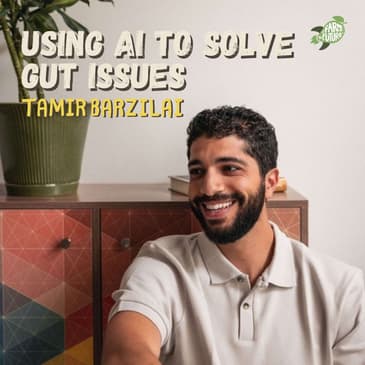
Tamir Barzilai is the CEO and co-founder of Honeycomb.ai, a company dedicated to building the next gen for food discovery for people with dietary restrictions. His company is pioneering an end-to-end dietary pipeline from restaurants to aggregators to consumers, powered by their in-house AI model called RAMS-E. Tamir has spent the last decade working in FoodTech, working with small mom and pop restaurants, to national chains, to Fortune 500 level food companies. After being diagnosed with Ulcerative Colitis, he set out to make ingredient transparency the norm rather than the exception. To date, Honeycomb.ai has helped over 1 million people find suitable food across their product-line.
Download the Honeycomb app at get.honeycomb.ai
Connect with Tamir
- Email: tamir@honeycomb.ai
Discounts
- Get 10% off delicious local farm-fresh food delivered to your door with my link for FarmMatch: https://farmmatch.com/jane
- Get 15% off high-quality Italian olive oil with code FARMTOFUTURE: https://shop.vignolifood.com/FARMTOFUTURE
- Get 40% the CircleDNA’s Premium DNA test with code JANEZHANG: https://circledna.com/premium
Connect with Jane Z.
- Instagram: @farm.to.future
- Email: jane@farmtofuture.co
- Website: farmtofuture.co
[00:00:01] I'm Jane Z and this is Farm to Future, the podcast all about eating better for the planet. Restaurants have come a long way in the past few years with having more options for people that are gluten-free, dairy-free, vegetarian, vegan, etc.
[00:00:18] But what if you're gluten-free, dairy-sensitive, and allergic to pineapple AND avoid spicy food like me? That's a lot to keep track of when you're going out to eat, and you always feel like that one annoying friend that has all the dietary restrictions that everyone else has
[00:00:33] to cater to. Enter Honeycomb. Tamir Barzilai is the CEO and co-founder of Honeycomb.ai. They're a company that was built around this problem. They're using AI to build an app that helps you discover and order dishes from
[00:00:49] restaurants that are personalized to ALL of your dietary restrictions, not just one of them. Tamir walks us through his very rough few years battling ulcerative colitis, which is an inflammatory bowel disease where your gut gets super inflamed and you get ulcers in your digestive tract.
[00:01:09] Tamir had the worst flare-up of his life when he was 19 and had to take a few years off from university and essentially the rest of his life. So it's no surprise that now he's dedicated all his time to helping make life a little
[00:01:22] easier for those of us with gut issues so that we can identify foods we can actually eat at restaurants and, you know, enjoy eating out again. If you are new here, welcome, welcome. Make sure to subscribe on Spotify or Apple podcasts or wherever you're listening.
[00:01:39] And you can find me, Jane Z, on Instagram at farm.to.future. All right. Welcome to the podcast, Tamir. Thank you, Jane. How are you? I'm doing great. It's finally sunny and summer in Boston.
[00:01:59] I was away for like two weeks, came back, it was hot so I'm here for a… Yeah. Fantastic. You're in Vancouver. Yeah, yeah. I forgot you're in Boston. That's really cool. I've never been but it's on the list.
[00:02:11] I've been really like checking off the cities to visit to-do list recently. I went to New York for the first time in October and then I recently got back from LA and San Francisco, which is crazy because I live in Vancouver.
[00:02:27] It's not like I live in Zimbabwe where this is like a life's trek to, you know, visit these places. I could go at any point. I'm just lazy. Fair enough. Any good food finds? I mean, those are all big foodie cities. New York, LA, SF. Yeah.
[00:02:43] I mean, I'm a big fan of American donuts so I will seek out… They have to be American because Canadians don't know how to make donuts. You mean Timbits? Yeah. Timbits are… I will eat Timbits all day but Timbits are also an abomination.
[00:02:59] They're like literally the opposite of donuts. They're donut holes. Yeah, exactly. So what's an American donut for you? Is that like Christmas cream or Dunkin'? No, no, no. Forget the name brands. You got to find the most random hole-in-the-wall type donut shop and it's even better
[00:03:17] If they're also like a Vietnamese restaurant up front but then they also sell donuts at the back. So there's this one in Joshua Tree and I think maybe some other parts of California called Jelly Donut.
[00:03:28] The one in Joshua Tree is basically just a… it's like an old gas station converted to a Vietnamese restaurant that also sells donuts. And those are by far the best donuts I've ever had in my life.
[00:03:39] So whenever I'm in the States, I'm like seeking out the hole-in-the-wall donut shops. But you were probably wondering more about like a nice restaurant to go to for dinner. Oh, I mean, whatever. A high brow, low brow. I'm here for all of it. I mean, I don't know.
[00:03:54] New York is great. I mean some ramen places and some Mediterranean places and I'm a big fan of Greek cuisine and Thai cuisine and Indian cuisine. Really I like it all but my limitation is like I can't just like pick whatever off the menu.
[00:04:08] In fact, I've trained myself to when a server comes to my table and they're like these are our daily features. I just zone out because I'm like there's a 90% chance I can't have your daily feature.
[00:04:19] So it's sort of like an interesting experience because I used to be able to go to a restaurant and be like, oh my God, there's so many options here. Like this is amazing. And then I would…
[00:04:28] Now it's like you can eat one thing but it's got to be modified. Yeah. I'm like what are like my one or two hits that I can have here at this restaurant that are suitable for me?
[00:04:38] The worst is like when I'll go to a restaurant and I legitimately can only have like sides and then I'm like, oh God, this is going to be a rough night. Yeah. But yeah. What are your restrictions?
[00:04:51] My restrictions change over time because I have a disease called ulcerative colitis. So my colon is basically very susceptible to inflammation and deciding to declare war on itself and start attacking itself, which is why it's an autoimmune disease.
[00:05:11] So I have to be careful but I would say it varies over time. If you ask any GI, they will tell you there's no dedicated specific ulcerative colitis diet. Everyone is different if you go to support groups and talk to people.
[00:05:24] There are some generally agreed upon rules of thumb. But again, there are also many exceptions to that. So for example, they're like probably shouldn't have dairy. Probably give you a bad time. So I've been avoiding dairy for the longest time as long as I can.
[00:05:41] But then, you know, if I go on a trip to Italy or Greece, like am I not going to enjoy gelato? Right. I have to do it. Yeah. I'd be like, what am I doing here? I should have just stayed at home.
[00:05:54] So I do believe in cheating on your diet when you can. If you're healthy enough to do it, I'm 100% in favor of that. You have to know when to do it. You have to schedule them in because the minute it becomes a habit, you're going to
[00:06:09] get sick again. And so I have periods of being in remission and I have periods of being sick. And I just oscillate between the two states and try to stay in remission as long as possible. But it's pretty much impossible to permanently stay in remission.
[00:06:25] There are people that do. People think that they've cured it. They think, oh, I've gone two years without a flare up. I've cured my disease. And that's when they get hit because they overreach, they overdo it. And then it comes back with a vengeance.
[00:06:39] And I'm aware of that because it has come back with a vengeance many times for me. This is the longest that I've gone in remission. I think it's been like a couple of years and like pure remission. So I'm super stoked right now.
[00:06:53] I'm so happy for you because I get that feeling exactly. It happens to me when I travel mostly. I'm curious when the flare ups happen for you. But when you're traveling, you just have way less control over the food you're eating and where you're going.
[00:07:08] And some places are food deserts and all you have is like McDonald's. And it's like, literally what can you have on the menu? I just came back from Europe and luckily Italy and France, they all have way higher food standards than the states.
[00:07:23] And so I was able to enjoy things like gelato and baguettes and cheese and things that I normally wouldn't touch here in the states just because I know the quality of the farming and the processing is a lot higher over there. Right.
[00:07:37] But yeah, do you notice like patterns of like seasons you go through where your guts happy versus flaring up? Yeah, I would say the seasons are directly proportional to the stress that I have at any given point. So it's not necessarily based on any specific period of time.
[00:07:58] I would say stress is by far the most influential factor in whether or not I'm sick or healthy. I would say when you're going to Europe, you're going on vacation anywhere, your stress goes down.
[00:08:13] The only time I would say where it increases is when you're in a place that you maybe don't have the trust that the food is going to necessarily be suitable for you. Like, for example, people tell you like if you go and eat street food in some
[00:08:28] areas of Mexico and some parts of India, you need to have like a gut of iron to do that because there's a legit phenomenon with the bacteria that they're used to that you're not. So in those areas, I think stress would increase for me.
[00:08:43] And that in its own right could essentially make me more susceptible to getting into a flare in addition to a potential bacteria infiltration. Right. But if I'm going to like a resort, if I'm going to like Italy, Greece, it's like, oh, OK, I'm going to nice restaurants.
[00:09:01] There's no chance of contamination here. Realistically, I'm having a great time and my body is just like, it just melts. I just feel so like, oh, like what colitis that doesn't exist. I can eat anything I want because it compensates for the reactions that my body typically has.
[00:09:18] So I don't know. It's just weird. Like it's just this weird balance. It's almost more art than science because every person is different. You sort of just have to figure it out for yourself. And I think because this podcast is about the future of food,
[00:09:32] I think that my experience will be closer to the average person's experience and probably is closer to the average person's experience. But a lot of people are in denial. And I'm not talking about that people are in denial of the fact
[00:09:45] that they have some like disease. That's not the case. But roughly 58 percent of the global population that are lactose intolerant. Fifty eight percent. Now, that doesn't really make sense, given that you don't really see, like, 58 percent of people, let's say in your friend group, avoiding dairy.
[00:10:04] There's usually people that are getting they're getting the soy latte or the oat latte or whatever. But how many friends do we know like that? Like, I probably shouldn't have this ice cream, but I'm going to have it anyway. But it's ice cream, so why not?
[00:10:16] Exactly. So I think like most people have that experience with food where they're like, this thing's not quite right. Like steak, take steak, for example. Steak is delicious. And because it's delicious, people will offset like the deliciousness offsets the potential disruption that it has to their gut.
[00:10:36] Now, chill out, carnivore people. If you're listening, I'm not I don't have anything against beef. But for a lot of people, beef is sort of tough on the gut to process. It's this heavier, denser meat that while it's delicious,
[00:10:52] like a lot of people are like, oh, man, I had that steak and it didn't really sit well with me. Oh, I wonder why. Maybe you shouldn't eat it. We don't. Yes. Food enough. Apparently, especially with things like beef,
[00:11:03] you got to chew 20 times before you swallow, which is a lot. None of us do that. No, I'm too lazy. Why would I can't chew 20, also, I'm probably talking to someone. I just want to get it down. I don't know.
[00:11:16] I feel like we have a lot of bad habits around food. And this is not something that's just for people that have some incurable disease. This is trending for everyone. Everyone is going to have to start to make those changes because the food, food is just getting weird.
[00:11:32] It's just weird out there. It is. And the sad reality is like, especially in the States and Canada is a little bit better, but I would say a lot of the regulations are similar. But in the States, there's just so much what I call fake food,
[00:11:46] essentially ultra processed industrial food. Right. Some of it's like not even real food. It's just like industrial products. I think as consumers, we do need to scrutinize our food system more now. But we also should demand from our food system and from our government
[00:12:02] that, hey, we deserve higher quality food. And the whole thing with dairy. And this is like a whole discussion that we don't have to get into. But there's now this growing raw milk movement. And the reason for that is like, well, before pasteurized milk,
[00:12:17] which is really an invention of the last century, people drank raw milk for millennia and it sustained populations. Raw milk is live food. It contains like over 700 different probiotics. And most people who drink it from a clean source do tolerate it well.
[00:12:36] And with pasteurized milk, I mean, there's a lot of problems with the dairy industry today. Like they are dumping chemicals and things like chlorine in it to like clean it and meet the pathogen number standards. And it's just it's not good for you.
[00:12:55] And also when you pasteurize milk, you end up killing all those live probiotic cells and you end up with these like bits of cells in the milk. And for a lot of us, when we drink that, our body rejects it. Because it's like, what is all this stuff?
[00:13:10] And so it's no surprise that so many of us, you said 58 percent of us don't tolerate dairy. It's sort of like sad that we're basically poisoning ourselves with the food we eat. Yeah, but we're poisoning ourselves, but we're also being gaslit
[00:13:24] by the industries and even by the governments. Like we shouldn't worry as much as we are. There's a fine line between conspiracy and recklessness. And we're not being poisoned by corporate entities. Right. Because I don't really like to delve into the conspiracy side.
[00:13:45] Like, oh, they want to poison us. Nobody wants to poison anyone. Right. Because even the executives at these companies, their families are extended families, their friends are eating, drinking the products. But they have a responsibility to their fiduciary obligation
[00:14:02] partners at their companies to deliver an efficient product and through an efficient company and the most efficient system. And that's why I think just going back to what you said about the raw milk movement, anything raw is great. However, do you trust the pipeline?
[00:14:20] Do you trust the supply chain to handle it correctly? Like that's where I have the issue. It's not really in the product. It's like, okay, you're taking something live. Is anyone watching if it just sat on its own, not in a cooled environment
[00:14:33] for like five hours in the sun? And then someone just loaded it up in the truck. It like, because when you're dealing with bacteria, things can go awry very quickly. And so with that respect, it makes sense from a supply chain to
[00:14:47] pasteurize it because you're killing that, like the shelf life is extended. So I think that part needs to be solved. And to be honest, I know nothing about the dairy supply chain or the raw milk supply chain.
[00:14:59] So maybe these problems have been solved, but to me, that's like my knee jerk reaction because I know that bacteria, good bacteria is fantastic for me, but good bacteria can turn into bad bacteria very quickly. That's why for the longest time I've been, you know, like avoidant of
[00:15:13] yogurts and kombucha's and anything that has like a bacterial culture in it. Because I'm like, okay, in theory, this is really good for my gut, but do I trust that like the guys at the market have treated it correctly and like
[00:15:28] know what to do with this type of a product? Like, are they educated enough? And so that's my anxiety coming out. You know, I think that's a real concern. Yeah. We should go visit a dairy farm when I'm next out in Vancouver.
[00:15:41] I actually source my raw milk directly from an Amish farm and they pack it in like a bunch of ice cubes. I think they used to use dry ice and now they just use like straight up ice blocks.
[00:15:52] But you're right, like it's and even still sometimes I'll get a shipment where the milk has like already gone sour. So it is very delicate and you're totally right about the supply chain. And a lot of times with raw products and raw milk specifically, you really
[00:16:06] just have to cut out the middleman and source directly from the farm or maybe one distributor. I guess like all these things leading up to honeycomb. What was the impetus for you to build honeycomb?
[00:16:21] Yeah, I mean, I think I just had a vision that probably a lot of people have had. So the impetus here is obviously I was diagnosed with colitis. As I mentioned, I went, you know, it's funny. There's this book that I love. This is a quick tangent.
[00:16:36] There's a book that I love. It's called Influence by Dr. Robert Cialdini. And he talks about like the six principles of influence in this book. And he talks about it from a personal level to a sociological level. Right? And one principle is the contrast principle.
[00:16:53] This is done when you want to influence someone to action, or you could even influence a group of people to action where you show them what could be. And then you take it away from them.
[00:17:06] You can sort of imagine that if you have a car and then somehow you lose your car and then you don't have it, you have to take the bus now for a few weeks, you have to take a bike. You realize all the convenience that you lost. Right?
[00:17:19] And that motivates you to go and be like, I want to get my car back. How do I get a new car now? What do I need to do? Do I need to make more money? Do I need to whatever the case is.
[00:17:28] So in my case, I was drinking milk. I love chocolate milk. I love ice cream. I love being able to go into any restaurant or bakery and just pick something up and try it out. Especially when you like, I was 19, 18, 19 when I was diagnosed.
[00:17:46] I was 19 when I had the worst flare up of my life where I was hospitalized for about 10 days. And I spent, I spent my 19th birthday in the hospital. What happened? Uh, I was on a, yeah, I was on a trip.
[00:18:00] It was my first ever international trip and like at Pearson airport, I was already like feeling a flare up coming and then like I googled what to do and someone was like drink coconut milk and that didn't help.
[00:18:13] I just found, I was like, yeah, Reddit, Reddit is super sus. Um, yeah. So that didn't work. I thought it was going to be like some panacea just, oh, drink coconut milk. It's like coconut milk, coconut water or something, but that definitely didn't work.
[00:18:31] And then, uh, I had like a 12 hour flight and just on that flight. I was, I mean, just, you know, I spent a lot of time in that airplane bathroom. So anyways, TMI, but yeah, a month later I came back.
[00:18:46] I weighed 25 pounds less than when I left and I'm already a pretty skinny guy. Oh, back then I was even skinnier to begin with. And so I was 145 pounds when I left. Think I was 120 when I got back to Vancouver, my mom barely recognized me. Uh, like five 11.
[00:19:04] Okay. Oh wow. That's really light. Yeah. No, you could see like my rib cage and like just all of my bones were sticking out. I have, I have photos from that time, but I probably won't share them with you. Spare your audience. My gant. Yeah, exactly.
[00:19:24] Um, but my mom could barely recognize me at the airport. I went to my doctor the next day. The doctor did some blood work. It's so weird. Cause when I think back, it's like, it's like such a fog because I was so
[00:19:34] out of it, I was in so much pain that I was hallucinating in the middle of the night. If the neighbor's dog was barking, I was like, it's the neighbor and his dog. That's causing me the pain.
[00:19:44] That's how, like I had real pain induced hallucinations, which is a real phenomenon for people that go through this type of thing, because it's not like you can locate the pain and say, Oh, this is like coming from my hand or my arm or my leg.
[00:19:58] It's your gut. It's just like your, it's your, the center of your body. You can't hide from it. So my doctor said your blood work is, um, I mean, he used profanity to describe my blood and he immediately admitted me to the 10th floor at St.
[00:20:15] Paul's hospital, but I had a great view anyways. I'm sure you appreciated that. That was a nice view of English Bay. So like, yeah, I went through that coming out of it. I had my first semester of university four months later, I just turned 19
[00:20:31] in Canada, 19 is party age. You get to go out and I was like, all right, I'm good enough to go out. So I started going out, went way too hard, was drinking. Um, and alcohol is like the worst thing, the worst thing you could possibly do.
[00:20:48] Stress is worse, but right after stress is alcohol and after alcohol, it's probably dairy for me at least for others could be different, but yeah, I had to drop out of university after a few months, I think in the third
[00:20:59] week of my second semester, I dropped out because I was so sick. I couldn't go to school. So then I just had like a few flare ups after that and it was really annoying
[00:21:07] and it really got to me because at that age, you know, you want to do the things that young people do. Like they're enjoying their lives. You're supposed to be at your prime. I mean, I had three years of my life eradicated, just poof, gone off
[00:21:19] the map because I was stuck at home. There was a point where I was like starting to feel better and I was like, okay, let me get on like a dating app. And I realized I had no photos within the last two years of me to post.
[00:21:34] I mean, that's how my life went. I was just like totally hermit living isolated from society. You did the COVID thing before COVID. I really did the COVID thing because people maybe don't understand. They're probably like, Hey, that's like an exaggeration.
[00:21:49] It's really not because when you're going out, you're planning where are the washrooms and that's not really a fun place to be. So you'd rather just stay at home because it's more comfortable. Anyways, this is very much TMI, but maybe it's useful for people to know.
[00:22:03] We love Gut Health on this podcast. We talk about poop all the time. It's all good. Yeah. So that was the real impetus here. And I was realizing as I started to improve my health, I was going out a
[00:22:14] bit more and I had a business that I was running at the time where I had different clients and I would be in downtown Vancouver wrapping up a client meeting and I was thinking, where do I go to eat right now?
[00:22:26] And I realized I'd go to two places. I'd go to Subway or I would go to Whole Foods. And the reason I would go to Subway is because I could control the ingredients that were going into my food and then Whole Foods, because
[00:22:41] they had like a healthy sort of buffet that you could select different ingredients there, right? Whole Foods became way too expensive. It was like 30 bucks a meal. And this was like eight years ago. So $30 then was a lot for lunch.
[00:22:56] Even now it's still a lot, but it's more of the norm now. So Whole Foods was not sustainable and Subway was not sustainable because Subway sucks. Like it's just like awful. So not even real. It's like every... It's not. Yeah. I don't know where that bread's from. Yeah.
[00:23:14] That bread, that fish, that's, it's all make believe. But I felt like at least I could, was in control of my own destiny. And so I was thinking to myself, I'm like, this doesn't make sense. I'm in downtown Vancouver. Vancouver has a great food scene.
[00:23:28] There's a ton of amazing restaurants in Vancouver, but I had this hesitation to go into these restaurants and try to decipher their menus and have conversations about the food. And the idea of it was anxiety inducing.
[00:23:43] It was stressful to think, oh man, like I have to go have a conversation with people about my diet in order like just to eat. I was like, that makes zero sense. And tech became a vehicle for change at the time.
[00:23:57] We were seeing all sorts of startups, all sorts of new companies come out. We were seeing Uber, we were seeing Airbnb. And I was like, why isn't there any innovation happening in food? Like, why isn't there a way for me to just like put in my dietary
[00:24:11] preferences and create like a profile and then an app could just tell me like, hey, Tamir, you can eat this chicken wrap 100 meters away at this restaurant or you could have this chicken curry or salmon dish at this restaurant 200 meters away or whatever.
[00:24:26] And just like find me the dishes that I could actually eat and then I could just go and get them as opposed to like me having to load up all these menus, manually parse them. And by the way, like on menus, you have a vegan symbol.
[00:24:40] You have a gluten free symbol. You have at very accommodating restaurants, a dairy free symbol. And if you've hit the jackpot, maybe you have like a nut free symbol, but they never tell you like which nut it is.
[00:24:50] You know, um, like they're like, it's just generally, you know, the family is not in this, but those are like four diets, right? Vegan, vegetarian, one or two different symbols there, like four or five diets, maybe in total, if you're lucky to see those on a menu,
[00:25:07] where's my symbol? Like, do I get a symbol? Does the person with diabetes get a symbol? Does the person trying to reduce their blood pressure get a symbol? Does the person trying to reduce inflammation, get a symbol when you
[00:25:19] consider the entire gamut of dietary restrictions, you realize, you know, there's going to be hundreds of symbols there. You realize that a menu actually would have to look more like a spreadsheet that you're going to have to like control F on and parse through.
[00:25:36] And then you see that like, Oh, okay. This is not really like an issue necessarily of restaurants, not wanting to accommodate, but there is no way for them to do that. Like you just can't accommodate for everyone, which is why they have a
[00:25:51] catch-all phrase typically, if you have any dietary restrictions, let your server know that's great. But how do I let your server know at scale? How do I let 20 restaurant servers know before I even go into the restaurant to get that information?
[00:26:06] So I have to like conduct a private investigation here to find food. That didn't make sense to me. And when I was thinking of a vision of what does the future of food look like that was not going to last like PDF menus while they're
[00:26:19] still here, even after COVID, I mean, PDFs are those are long-lasting pieces of technology restaurants on a technology adoption cycle. You have innovators, which are the first people to try a product. You have early adopters, which are sort of the second group of people to
[00:26:36] try product that maybe like want less bugs, but they're still happy with like a few bugs and they're willing to try new things. The innovators are the people that are like coming into your laboratory and they're like, give me this. I want to try any version of it.
[00:26:48] And the early adopters are the ones that are like, yeah, this is kind of interesting. You know, let me try this out. I love these kinds of new technologies. And then you have a early majority and then you have a late majority.
[00:26:58] And then you have laggards and laggards are the last group to adopt a new technology, and that's what restaurants are. Restaurants are the last group to adopt a new technology. And there's multiple reasons for that. And I think that actually will change by evidence for that is
[00:27:18] when did QR codes come out? I don't know. It was like in the late nineties, early two thousands, they were already being used in Asia. And we only recently, because of a global pandemic decided, oh, maybe
[00:27:30] we could like use a QR code so people can get that thing that you have on their phone pretty easily. That just goes to show you like how far behind that industry is. Now that sort of begs the question. What is the vision here?
[00:27:44] Like what is the actual real vision for interfacing with food? Because even if you look at DoorDash today, you look at Uber Eats today, you look at Yelp. I was surprised when I was in California, I was surprised at how
[00:27:56] many people still use Yelp and I guess they use it for the reviews, but I don't put much weight into those reviews. For me, like Google stars are like really just good enough as a signal. If I see like over 500 five-star reviews for a place, I'm like, all
[00:28:09] right, this is probably good enough. But all of these platforms don't really provide anything innovative. I mean, when was the last time Uber Eats or DoorDash released a feature that you were like, oh my God, this is sick. It never happened. Even the-
[00:28:23] Yeah, people just want their food delivered. Exactly. Exactly. But people also want personalization and people also want to execute that task efficiently because when you're hungry, the last thing is like, oh my God, what do I want to eat? That's like very frustrating.
[00:28:40] You spent half an hour sometimes trying to figure it out, especially there's multiple people involved. Oh my God. We had this exact thing in London with my sister the other day. We were looking for congee in London and it took us like 45 minutes to decide
[00:28:55] on what to get and we had to like have a full meal before it got there to tide us over. Yeah, it's a frustrating experience that resonates with nearly everyone that I talk to because even if that person doesn't have dietary restrictions,
[00:29:09] they are familiar with the problem through friends and family and coworkers and so on. Many people have children that have dietary restrictions now because it's just increasing. Autoimmune diseases are increasing, food allergies are increasing. But where am I going with this?
[00:29:22] So have you seen Rabbit in the last few months, the Rabbit product that was released as an AI consumer product? There's also a similar product called Humane. So AI now is proliferating and it's becoming more and more mainstream.
[00:29:37] 2024 is the year that AI hit consumers in terms of hardware. And Rabbit is essentially like a miniature phone that they created. It's really just a toy, but there's a lot of products like this. And what they- It's kind of like a pager.
[00:29:52] Yeah, yeah, it does look like a pager. It's cute. It's cute. It's kind of this fun thing. But all of these products, whether it's Humane or Rabbit or whichever other company is coming up with something, they have this idea of how their product could be used.
[00:30:08] You take the product, you say, Hey, I want to order a vegan dish. That's a pizza and I want to deliver it to me. Boom. And then it would just somehow magically execute that order for you
[00:30:20] and know exactly what you want, find it, and then deliver it to you. We've been hearing about this use case for like the last two years on multiple podcasts, on Twitter, on Instagram, whichever platform, some influencer, some person is talking about, Oh my God, AI, it's so amazing.
[00:30:37] You can just order any food now that you want. Yet here we are two years later and no one's done it yet. Even Rabbit that said that, Oh, we're going to be able to do it. There are countless videos online of people attempting to
[00:30:51] do it and then it fails. I sort of wonder like, why are they failing? And I'll explain why they're failing in a second. Do you watch many videos on YouTube? Like are you, you're on YouTube, right? Yeah. Yeah.
[00:31:02] YouTube has this magical power of knowing exactly what kind of videos you like to the point where you load up the homepage and they show you like those like eight prime videos there. Like these are the ones that we've chosen for you.
[00:31:18] And usually about half of them are bangers. I'm like, dude, I got served up this one today. That was like how one of the best bakeries in the U S is run. And I'm like, yes, this will be my lunch watch. And it was really entertaining. Yeah.
[00:31:32] YouTube knows how to find amazing creators. Obviously don't give too much credit to YouTube. It's the creators that are making these videos, but they're able to find those videos from great creators that you will like and reliably so like when was the
[00:31:46] last time you were on your YouTube homepage and you were bored and you're like, I need to search some topics here. Like I think that's rarely the case. You usually find like this video is great. And then that video leads to more recommendations.
[00:31:59] And then you're like, ba ba ba ba ba because their recommendation engine is like on another level. Now, what if I told you that that experience could exist for food where you just loaded your app and it's just bangers just literally like, oh my God.
[00:32:17] It just knows exactly what you want right now. If you go to Uber, you go to door dash count, how many times you have to click in order to find something that you want.
[00:32:26] So you have to either search or you have to click a tag or you have to see the homepage of places nearby, forget the places that like you've already ordered from before because that's cheating, right? Okay. Like everybody has like two or three favorite restaurants. So forget those.
[00:32:40] Let's say you're in a new city. You don't know what to get. Okay. You look at the places nearby, maybe 20% of them seem appealing. Maybe that's like five restaurants. So you click each restaurant. Now you're parsing through the menu. You're scrolling up and down. This is maybe interesting.
[00:32:53] That's maybe interesting. You're creating almost this like virtual basket. You're like, okay, maybe I'll get that, you know, tagliatelle carbonara. Maybe I'll get this pizza. Maybe I'll get this shawarma. What do I feel like eating green curry? Maybe I'll get that.
[00:33:07] And now you've, you've gone through five restaurants. You've created like your virtual hand basket of all these like potential picks and now you're deciding against those potential picks. So that's like a good 10 minutes of scrolling.
[00:33:20] Maybe now I need to go to like Yelp and see what's like the reviews on this restaurant because I'm like, I don't know like the shawarma, for example, there's shawarma and then there's like shawarma. Like you don't really know.
[00:33:31] And it's the same for like Thai food and Indian food and whatever. So I just described that YouTube experience, and then I described the current state of finding food. And those are just like polar opposite experiences.
[00:33:44] So at honeycomb, we really believe that we have the technology and we have the capability of creating that YouTube experience, but for food. Where you like instantly load the app because we profile people better than any other app in the world.
[00:34:02] For example, we have something that's like a severity index that you can indicate an avoidance, an intolerance or an allergy and relative to your selection, you actually see different data in the app. So knowing a user's entire dietary makeup, knowing their profile, if
[00:34:18] they wanted to get like a salmon burger, for example, but let's say they have an issue with gluten. Okay. So they need a salmon burger at a restaurant that has a gluten free bun. Good luck with that search on any other app right now in the world.
[00:34:34] Good luck with it, right? With us, we will find you all of the salmon burgers nearby, whether you want to go there yourself or you want to place the order because you can execute the order in our app and they will all be salmon
[00:34:48] burgers that have a gluten free customization option or entirely gluten free and that's the fundamental difference because in the future people will have all sorts of requirements. Oh, I want this type of protein from this dish because it has the
[00:35:03] certain amino acid complex and I believe that's going to help me build more muscle as a random use case. This is a very Peter Atiyah Andrew Huberman use case and you can't do that today, but you know, we have macronutrients,
[00:35:18] then you want to go into micronutrients, then you want to go into like molecular composition of dishes. Why not? Why shouldn't we be able to have a parametric model of food and for you
[00:35:29] to be able to go in and say, I want to get these vitamins and I want these minerals and I have this allergy and just to fully spec out exactly what you're looking for. And then we can find it for you.
[00:35:43] Just like you're ordering a car from a dealership or something. We have like all these specs that you're like get the tinted windows and the power this and the power that. So I will land my plane there as far as the vision of the company.
[00:35:56] I did check out the current version of the app and I do love that when you're filling out your profile, like you said, you have like gradients for all these ingredients. Right. So I got to say like, you know, gluten, I'm intolerant dairy.
[00:36:10] I think I put intolerant too or what was the one that's like next to it? There's like intolerant allergy avoidance, avoid dairy, spicy food, avoid. I like that you guys included that. And I think you guys even have options for keto and paleo too. Yeah. Yeah.
[00:36:27] I would say like in the current version, we support like the top eight or 10, I can't remember it like eight to 10 diets. And then we support top 29 allergens and avoidances, but like, that's really just scratching the surface.
[00:36:39] Like I, the future, I think it's just like whatever you want. You don't want paprika, no paprika then for you. Like, it's like I'm having a private chef in an app sort of. Well, that's why, sorry, but that's why we call our AI Ramsey.
[00:36:56] Oh, why aren't you guys called the Ramsey app? Well, we don't want to get sued first of all. Right. But so our Ramsey, our spelling is like Dali or like, yeah. Dash E. Exactly. And it technically, it technically stands for restaurant augmented menu search engine.
[00:37:19] That's like Steve Jobs with Lisa. It's localized. Not your name, Lisa, his daughter. Yeah. Anyways, I, sorry, I cut you off earlier. No, no, no. What I love about the vision and I think this is like the key nugget
[00:37:37] that's different between honeycomb and everything else is instead of the unit being the restaurant, the unit is the dish, like the thing that you're going to get. Like, why can't I go onto Yelp or Uber Eats and type in, for example,
[00:37:51] like you said, salmon burger and have the best rated of that dish show up the price, the ingredients and the delivery time. You know, they give you some of that, but not it's not the full thing. If you search salmon burger, they will give you some salmon burgers,
[00:38:09] but it's not a really exhaustive item search. And the reason for that is because their architecture was not built for this use case. And for those companies, startups can disrupt industries and can innovate because they move fast at that level that they're, that they're at.
[00:38:25] They need multiple approvals and they need just managers and strategy and all of the red tape at big companies. They have that now and they need to be able to quantify the return on investment. And I think they need a startup like us to come in,
[00:38:42] to get the users, to get the traction, to de-risk that investment for them. And then they'll be like, okay, we're going to go and throw a hundred million dollars at this and build the ecosystem and build the infrastructure to do it. But until that happens, until there's a
[00:38:56] disruptive event like that, I don't think they're going to bother. I think they're going to make very incremental minor changes. I think they're going to go horizontally. Like you've seen, they're more interested when you place an order on DoorDash,
[00:39:07] they're more interested to say, Hey, do you want to add like toilet paper to your order? They're just trying to increase the average order value. They're not trying to go vertical into the user and go vertical into
[00:39:17] the dishes and into the restaurants and say, how can we create the most perfect mind reading experience possible? They want you to have just enough of a decent experience that you'll go back and order again and again and again. That's right.
[00:39:33] This is kind of random, but I have the Rabbit Tech gadget thing open here. And I'm just thinking like, what actually happens behind the scenes? Because the manual process here would be like, hey, you put in that order and then you have like a team of elves
[00:39:46] behind the scenes, like making the calls for you and like calling up the restaurants and like checking the ingredients. Can you talk a little bit about what the AI and what the tech is behind Honeycomb? Like what kind of data y'all are feeding in? What are the recommendations?
[00:40:03] Yeah, absolutely. So contrasting what we do from what Rabbit does. So Rabbit has a just like Android emulator running in the background. They are sort of spoofing is not the right word, but they're essentially recreating your account and then getting a bot to place
[00:40:18] that order for you within an emulated DoorDash app on an Android phone. So it sort of is elves behind the scene, but it's like sort of like a more automated... But it's not even working. But in theory, that's what it would do.
[00:40:33] With us, we connect right into the delivery APIs of all the major companies. Actually, everyone except for DoorDash in North America, all the big players except for DoorDash, just skip the dishes, Uber Eats, Grubhub, etc. So by definition, we have all of those locations.
[00:40:50] So hundreds of thousands of restaurants all over North America between Canada and the US. As far as the recommendations, so that's like the downstream, the actual delivery, the execution of the order. More upstream is the recommendations and the profiling and so on.
[00:41:03] The way that it works is we have multiple layers of data. Okay, there's the main AI layer, which does the heavy lifting. That's Ramsey. Ramsey is... Did you guys actually build your own model or are you pulling from OpenAI? No, yeah. So this is what's unique about Honeycomb.
[00:41:20] We've been working on this model before all of the AI hype. I registered this domain name in 2016. Our company has been incorporated since 2016. We didn't really work on it in a meaningful way until 2018. We already had like early versions of our model in 2019. In 2020, we hired data scientists.
[00:41:43] Our data scientist was from previously Deliveroo. He's an Oxford PhD. He led the development and the research behind Ramsey. We hired multiple machine learning engineers. Some of them are from Waterloo, work at prestigious companies. We had a lot of effort that went into building our own in-house model.
[00:42:02] The difference between our in-house model and your off the shelf GPT-4 or Lama or whichever big LLM you want, LLMs don't actually solve this problem very well because what we need to do is we need to get the menu in real time because menus change constantly.
[00:42:20] Pre-processing is sort of out of the question. It's also out of the question due to the permutations of dietary restrictions. When I say pre-process, I mean run it through GPT-4 or GPT-3.5 or whichever one you want. There are billions, even with our current eight diets and 29 allergens,
[00:42:38] even with those, I think the permutations, like the number of possible diets that you can generate are in the billions. You just can't do that. Why you can't pre-process it? First of all, there's a cost associated with it.
[00:42:50] Okay, fine. Let's say you go raise like a bajillion dollars, cost is out of the question. But if you're running it in real time, it's going to take you minutes or at least like a minute, depending on the size of the menu,
[00:43:03] to run through and analyze every single item in real time for that particular user. And you risk hallucinations. It's just not doable. Now let's compare that to Honeycomb. Ramsey analyzes, predicts, annotates the real time dish within a fraction of a second. Okay?
[00:43:22] So we are able to do that and achieve that for the user. Why? Because our model is specialized specifically for this use case. Our model cannot write you a poem by Shakespeare. GPT can do that. Our model is particularly like designed for restaurant,
[00:43:43] dish, dietary, allergen, ingredient, macronutrient labeling. That's it. So it's like a large food model, LFM or a large menu model. Yeah, you could call it that. I'm sure when we raise a bunch of money, we'll go trademark one of those jargons and go with that.
[00:44:00] Have you guys already raised funding? Cause it sounds like you have a pretty hefty team. Yeah, we have raised money. I would say we've been pretty lean though. Like traditionally with a company like ours, you would have seen like a much more significant capital injection,
[00:44:16] but we've spent a lot of time in R and D and testing. I would say it's like a majority of companies that raise a lot of money, probably spend it too fast. So we did raise close to like a million,
[00:44:27] I would say so far in Canadian dollars for our American friends, which is probably like 700 or something. But yeah, there's a big discount, but that's all like rough estimation. I was just curious. Yeah, but yeah, we have had, cause like I said,
[00:44:43] we've been around for a few years. So right now we are going and doing a fundraising round this summer. We do have the conviction. I think hopefully I've communicated that over this conversation and we have the evidence now we've had a million people use our first product.
[00:44:58] Our first product was basically the same idea, but for specific restaurants you go to a restaurant, you put your dietary preferences, it tells you what you can eat at that restaurant. Smart. I would totally use that. Tell me what gluten-free things I can eat here.
[00:45:14] Yeah, it was just a super successful product and we're working on a second gen version of it. But obviously we spent a lot of time on the app and a lot of time on the R and D.
[00:45:22] So to just finish up what I was saying earlier about how we handle the data and the recommendations, we have a AI layer, Ramsey that looks at the dishes. Then we have a restaurant level layer of data,
[00:45:34] which looks at the food preparation methods and the accommodation factors of a restaurant. So for example, it's one thing that a dish says that it's gluten-free, but do you actually support celiac patrons that require dedicated food preparation methods? Right?
[00:45:51] So that gives them a different label in the app. And then the final layer is a verification by the restaurant themselves. So for example, there's like a ton of resources that exist that are fragmented. You have halal resources, you have kosher resources,
[00:46:05] you have vegan resources and just on and on and on. If you go on Facebook today, you will find groups dedicated to every one of these diets that daily people be asking, Oh, what can I eat in? I don't know.
[00:46:18] Phoenix in the peanut allergy association for Phoenix, Arizona, there's like the crazy number of fragmented groups and none of them are communicating together. So part of our job is we also like aggregate all of this data and have it in a single source of truth.
[00:46:33] And then we have verification by the restaurant, verifying their dietary practices, verifying ingredients if they so choose to. And so those are all the three layers and we do our best to like direct people to the area with the least risk. There is risk to be clear.
[00:46:50] There is risk for every customer because on any given day, even when a restaurant has verified it, that chef is sick. Then there's another guy there working and that guy is like, ah, you know, a only ranch dressing, dairy mayonnaise, whatever.
[00:47:09] You know, he's switching it up on you. You don't know when that can happen. So you always have to check with the restaurant. You always have to double check. Don't put your life and your health in the hands of an app.
[00:47:19] Use it as your confidant, as your consignly area, as your assistant, as your guide, whatever you want to call it. You know, it's actually funny because the current version of the app doesn't have two way communication, but our next gen version actually will have a copilot in
[00:47:34] there that you could actually semantically talk to it. Not necessarily like a chat bot, but imagine just opening your phone. You talk to it and then say, can you find me a green curry chicken that's suitable for me and order it?
[00:47:49] And then it can get that done just like Rabbit is trying to do, except ours will actually do it. So it'll actually work. Yeah, I don't mean to hate on Rabbit. I actually really like Rabbit. I think it's really cool.
[00:48:00] Is Rabbit only for food or is it like a general AI? No, no, it's for anything. Food was just one use case. Food was just one use case. It's you can like apparently book a trip on it. You can apparently do a lot of things,
[00:48:12] but I think they just released it a bit too early, I would say. That's OK. Get the hardware in people's hands and then update the software. Yeah. Well, anyways, if Rabbit sees this, they can come to us and we can give them API access because we do also
[00:48:27] open up Ramsey to other companies. If other companies want to access Ramsey, we do license our API. We have some Fortune 500 companies that actually use it for different products that they run. So we're very multifaceted. Some would argue distracted, but I would argue that.
[00:48:44] I bet the funding round is going to change that. I would argue that the ADHD can be used as a superpower. OK, since, you know, launching the app and watching these million users find the foods they want off the menus, what have you learned about like
[00:49:01] the latest trends and what people are looking for? Like, for example, last time we spoke, I remember we talked about plant based diets and how they're kind of going out of vogue a little bit. I used to be vegan and vegetarian,
[00:49:15] switched to omnivore, and now you see this huge carnivore movement taking off. Would you say like that's a big trend you see? Yeah, yeah. I think like right now, obviously carnivore, obviously vegans. I mean, you could just look at if you want to see what's happening,
[00:49:30] because look at the stock prices of all the vegan companies that IPO'd like three years ago and see where they're at now. Everyone's trying to pivot into like something else. And I think what we're seeing is an aversion to sugar. Finally, that's not necessarily stevia only.
[00:49:48] So I think a few years back we had like stevia only as the sugar alternative. And which tastes weird. Yeah, stevia only really, in my opinion, sucks. But I'm seeing now more like, you know, Ollie, you know, like the pop Ollie.
[00:50:03] And there's one in Canada called Ollie Pop. Ollie Pop. Yeah, they're like healthy soft drinks. Yeah, exactly. So there are those that I don't actually about Ollie specifically. So I don't want to say something incorrect. But in Canada, we have a version called Poppy that's becoming increasingly popular.
[00:50:18] And that actually combined stevia with a low dosage of sugar, of cane sugar. OK, which that's kind of like big brain because it tastes like legit. Yeah. So apparently stevia hits a different part of your tongue and your taste buds than sugar.
[00:50:37] And so I've seen another combo which is stevia plus monk fruit sugar, which gives you like a full sweetness. Yeah. So I think like they're getting a bit more creative because people do want low sugar food. It's very, very difficult to achieve for it to like permeate restaurants.
[00:50:55] I think that'll take a lot longer. Like when it was last time you went to a restaurant and then replaced sugar with stevia in like a brioche bun. Like that's I don't think that's going to happen anytime soon. But eventually consumers will demand it.
[00:51:08] When consumers demand it, then change happens. Restaurants are not going to change anything. They're very reactive to what the consumers want. Typically, you'll see CPG products come out first with all these alternates before they hit the restaurants because ultimately restaurants are buying ingredients.
[00:51:24] Those ingredients are coming in from the supply chain, from the CISCOs. A lot of restaurants buy food from like your local supermarket. Like if it's like a small mom and pop shop, right? The ingredients have to exist there before they're going to exist at the restaurant.
[00:51:38] So by definition, it's a very good indicator to see what's going to happen at restaurants. Another example was cauliflower crust for the keto folks, for the low carb folks in pizzas. Now we see cauliflower crust sometimes at certain pizza chains. So low sugar, low carb.
[00:51:56] These are, I guess, proxies. These are signals for having a better metabolic health understanding and how blood sugar is impacted. And, you know, new influencer superstar over the last like 18, 24 months has been glucose goddess, which I'm sure you've seen her stuff. Yeah, so she's great.
[00:52:17] And you'll see a lot of CGMs like continuous glucose monitors are being used by people who don't have diabetes, like they don't need to monitor the blood sugar, but they are because energy is now the new trend. This is sort of where I'm getting to.
[00:52:32] People are going are not necessarily going to optimize for food anymore. Food is the proxy. Exercise is the proxy. Energy is the gold. Energy is the resource, right, that you want. So you're manipulating your dials on your diet. You're manipulating the dials on your exercise.
[00:52:48] You're manipulating it on your sleep and then whatever on your cold plunges and whatever else. But what you're actually trying to get is energy. And so people are realizing, oh, like carnivore is becoming more popular because people feel like they have more energy with carnivore, right?
[00:53:08] So I think the biggest trend that we're seeing is energy as like a general shift and how energy fluctuates. This idea that your metabolic health is very much a signal and indicative of your overall health and could be a cause of
[00:53:26] autoimmune diseases, of allergies, so on and so forth. So I think as far as like mapping the entire function and algorithm of energy and of your health, that is the trend. And that's why we are going to require parametric models of food where you can
[00:53:46] actually understand like a glycemic index of that green curry chicken and have that accessible at your point of ordering. That's where it's going anyways. Tamir is going to write the next health hit on energy. I really like that thesis. I feel like that could be like a whole
[00:54:03] thing defined in terms of metabolic health and not calories in calorie out, because that's like the danger of calling it energy. Right. It's like you could also just like count calories. Yeah, calories are calories again, or just I think they're just like a signal.
[00:54:18] They mean something there, their currency for the body. But it doesn't tell the whole story. Yeah, yeah, totally. Last question before I let you go, what are your go to places to order food from now that are not Subway or Whole Foods? Oh, like in Vancouver. Yeah.
[00:54:35] OK, well, I'll give you like my bad habit first and then I'll give you like my clean so my bad habit is green curry chicken. I've mentioned it multiple times on this podcast. I love green curry chicken, but this is a warning to all of you other
[00:54:51] green curry chicken lovers out there. Recently, I went and had like an ultrasound done. I don't know, just some like random paid I had in my gut. And I was like, whatever, it doesn't hurt. Canadian health care is free. Let's go check it out.
[00:55:04] So I did an ultrasound and they're like, oh yeah, everything is fine. And I'm like, oh, thank God. I was like kind of worried and they're like, oh, but we notice that your liver has some like fatty spots to it. So you might want to watch out.
[00:55:15] Like how is your exercise and how is your diet? And I'm like, I had just completed a triathlon. I just completed seventy five hard, which is like you're working out twice a day for 75 days. Yeah, I'm like there's no way my exercise is an issue.
[00:55:30] But I was like binging on green curry chicken and a main ingredient is coconut milk, which is super high in fat. So for the longest time I was just eating this. And now I eat it like way less,
[00:55:44] maybe like once or twice a month as opposed to like once or twice a week. So that's my bad habit that I'm switching. But I do love Thai food and I get it any chance I get. But I love lamb. I like my favorite place to eat is
[00:56:00] basically any Greek restaurant where I can get those like lamb chops, like the rosemary and a little bit of salt, tzatziki, even though I can't have dairy, but sometimes I'll just like micro dose dairy. So like I'll just like dip a little bit in there.
[00:56:16] And yeah, I would say that's like my go to otherwise like for Vancouver. I'll shout out Fresh Bowl. If you do want Thai food, we're here in Yaltown and there's this restaurant Fresh Bowl and they have healthy Thai food. So it's actually quite innovative where
[00:56:32] you get the Thai food and it looks like Thai food and it tastes like Thai food, but it's not traditional Thai food. It's like with ingredients that feel very healthy. That's my go to. I'm probably going to order it today after this call.
[00:56:45] So if you like lamb, there's a restaurant in Richmond, a Chinese lamb place. I forget the name, but it has lamb in the name. You should check out. It's near Aberdeen. Oh, I've never had Chinese lamb,
[00:56:57] although any time I've ever had like Chinese skewers like at the night market, they changed my life. I have it. And I'm like, why aren't there? Why is first of all, why is there no street food of this in Vancouver? Make zero sense.
[00:57:09] Why only at the night market? I would eat this like all the time with their spice. They put this like spice on it. I don't even know what that is. I think it's like cumin, red pepper. Lamb is so good. Yeah. Anyways.
[00:57:21] OK, well, I know it's probably your lunchtime slash time to get some green curry. Where can people find you find honeycomb? Download the app. Yeah, people can go to honeycomb.ai. That's our main website to sort of check out everything that we do.
[00:57:36] If you just want to download the app, you can just search honeycomb.ai on any app store and download it there or eat.app. Link slash honeycomb. There are many ways to get to it, whichever one you want. The current version of the product is like really cool.
[00:57:50] It's really good. You'll see glimpses of the future. So like get in now, be a part of the ride because we're going to be dropping some really cool next gen stuff over the coming months. And we're really excited about that. And if anyone is interested in even
[00:58:05] investing, we are opening up like a new round soon. We're happy to include supporters as part of the journey. So thanks for the support. Thanks for having me on this podcast. I think you're doing amazing work with Farm to Future. It was a pleasure being on here.
[00:58:20] Sweet. Thanks so much, Tamir. And if people want to reach out about fundraising or anything like that, should they email you directly? Yeah, they can hit me up at tamir at honeycomb.ai. Awesome. Thanks so much for coming on. And that's a wrap.
[00:58:34] Thank you so much for tuning in. Remember to nourish your body and I'll talk to you next time.