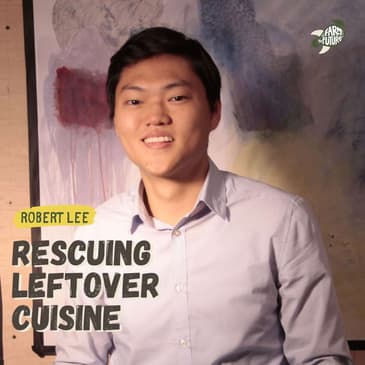
If you've ever thought about how much food goes to waste in restaurants, today’s episode we’re going behind the scenes to see what happens to those leftovers. Robert Lee is the co-founder and CEO of Rescuing Leftover Cuisine, and he’s been tackling this issue for over a decade.
Robert started rescuing food back in college, where he would deliver dining hall leftovers to a nearby homeless shelter. Almost 15 years later, he’s built and scaled this non-profit to saving millions of pounds of food from ending up in landfills and feeding countless people across the country.
Robert’s going to share the nuts and bolts behind their logistics model and business model, how they pivoted during the pandemic when restaurants shut down, and the big role that city governments can play when it comes to food rescue.
About Robert
Robert Lee is the CEO & Co-founder of Rescuing Leftover Cuisine, Inc (RLC). With a Bachelor’s degree at the Stern School of Business at New York University and experience working in finance at various Wall Street firms, Robert Lee left a future career in finance to work on growing RLC. RLC has been providing food rescue services since 2013 and is headquartered in New York City. RLC was incubated by Blue Ridge Labs @ the Robin Hood Foundation and since then has expanded across the nation. In addition, Mr. Lee has been honored as an Obama Leader USA, Gates Millennium Scholar, CNN Hero, Forbes 30 Under 30 for Social Entrepreneurship, NYC Food Policy 40 Under 40, and Youth Action Net Fellow.
Website: https://www.rescuingleftovercuisine.org/
Instagram: @rescuingleftovercuisine
Discounts
- Get 10% off delicious local farm-fresh food delivered to your door with my link for FarmMatch: https://farmmatch.com/jane
- Get 15% off high-quality Italian olive oil with code FARMTOFUTURE: https://shop.vignolifood.com/FARMTOFUTURE
- Get 40% the CircleDNA’s Premium DNA test with code JANEZHANG: https://circledna.com/premium
Connect with Jane Z.
- Instagram: @farm.to.future
- Email: jane@farmtofuture.co
- Website: farmtofuture.co
[00:00:00] [SPEAKER_05]: When we first got started in 2013, people just told me, hey, when you're doing is illegal, stop doing it.
[00:00:05] [SPEAKER_05]: I don't have to literally print out the Bill Emerson Good Samaritan Act of 1996 and print
[00:00:10] [SPEAKER_05]: out state versions of that state law to basically show people that A, it's not illegal, but also
[00:00:16] [SPEAKER_05]: B, that the IRS incentivizes people to donate their excess food. I'm Jane Z. And this
[00:00:23] [SPEAKER_00]: is Farm to Future, the podcast all about eating better for the planet.
[00:00:29] [SPEAKER_00]: Hello friends. I hope you're having a wonderful summer. I have been a bit MIA on the podcast
[00:00:36] [SPEAKER_00]: this season as I've been heads down with work and just traveling up ton the last few months,
[00:00:41] [SPEAKER_00]: but I have not forgotten about you guys and I'm hoping to get back on a regular posting
[00:00:46] [SPEAKER_00]: schedule soon. Today we've got a great episode. If you've ever thought about how much food
[00:00:52] [SPEAKER_00]: goes to waste in restaurants, today's episode we're going behind the scenes to see what happens
[00:00:57] [SPEAKER_00]: to those leftovers. Robert Lee is the co-founder and CEO of Rescuing Leftover Cuisine and he's
[00:01:05] [SPEAKER_00]: been tackling this issue for over a decade. Robert started rescuing food back in college
[00:01:10] [SPEAKER_00]: where he would deliver dining hall leftovers to a nearby homeless shelter in New York.
[00:01:15] [SPEAKER_00]: Almost 15 years later, he's built and scaled this nonprofit to saving millions of pounds of
[00:01:21] [SPEAKER_00]: food from ending up in landfills and feeding countless people across the country. Robert's
[00:01:27] [SPEAKER_00]: going to share the nuts and bolts behind their logistics and business model, how they still
[00:01:32] [SPEAKER_00]: manage to feed people during the pandemic when restaurants shut down and the big role that city
[00:01:37] [SPEAKER_00]: governments can play when it comes to food rescue. If you are new here, welcome, welcome.
[00:01:43] [SPEAKER_00]: Be sure to subscribe on Spotify or Apple podcasts or wherever you're listening
[00:01:48] [SPEAKER_00]: and you can find me, Jane Z on Instagram at farm.to.future. Let's dive in.
[00:01:57] [SPEAKER_00]: Welcome to the podcast Robert. Hi, thanks for having me. We met on a panel a few weeks ago
[00:02:03] [SPEAKER_00]: through our mutual friend, Sharayas. So the panel was all about food sustainability and we
[00:02:08] [SPEAKER_00]: had a few different businesses on to talk about food waste, which is what your nonprofit focuses
[00:02:14] [SPEAKER_00]: on and other things. But you started your nonprofit around the start of COVID, right?
[00:02:22] [SPEAKER_03]: No, actually we got started in 2013. So about 11 years ago.
[00:02:26] [SPEAKER_03]: Oh, wow. Yeah, no.
[00:02:28] [SPEAKER_00]: Okay. That makes a lot more sense because I was looking at your website and you guys are
[00:02:31] [SPEAKER_00]: across like what a dozen cities in the States now. Yeah, we're trying to, you know, do what
[00:02:37] [SPEAKER_05]: we can across the country. And obviously there's a lot more to do, but yeah, little by little.
[00:02:43] [SPEAKER_00]: Yeah. Okay. So let's, let's start from the top then. So tell us about rescuing leftover
[00:02:48] [SPEAKER_00]: cuisine. How did you get started? And I definitely want to hear the story of how you jumped ship
[00:02:53] [SPEAKER_00]: from your finance job to entering this, the food waste space. Absolutely. Yeah, just,
[00:03:00] [SPEAKER_05]: I mean, starting from kind of this introduction of the organization, it's called rescuing
[00:03:05] [SPEAKER_05]: leftover cuisine super long, but pretty self-explanatory name. We bring excess food
[00:03:11] [SPEAKER_05]: from all kinds of different food businesses, like restaurants, catering companies. And we bring it
[00:03:16] [SPEAKER_05]: to people who need it at homeless shelters, soup kitchens, food pantries. And the way we do that
[00:03:21] [SPEAKER_05]: is we have a technology based solution that allows people to be the transportation solution.
[00:03:27] [SPEAKER_05]: Back when we got started in 2013, we saw that there were really, really great organizations
[00:03:32] [SPEAKER_05]: like city harvest and food bank doing incredible work already. And we didn't need to kind of
[00:03:40] [SPEAKER_05]: model set up. They use trucks that basically, as you can imagine, you would want to be as
[00:03:46] [SPEAKER_05]: efficient as possible. So if you're going, going to the city and you're going to rescue
[00:03:50] [SPEAKER_05]: all this food, you're going to want to fill that truck up and make sure that you're not
[00:03:54] [SPEAKER_05]: wasting any space. And so because of that, they had minimum pound requirements. They don't
[00:03:59] [SPEAKER_05]: work with restaurants and different groups that have, you know, less than was worth it to go
[00:04:03] [SPEAKER_05]: down to the city to pay all the, you know, gas and parking tickets and whatever it is,
[00:04:08] [SPEAKER_05]: that, you know, it costs to actually go down and do a pickup. So we, you know, specifically
[00:04:15] [SPEAKER_05]: targeted the smaller amounts of food that, you know, restaurants wanted to donate, but they
[00:04:19] [SPEAKER_05]: couldn't find the nonprofit solution for. And so we kind of filled that gap and we essentially
[00:04:25] [SPEAKER_05]: worked with the smaller groups and used volunteer activity to kind of be that transportation
[00:04:31] [SPEAKER_00]: solution. And that's, that's how it all works. Interesting. Okay. So you crowdsource the food
[00:04:38] [SPEAKER_00]: rescuing, I guess you guys call it, but like the logistics of actually bringing the food
[00:04:43] [SPEAKER_00]: from restaurants to, do they go to donation centers? Yeah. So we do a direct food rescue
[00:04:49] [SPEAKER_05]: model. So we don't like bank the food. We don't store anywhere. We go directly from
[00:04:54] [SPEAKER_05]: the restaurant or the food business directly over to the homeless shelter so you can
[00:04:58] [SPEAKER_00]: food pantry. Oh, interesting. So you're almost like Grubhub for food rescue. That's exactly
[00:05:05] [SPEAKER_05]: what we say. We love to say, yeah, we're the Grubhub of, you know, food rescue.
[00:05:11] [SPEAKER_00]: So technology based. There's the title of the episode.
[00:05:16] [SPEAKER_05]: Yeah. Plus Grubhub is an incredible support of ours and yeah, it's incredible to
[00:05:21] [SPEAKER_05]: get their support to keep on growing and make this, you know, the universal standard
[00:05:25] [SPEAKER_00]: it should be. Yeah. How, how do you work with them? Are they like funders or?
[00:05:31] [SPEAKER_05]: Yeah. During the pandemic, they really wanted to help out their restaurants that, you know,
[00:05:37] [SPEAKER_05]: were struggling during the time. And so they had a kind of community fund that was set up
[00:05:42] [SPEAKER_05]: to essentially help restaurants essentially create meals for the food insecure. And through
[00:05:48] [SPEAKER_05]: kind of our work and our activities, we were able to, you know, help support a lot
[00:05:53] [SPEAKER_05]: of restaurants through that difficult time. And then afterwards, after that, that time period
[00:05:59] [SPEAKER_05]: with the pandemic, we were able to continue to get support from Grubhub to work with the same
[00:06:04] [SPEAKER_05]: restaurants and just rescue their excess food basically. Very cool. Do you work with specific
[00:06:11] [SPEAKER_05]: types of restaurants? Yeah. I mean, we work with pretty much all types of restaurants,
[00:06:15] [SPEAKER_05]: whether it's fast casual or sit down or, you know, any different, any type really,
[00:06:20] [SPEAKER_05]: we work with all kinds of other types of food businesses, ones that you wouldn't really expect.
[00:06:26] [SPEAKER_05]: So for example, we work with catering companies within offices. So when people have like
[00:06:31] [SPEAKER_05]: conferences or training events or, you know, all kinds of things where they have like this
[00:06:36] [SPEAKER_05]: beautiful spread of all kinds of pastries or fruits or, you know, things like that,
[00:06:40] [SPEAKER_05]: there's a lot that goes to waste. And so we're able to rescue all of that. We're also
[00:06:50] [SPEAKER_05]: so if there's like a, you know, film taking place and, you know, there's catering for the actors and
[00:06:57] [SPEAKER_05]: all the people we can rescue food from there. We actually just started working with city field
[00:07:02] [SPEAKER_05]: home of the Mets as well as family park over the last couple of months. So it's been
[00:07:08] [SPEAKER_05]: incredible to see, you know, just venues starting to donate their excess food instead of
[00:07:14] [SPEAKER_05]: throwing it away. And as you can imagine, there's so many more instances. I mean,
[00:07:19] [SPEAKER_05]: planes have excess food. I've heard the army has a lot of, you know, excess food. They're just
[00:07:25] [SPEAKER_05]: really wherever there are people, there's food and whether it's food, there's a lot of excess.
[00:07:29] [SPEAKER_05]: So yeah, we're happy to rescue that and feed the people who need it.
[00:07:33] [SPEAKER_00]: Yeah, I'm just picturing all the leftover hot dogs at Fenway Park after a Red Fox game.
[00:07:40] [SPEAKER_00]: Yeah. So I guess like if I'm someone living at a homeless shelter and we receive food from
[00:07:49] [SPEAKER_00]: you guys, like on a given day, I could expect food from like maybe sweet green and the next
[00:07:55] [SPEAKER_00]: day it's dim sum. Like it sounds like it's a variety of things depending on what's available
[00:08:00] [SPEAKER_05]: that day. Yeah. What we do is we try to set it up so that it's more of a recurring basis.
[00:08:06] [SPEAKER_05]: So especially if it's a, you know, sweet green or, you know, dumpling or something
[00:08:09] [SPEAKER_05]: like that, it's coming from some kind of recurring source. So if it's the cafeteria
[00:08:14] [SPEAKER_05]: or anything like that, typically restaurants will have the delivery set on a specific day
[00:08:19] [SPEAKER_05]: of the week or multiple days of the week, but just on a consistent schedule. So that's when
[00:08:23] [SPEAKER_05]: they might do their inventory or throw out a few things. Or they may get wrong orders.
[00:08:28] [SPEAKER_05]: It happens all the time where they order something, but it's out or they get something
[00:08:32] [SPEAKER_05]: completely random that they never ordered. And so they're, you know, they can donate that
[00:08:37] [SPEAKER_05]: instead of throwing it away. And essentially we work with the non-profit recipients,
[00:08:41] [SPEAKER_05]: whether it's the homeless shelter, a soup kitchen, food pantry, or food bank. And we
[00:08:46] [SPEAKER_05]: essentially kind of arrange it so that they know what they're getting, plus or minus, you know,
[00:08:50] [SPEAKER_05]: five, 10 pounds on a regular basis. And that way they can actually just not purchase that food
[00:08:57] [SPEAKER_05]: and actually just use that money for other things, more housing, more job skills training,
[00:09:03] [SPEAKER_05]: whatever it is, right? Their budget should be used on more long-term things, not just food.
[00:09:08] [SPEAKER_00]: Yeah, right. Yeah. And it sounds like a big difference between what you guys provide
[00:09:15] [SPEAKER_00]: and maybe food donations that food banks get. Like a lot of their stock is non-perishable items,
[00:09:21] [SPEAKER_00]: whereas the food that you guys provide is like ready to eat pre-made meals.
[00:09:27] [SPEAKER_05]: Yeah, it's all, it's interesting. I mean, when we first started, we definitely
[00:09:32] [SPEAKER_05]: had far more prepared meals and prepared, you know, food. With the pandemic,
[00:09:39] [SPEAKER_05]: we essentially saw that, I mean, a lot of our partners had to close, right? There were no
[00:09:45] [SPEAKER_05]: catering events, no restaurants. And we at the same time saw a huge demand for food.
[00:09:52] [SPEAKER_05]: And so rather than kind of sit and wait until the pandemic was over,
[00:09:55] [SPEAKER_05]: we decided to actually go up the supply chain. We started working with CPG,
[00:10:00] [SPEAKER_05]: consumer packaged goods brands, direct to consumer brands, as well as just food
[00:10:04] [SPEAKER_05]: manufacturers in general. It started rescuing obsolete inventory. And that was obviously far
[00:10:12] [SPEAKER_05]: more kind of the shelf stable packaged food. And so now we've kind of, you know,
[00:10:18] [SPEAKER_05]: been welcoming partners back from the pandemic and sticking to kind of our, you know, roots of
[00:10:23] [SPEAKER_05]: doing what we always used to do, but with this added kind of layer of, you know, working
[00:10:28] [SPEAKER_05]: with pallet size donations. And so, yeah, now we kind of do both. And it's interesting to
[00:10:35] [SPEAKER_05]: kind of see that, you know, we work with different non-profit recipients that could
[00:10:40] [SPEAKER_05]: work with both, right? So some homeless shelters may have a whole kitchen and they have staff and
[00:10:45] [SPEAKER_05]: they have, you know, the facilities able to, you know, use raw ingredients. Whereas some
[00:10:51] [SPEAKER_05]: shelters may only have a microwave. And so they can only accept salads or hot dogs or,
[00:10:58] [SPEAKER_05]: you know, things that they can just, you know, heat up in a microwave and distribute to
[00:11:01] [SPEAKER_05]: their constituents. So we do all that matching, you know, behind the scenes,
[00:11:06] [SPEAKER_05]: making it so that it's easier for our nonprofit, for their both nonprofit recipients and our
[00:11:11] [SPEAKER_05]: food donors. So the food can actually feed people. Yeah. Nice. Hopefully they're not
[00:11:16] [SPEAKER_00]: microwaving their salads. I mean, I guess you could if you wanted to. I actually am like
[00:11:21] [SPEAKER_00]: weird and my parents cook all veggies and I enjoy veggies most when cooked and they'll
[00:11:26] [SPEAKER_00]: actually cook lettuce. In my opinion, it tastes pretty good. Nothing wrong with, you know,
[00:11:33] [SPEAKER_00]: frying some greens and maybe it tastes a little better. Yeah. With the food manufacturers
[00:11:43] [SPEAKER_00]: and the brands, what's their incentive for donating? Are they providing like packaged
[00:11:51] [SPEAKER_00]: goods that are close to the expiration date? Is it like batches that didn't meet their
[00:11:56] [SPEAKER_05]: standards? Yeah. Yeah. Well, I mean, there's a lot of different use cases and, you know,
[00:12:01] [SPEAKER_05]: statistics are pretty startling. I mean, 40% of the food that we produce in this country is wasted
[00:12:07] [SPEAKER_05]: and, you know, obviously that's just a huge number just from, you know, just when you first
[00:12:13] [SPEAKER_05]: hear it. But when you think about the fact that that's enough nutrition to like more than
[00:12:20] [SPEAKER_05]: eliminate food insecurity, it's kind of insane. That's actually three times the amount we would
[00:12:27] [SPEAKER_05]: to basically feed all the food insecure people in the United States. So if we just took one third
[00:12:34] [SPEAKER_05]: of the food that we waste, brought it over to people who need it, we could eliminate food
[00:12:37] [SPEAKER_05]: insecurity right now. It's just a distribution problem and obviously it's a huge, you know,
[00:12:44] [SPEAKER_05]: environmental waste. We use half the U.S. land, 80% fresh water, 10% of our energy
[00:12:50] [SPEAKER_05]: budget just to bring all that food to our tables and then wasting 40% of it obviously
[00:12:56] [SPEAKER_05]: is not the best thing to do with all of that. And then when it actually goes to landfills,
[00:13:01] [SPEAKER_05]: it produces methane gases which are very times worse for the environment.
[00:13:06] [SPEAKER_05]: So I mentioned all this because there's just so many different reasons why food donors donate.
[00:13:13] [SPEAKER_05]: Right? So number one, they sometimes have just obsolete inventory where they essentially
[00:13:19] [SPEAKER_05]: just don't want to miss out on sales and they produce a ton of food. And so some of
[00:13:24] [SPEAKER_05]: the food just can't get it to retailers in time. And so they, it may be dated for like
[00:13:29] [SPEAKER_05]: three or four months from now, but it would be considered obsolete inventory because by the time
[00:13:34] [SPEAKER_05]: it gets to the supermarket and then to you, it would be like one month left and apparently
[00:13:40] [SPEAKER_05]: don't buy it basically at the supermarket. And then there are interesting cases where it's
[00:13:45] [SPEAKER_05]: like branded food products that are branded for certain marketing events for like, you know,
[00:13:51] [SPEAKER_05]: July 4th and now it's like August and they have all this July 4th power of chips, right? Like
[00:13:59] [SPEAKER_05]: they just throw it out. They consider it as trash. And so there's all kinds of interesting
[00:14:04] [SPEAKER_05]: weird things that happen. And of course, you know, with all the advent of AI, there's
[00:14:10] [SPEAKER_05]: obviously a lot of thought around how to like optimize ordering and figure out what the right
[00:14:16] [SPEAKER_05]: amount to order and produce is, but it seems like it'll never be truly perfect because people
[00:14:23] [SPEAKER_05]: will always want to have the leeway to make a sale if there's a huge amount of demand.
[00:14:29] [SPEAKER_00]: So yeah, yeah. There's so much that's unpredictable with events like that. Like what if it rains
[00:14:35] [SPEAKER_00]: on July 4th and nobody comes out to your parade? Well, you're left with a bunch of
[00:14:39] [SPEAKER_00]: chips or cupcakes. That makes a lot of sense. Exactly. Yeah. Yeah. How do you all approach
[00:14:45] [SPEAKER_00]: food quality? How do you make sure things are good to eat? Like, are you guys liable?
[00:14:51] [SPEAKER_05]: Are the restaurants and suppliers liable? Yeah. That's always a big point of contention
[00:14:56] [SPEAKER_05]: and one of the biggest fears for a lot of potential food donors who just decide to throw
[00:15:02] [SPEAKER_05]: away the food. When we first got started in 2013, people just told me, hey,
[00:15:06] [SPEAKER_05]: what you're doing is illegal. Stop doing it. And I'll have to literally print out
[00:15:10] [SPEAKER_05]: the, you know, the Bill Emerson Good Samaritan Act of 1996 and print out state versions of
[00:15:16] [SPEAKER_05]: that state law to basically show people that A, it's not illegal, but also B, that the IRS
[00:15:22] [SPEAKER_05]: incentivizes people to donate their excess food. You get enhanced access if you donate.
[00:15:28] [SPEAKER_05]: This is the Bill Emerson Good Samaritan Act of 1996. And then most recently,
[00:15:33] [SPEAKER_05]: the Food Donation Improvement Act just about two years ago was also passed by Congress.
[00:15:38] [SPEAKER_05]: So yeah, there's no legal liabilities as long as, you know, obviously you're donating food in good
[00:15:45] [SPEAKER_05]: faith and you're a licensed food vendor and you're not, you know, doing things negligently.
[00:15:52] [SPEAKER_05]: But we also only work with licensed food vendors, right? So we don't rescue food
[00:15:56] [SPEAKER_05]: from people's homes. We can't, right? We don't know whether or not you know how to
[00:16:01] [SPEAKER_05]: make food the right way. We don't know if that food is, you know, safe and fit for human
[00:16:06] [SPEAKER_05]: consumption. So we only work with licensed food vendors. And we also only work with licensed,
[00:16:11] [SPEAKER_05]: you know, 51C3 now properizations that are, you know, bringing food or providing food to
[00:16:17] [SPEAKER_00]: food insecure populations. So there is a, in California, there's a cottage industry act,
[00:16:25] [SPEAKER_00]: something like that cottage industry food act where you can start a small food business
[00:16:30] [SPEAKER_00]: and like make like sourdough bread in your kitchen and sell it. And I think especially
[00:16:36] [SPEAKER_00]: during the pandemic, it allowed a lot of people to keep their businesses or like start
[00:16:41] [SPEAKER_00]: food businesses from their own kitchen, which is pretty cool. So I read on your,
[00:16:48] [SPEAKER_00]: somewhere on the internet that you had done, you had volunteered delivering
[00:16:52] [SPEAKER_00]: leftover dining hall foods to homeless shelters while you were at NYU. Is that what
[00:16:58] [SPEAKER_05]: inspired the model for rescuing? Yeah, absolutely. Yeah. Back, I mean, I back in 2009 when I was
[00:17:07] [SPEAKER_05]: first, you know, attending NYU during, you know, those like first weeks where it's like a club
[00:17:12] [SPEAKER_05]: pub fair and you see all these different clubs and you, you know, learn about what's, you know,
[00:17:17] [SPEAKER_05]: out there. I was a freshman and I was just like, I want to learn about what's, what's
[00:17:22] [SPEAKER_05]: going on in campus. And I came across this club that was called Two Birds One Stone that
[00:17:26] [SPEAKER_05]: brought leftover dining hall food to homeless shelters. And I was immediately really, you know,
[00:17:33] [SPEAKER_05]: just, I just thought it was so elegant. I thought the model was just really, really great.
[00:17:40] [SPEAKER_05]: Having students be the go-between between so much, so much waste on campus dining halls
[00:17:47] [SPEAKER_05]: and a homeless shelter that was literally right next door to an NYU dorm. And so yeah,
[00:17:55] [SPEAKER_05]: I learned about the model there. And I remember, you know, I heard about it and I thought it was
[00:18:01] [SPEAKER_05]: really, really cool. And when I asked a bunch of questions, I found out that they didn't,
[00:18:05] [SPEAKER_05]: you know, rescue food on weekends. And so that was the only reason why I joined their
[00:18:09] [SPEAKER_05]: executive board so that I could, you know, help expand their operation to, you know,
[00:18:13] [SPEAKER_05]: working on weekends too. And after that just stayed on board and, you know, ended up being
[00:18:18] [SPEAKER_05]: president for a couple of years and expanding it out to different, you know, dining halls
[00:18:24] [SPEAKER_05]: and that's how it slowly ended up consuming my entire life. But yeah,
[00:18:29] [SPEAKER_00]: Hey, yeah, till to this day. To this day. Yeah. So were you like carrying boxes of food from
[00:18:38] [SPEAKER_03]: the dining hall next door to the shelter? Yeah, yeah, 100%. I mean, the dining hall itself
[00:18:43] [SPEAKER_05]: wasn't right next door to the homeless shelter, but there was an NYU dorm that was right next
[00:18:47] [SPEAKER_05]: door. So there was like this NYU bus that would go from like the center of the campus
[00:18:51] [SPEAKER_05]: to the dorm. And it would just basically be the perfect bus because we were just taking,
[00:18:57] [SPEAKER_05]: just take the bus with the food and then get off at that stop in front of that
[00:19:02] [SPEAKER_05]: dorm and go right across the street. And so it was perfect. Yeah, that's amazing. Yeah.
[00:19:09] [SPEAKER_00]: Do you ever like go into the shelters and meet people and serve food yourself?
[00:19:15] [SPEAKER_05]: Yeah, absolutely. You know, we do actually, we have a kind of corporate group activity that kind
[00:19:23] [SPEAKER_05]: of, you know, centers on doing that a little bit more just because I think we want to show
[00:19:29] [SPEAKER_05]: kind of, you know, the impact of what the food is actually doing. Also, you know, sometimes
[00:19:33] [SPEAKER_05]: just rescuing the food is just kind of more of a delivery service like, you know,
[00:19:38] [SPEAKER_05]: grab up, you just deliver it from one place to another. But when we can bring different
[00:19:42] [SPEAKER_05]: groups out, student groups, you know, corporate groups and actually show them how the food goes
[00:19:47] [SPEAKER_05]: from one place to another, but also what the food actually can do for people. I think it
[00:19:51] [SPEAKER_05]: really resonates more. And so when we do that, we're able to, you know, just actually serve
[00:19:58] [SPEAKER_05]: the food that we rescue and talk to some of the people that it helps. And we get all kinds
[00:20:03] [SPEAKER_05]: of, you know, people who are willing to kind of share their story. Some of them were just
[00:20:09] [SPEAKER_05]: long time taxpayers and people who just never had, you know, health insurance and all of a
[00:20:14] [SPEAKER_05]: sudden got sick and then just ended up in this kind of situation. Others were just all kinds
[00:20:20] [SPEAKER_05]: of different backgrounds and stories, but those are the ones I think that, you know, always
[00:20:26] [SPEAKER_05]: kind of make me see the impact firsthand. I should also mention one of the reasons why I
[00:20:32] [SPEAKER_05]: got super involved with the NYU club was also because I personally also went through
[00:20:38] [SPEAKER_05]: experiencing food insecurity. And, you know, my parents came here looking for a better life
[00:20:44] [SPEAKER_05]: in Korea and typical kind of immigrant story. They didn't know the language, struggled.
[00:20:50] [SPEAKER_05]: And so when I was growing up, I thought food insecurity was just normal. I thought,
[00:20:54] [SPEAKER_05]: you know, people would just walk instead of taking the bus. I thought it was just normal
[00:20:59] [SPEAKER_05]: that like you would just skip meals and it would just be part of life and you would
[00:21:03] [SPEAKER_05]: rescue food as a normal way of doing things. But when I went to school, I sort of realized
[00:21:09] [SPEAKER_05]: that's probably not the case because kids would just throw out, you know, just perfectly fine
[00:21:13] [SPEAKER_05]: apples or like, you know, baby carrots and things like that. So I'll take those home and
[00:21:18] [SPEAKER_05]: just eat them and rescue them. So that's also something that I think comes full circle
[00:21:24] [SPEAKER_05]: for me when I do those kind of, you know, food rescue and then, you know,
[00:21:29] [SPEAKER_05]: because you can see the impact firsthand and see, you know, what the impact of the food
[00:21:35] [SPEAKER_00]: can actually be. Yeah, it really hits home. Did you grow up in New York City?
[00:21:40] [SPEAKER_00]: Yeah, yeah, in Queens. Oh, wow. Okay. Yeah. Queens boy. My father-in-law is from Queens
[00:21:46] [SPEAKER_00]: and he took us on a little field trip once to the neighborhood he grew up in.
[00:21:51] [SPEAKER_00]: But I appreciate you sharing that. And I can definitely relate on the, you know, immigrant
[00:21:57] [SPEAKER_00]: family front. I moved to Canada with my parents when I was four and, you know, the beginning
[00:22:03] [SPEAKER_00]: years. I mean, the first 10 years were pretty rough. But like you said, like when you're a
[00:22:10] [SPEAKER_00]: kid and you don't experience anything else, you just think that's normal. Like five people
[00:22:15] [SPEAKER_00]: living in a one bedroom apartment, normal. Sharing a bed with my grandma, normal. Yeah,
[00:22:21] [SPEAKER_00]: yeah. Exactly. What else do you know? Really? You know? Yeah, totally. Until you go to your
[00:22:28] [SPEAKER_00]: friend's houses and I was like, what? Wait, you have your own room? Yeah. Like, how does that work?
[00:22:35] [SPEAKER_00]: Yeah. I was also like always jealous of the kids that had like Dunkaroos and Lunchables
[00:22:40] [SPEAKER_00]: and all like the fun foods for lunch. Yeah. My mom would pack me a banana for snack every
[00:22:48] [SPEAKER_00]: day. And actually, this is kind of bad. I was the problem because I just got so sick of
[00:22:54] [SPEAKER_00]: bananas that I started throwing them out. And then one day, one day I had a teacher that was
[00:23:01] [SPEAKER_00]: like, she was, she was kind of mean. But she saw that and she was like, you get the banana
[00:23:08] [SPEAKER_00]: out of the trash. And it was one of those giant like metal garbage bins. And I was small.
[00:23:14] [SPEAKER_00]: It was like kindergarten. And I had to climb all the way into the garbage bin and take it out.
[00:23:21] [SPEAKER_00]: So I was scarred for a while. That's a big one. Yeah. Yeah. But now- There's probably better ways to
[00:23:25] [SPEAKER_00]: teach someone not to, you know, throw out food. Yeah. But I no longer throw away my bananas.
[00:23:33] [SPEAKER_00]: And I appreciate them. And yeah. Well, I mean, I feel like all kids also like, you know,
[00:23:39] [SPEAKER_05]: even me when I was a kid, like you're always going to find something that you don't like,
[00:23:42] [SPEAKER_05]: right? And you're not going to eat it. You're not going to want to eat it. I think it also helps
[00:23:46] [SPEAKER_05]: teaching kids like where the food comes from and how much work and like water and stuff goes into
[00:23:52] [SPEAKER_05]: making that food. It's just kind of eye-opening. Yeah. It's funny when you grow up in the city,
[00:23:56] [SPEAKER_00]: you're just like so disconnected. Yeah. It just shows up. So yeah, milk, carrots,
[00:24:02] [SPEAKER_00]: it all comes from the grocery store. Right. Yeah. And then we have these like very
[00:24:07] [SPEAKER_00]: outdated, idyllic images of, you know, farmer Joe and the cows and, you know, growing these
[00:24:13] [SPEAKER_00]: things on a small plot of land. But it really- Yeah.
[00:24:17] [SPEAKER_00]: The industrial farming system does not look like that. And there's all these middle
[00:24:22] [SPEAKER_00]: distributors and manufacturers. Fascinating. I mean, I love learning about that. That's like
[00:24:28] [SPEAKER_00]: why this podcast exists. But okay. So one thing I really wanted to dig into and commend
[00:24:34] [SPEAKER_00]: on is like you took that model from the student club and you really like built it out into a
[00:24:40] [SPEAKER_00]: sophisticated business model, I would say. Right? Where you're a 501 C3 non-profit, but you have
[00:24:48] [SPEAKER_00]: built out regular income streams. Right? Can you talk about your revenue model?
[00:24:53] [SPEAKER_05]: Yeah. Yeah, absolutely. When we first got started, we had everything for free just because
[00:24:58] [SPEAKER_05]: we wanted to make a difference and wanted to make the barrier entry super, super low.
[00:25:03] [SPEAKER_05]: But we realized that there were, you know, difficulties with partnering when that happened.
[00:25:09] [SPEAKER_05]: So for instance, we would have a partnership with a food donor restaurant. They would
[00:25:14] [SPEAKER_05]: package the food for us. We would go by and, you know, everything would be great
[00:25:19] [SPEAKER_05]: for the first few weeks. And then let's say, you know, obviously turnover is pretty high in
[00:25:25] [SPEAKER_05]: the restaurant industry. Let's say the night manager decides to quit and it's a new night
[00:25:29] [SPEAKER_05]: manager. And we will have an arrangement with the owner and the owner doesn't tell
[00:25:34] [SPEAKER_05]: the night manager because it's not important to them. So the night manager has no idea,
[00:25:38] [SPEAKER_05]: just throws out the food. So our volunteer shows up and then they're like, where's the food?
[00:25:43] [SPEAKER_05]: They're like, oh, I didn't know I had to package the food. And so the volunteer is
[00:25:47] [SPEAKER_05]: upset because they came here for no reason. And so the next week, the volunteer decides
[00:25:51] [SPEAKER_05]: not to go. But of course that's the week when, you know, the manager actually packages
[00:25:56] [SPEAKER_05]: the food. So it kind of just goes in a very downward spiral. And, you know, some obviously,
[00:26:04] [SPEAKER_05]: you know, sometimes volunteers also just, they have more important things going on
[00:26:08] [SPEAKER_05]: in their life. They have to prioritize their work or health or other things.
[00:26:11] [SPEAKER_05]: And so whenever that happens, it kind of just, you know, generates this downward
[00:26:14] [SPEAKER_05]: spiral as well. And essentially for us, we wanted to figure out a way obviously to capture
[00:26:20] [SPEAKER_05]: some of the value that we're providing for like the enhanced tax reductions and the reduced
[00:26:25] [SPEAKER_05]: disposal costs for the food donor, as well as the intangibles of kind of being associated
[00:26:31] [SPEAKER_05]: with the green mission as well. And so we decided to charge and we started off with like,
[00:26:36] [SPEAKER_05]: we experimented a lot and we started off with like 25 cents per pound model, but that was
[00:26:41] [SPEAKER_05]: terrible because none of the food donors that we worked with actually knew what they had
[00:26:46] [SPEAKER_05]: and how much pounds of food they were going to donate. And so they'd be shocked by the bill.
[00:26:50] [SPEAKER_00]: Yeah, they have to like measure it before they...
[00:26:51] [SPEAKER_05]: No one does. They just throw it out and they don't worry about it. And so they were shocked
[00:26:56] [SPEAKER_05]: by how much actually poundage wise would come up. So we converted it instead to, you know,
[00:27:02] [SPEAKER_05]: a per pickup model that was easier for them to budget for, to understand and to pay for.
[00:27:07] [SPEAKER_05]: And so that allowed us to, if our volunteers didn't show up, we can refund them. We can
[00:27:12] [SPEAKER_05]: say sorry. We could even give them more than, you know, whatever the value of the pickup was
[00:27:16] [SPEAKER_05]: as a way of saying sorry. And then if there was something that they did on their side that
[00:27:22] [SPEAKER_05]: wasn't aligned with the process, we can keep the charge or do something to make it so that
[00:27:28] [SPEAKER_05]: there's skin in the game so that they can say, hey, this is something that is a value
[00:27:33] [SPEAKER_05]: that needs to be put into their SOP, their standard operating procedures and
[00:27:38] [SPEAKER_05]: something that is part of the training for all the night workers, all the night managers.
[00:27:44] [SPEAKER_05]: And so even if it's not RLC, even if, you know, we disappear tomorrow, they can say, hey,
[00:27:50] [SPEAKER_05]: for us to get this enhanced tax deduction or for us to get, you know, all the disposal
[00:27:54] [SPEAKER_05]: costs or all other benefits, we'll go find a food rescue and work with somebody rather than
[00:28:00] [SPEAKER_05]: nobody. So we're trying to really make this the actual universal standard, something that's
[00:28:06] [SPEAKER_05]: a habit, something that actually, you know, can be built into their business model as well.
[00:28:11] [SPEAKER_00]: Yeah. Can I ask how much you charge for pickup?
[00:28:14] [SPEAKER_05]: Yeah, it's $20 a pickup, nominal fee.
[00:28:18] [SPEAKER_05]: That's really reasonable.
[00:28:20] [SPEAKER_05]: Yeah. I mean, I think it's very reasonable. You do it once a week when you do your inventory,
[00:28:25] [SPEAKER_05]: it could be very, very minimal impact on your overall operation. So it helps us cover the
[00:28:31] [SPEAKER_05]: cost of transporting the food. When we first started out, as I mentioned, we started off with
[00:28:35] [SPEAKER_05]: you know, free everything. And as we scaled and grew, we saw that volunteers all have the same
[00:28:43] [SPEAKER_05]: kind of schedule. Like everyone takes vacation in August, everyone, you know, has finals during
[00:28:48] [SPEAKER_05]: the same week. Everyone has XYZ plans on Friday nights. That is difficult because we need people
[00:28:54] [SPEAKER_05]: to transport food on during those times. And so we started actually paying people too, during
[00:28:58] [SPEAKER_05]: those times. We have a mixture of like paid gig economy workers who, you know, transport
[00:29:03] [SPEAKER_05]: food. And we have volunteered. And so the charge basically helps us cover the cost,
[00:29:10] [SPEAKER_05]: provide a much more professional level of service that is 99%, you know, success rate
[00:29:14] [SPEAKER_05]: and creates that habit for everyone.
[00:29:18] [SPEAKER_00]: Are people delivering food like on foot, by bike, on bus? Or do you guys provide
[00:29:24] [SPEAKER_00]: any transportation?
[00:29:26] [SPEAKER_05]: Yeah, we don't just provide transportation. They're all like 1099 contractors. They
[00:29:30] [SPEAKER_05]: basically bring, you know, their own equipment to the solution. If they're volunteers, they
[00:29:35] [SPEAKER_05]: also bring kind of what they have. But essentially in New York City is still obviously
[00:29:40] [SPEAKER_05]: very unique in that we can walk, you know, there's just tons of places to bring food to.
[00:29:46] [SPEAKER_05]: In our other locations, we all drive. So obviously, you know, slightly different.
[00:29:51] [SPEAKER_00]: But yeah, Atlanta is not as walkable.
[00:29:54] [SPEAKER_05]: Yeah, no. It's just how the cities are built, you know, like we have to accommodate
[00:30:00] [SPEAKER_05]: for, yeah.
[00:30:02] [SPEAKER_00]: Yeah, that makes sense. Okay. That's a really smart model. I'm just like picturing all the
[00:30:07] [SPEAKER_00]: logistics. It's fascinating to me. I did see on your website that you had a calendar of food
[00:30:14] [SPEAKER_00]: rescue events. What do those entail?
[00:30:17] [SPEAKER_05]: Yeah, that's exactly our model. So we, as soon as we partner with the food donor
[00:30:21] [SPEAKER_05]: partner, they tell us the schedule. Let's say, you know, we want to donate Monday,
[00:30:24] [SPEAKER_05]: Wednesday, Friday, whatever the schedule is. And then after we find a nonprofit recipient
[00:30:29] [SPEAKER_05]: wants to take that food, that's get those schedules. It's kind of a hub and spoke model.
[00:30:33] [SPEAKER_05]: So it might be like on Mondays, it goes to one location. And for Wednesdays,
[00:30:37] [SPEAKER_05]: Fridays, it goes to a different location. But whenever those routes are all set up,
[00:30:41] [SPEAKER_05]: we put them up on our website and then volunteers and all of our pay to rescue
[00:30:45] [SPEAKER_05]: is able to just see that all live on our calendar and pick pickups that they want to
[00:30:50] [SPEAKER_05]: take and they can drop them and they can rearrange them. And it's all done through
[00:30:54] [SPEAKER_05]: our website. Right there.
[00:30:56] [SPEAKER_00]: Got it. So it's like a shift model where they pay the shifts.
[00:31:00] [SPEAKER_05]: Exactly.
[00:31:00] [SPEAKER_00]: Cool. OK, how do you recruit volunteers and how many do you have now?
[00:31:06] [SPEAKER_05]: Yeah, I mean, we have it's a very long tail, right? As you can imagine,
[00:31:09] [SPEAKER_05]: there's a lot of people who kind of just hopped in once, you know, try to do it
[00:31:13] [SPEAKER_05]: every so often every few months. But then there's like this small contingent of people
[00:31:18] [SPEAKER_05]: who are doing it every week, multiple times a week for several hours a week.
[00:31:22] [SPEAKER_05]: Right. And so we have something like 10,000 volunteers across the country who
[00:31:27] [SPEAKER_05]: registers and signed up at one point. Oh, how do we recruit?
[00:31:31] [SPEAKER_05]: Yeah, I mean, everything is done online.
[00:31:33] [SPEAKER_05]: So even if we go to like tabling events, which we do, we kind of bring a laptop
[00:31:38] [SPEAKER_05]: and people can just sign up online to create an account on our website.
[00:31:42] [SPEAKER_05]: So typically we like to just market online as well, because then you can just go
[00:31:46] [SPEAKER_05]: straight from online to online. So we recruit on places like volunteer match,
[00:31:51] [SPEAKER_05]: like then idealist places that people can search volunteer opportunities
[00:31:56] [SPEAKER_05]: and then land on our website. Nice.
[00:31:59] [SPEAKER_00]: Have you gone back to NYU and worked with that student club?
[00:32:03] [SPEAKER_05]: Yeah, yeah, absolutely. Actually, currently NYU is a food dinner partner as well
[00:32:07] [SPEAKER_05]: from the executive MBA program. We like to not need to overlap with other
[00:32:13] [SPEAKER_05]: groups that are doing kind of food rescue in the dining hall space.
[00:32:16] [SPEAKER_05]: But there are other, as you can imagine, other sources of food
[00:32:20] [SPEAKER_05]: on campuses that we can receive food from. But yeah, NYU has been
[00:32:24] [SPEAKER_05]: super, super supportive and really, really great community.
[00:32:28] [SPEAKER_05]: Actually, one of our board members is also from NYU and yeah, definitely a lot of
[00:32:33] [SPEAKER_05]: great folks who will want to support and do what they can to make this the universal standard.
[00:32:39] [SPEAKER_00]: I could see this being like you could have branches at different universities.
[00:32:44] [SPEAKER_00]: Do you do any recruiting with students that way?
[00:32:48] [SPEAKER_05]: Well, yeah, I mean, we used to actually right before the pandemic,
[00:32:50] [SPEAKER_05]: we had like maybe like few clubs, essentially. We decided to not do that actually because it
[00:32:57] [SPEAKER_05]: actually is a lot of work to continue to kind of have that churn turnover and having a new
[00:33:04] [SPEAKER_05]: president every year of every single branch and things like that. And also there's a group that
[00:33:08] [SPEAKER_05]: does, you know, there's actually multiple groups that do food rescue work in kind of
[00:33:13] [SPEAKER_05]: dining halls on campuses. And so we felt that there was no real need to kind of,
[00:33:18] [SPEAKER_05]: duplicate that effort really.
[00:33:20] [SPEAKER_00]: Yeah. Do you ever see this as something that a city could provide as like a public infrastructure?
[00:33:28] [SPEAKER_00]: Like as part of compost pickup and things like that?
[00:33:31] [SPEAKER_05]: Yes, 100%. Actually, I think Boston is actually like a leading city in this,
[00:33:36] [SPEAKER_05]: in food rescue. The mayor actually has like an initiative that we're part of that essentially
[00:33:42] [SPEAKER_05]: is a group of food rescuers. She's collecting information and trying to figure out how to do it
[00:33:48] [SPEAKER_05]: in the best way. But 100% yes, I think the city, a, the city can lead by example. City agencies
[00:33:54] [SPEAKER_05]: should be donating excess food whenever they have press conferences or whatever they are
[00:33:58] [SPEAKER_05]: doing, you know, conferences in their actual facilities. But also they should,
[00:34:03] [SPEAKER_05]: you know, be talking about it and providing incentives for, you know, folks that actually
[00:34:08] [SPEAKER_05]: donate their food instead of throwing it out. There's definitely a huge role that city
[00:34:12] [SPEAKER_05]: governments can play across the country. But Boston is doing a really great job.
[00:34:16] [SPEAKER_00]: Oh yay, Michelle Wu. Let's go.
[00:34:19] [SPEAKER_04]: Yep, exactly.
[00:34:21] [SPEAKER_00]: That's awesome. Have you met with her?
[00:34:24] [SPEAKER_04]: No, I personally haven't, but yeah. Yeah. I've heard great things.
[00:34:30] [SPEAKER_00]: Yeah. I've also heard great things. Okay. Fun question. What, what do your food routines
[00:34:35] [SPEAKER_00]: look like these days? Like, what do you love to eat? Do you like to cook?
[00:34:39] [SPEAKER_03]: Yeah. Yeah, I honestly, I'm, I'm probably like the most simple type of chef in terms of,
[00:34:47] [SPEAKER_05]: I don't like it to be super complicated. So I like making like very simple things.
[00:34:52] [SPEAKER_05]: Okay.
[00:34:52] [SPEAKER_05]: Cost of steak. I just, I'd probably make steak like once a week.
[00:34:56] [SPEAKER_05]: Okay, nice.
[00:34:57] [SPEAKER_05]: But yeah, I do, you know, enjoy the process. It's definitely very different from my early days for sure.
[00:35:04] [SPEAKER_00]: Yeah. Right, right. Yeah. Maybe didn't get to have steak every week, but that's awesome.
[00:35:09] [SPEAKER_00]: Gotta enjoy it.
[00:35:11] [SPEAKER_05]: Yeah, absolutely. But I'm lazy. It'll be just easier for me to just fry it, flip it.
[00:35:18] [SPEAKER_00]: Yeah. See to me, I feel like steak is like something difficult to like get perfectly,
[00:35:23] [SPEAKER_00]: but you probably spent a lot of time on that.
[00:35:28] [SPEAKER_05]: Just mess it up a lot and then eventually you get to the point where you're like,
[00:35:32] [SPEAKER_03]: this is pretty good. It's not bad.
[00:35:34] [SPEAKER_00]: What do you season it with?
[00:35:37] [SPEAKER_03]: I just do salt and pepper, you know, just, yeah, three minutes on a side for me. And then
[00:35:42] [SPEAKER_03]: it's just medium.
[00:35:43] [SPEAKER_00]: And then it's perfect.
[00:35:45] [SPEAKER_00]: Yeah. I also do a medium rare or like medium. I find like if you get a good quality cut,
[00:35:51] [SPEAKER_00]: you don't really need to.
[00:35:53] [SPEAKER_05]: Yeah, I think that's what it is. It's key.
[00:35:56] [SPEAKER_00]: This has been really fun and cool to get to know you. You like seem like such a chill dude
[00:36:00] [SPEAKER_00]: and I love all the work that you're doing. 10 years, that's pretty massive.
[00:36:05] [SPEAKER_00]: I guess one like closing thought is like from 10 years of running this org,
[00:36:11] [SPEAKER_00]: how do you think you've grown as a person?
[00:36:14] [SPEAKER_05]: I mean, from working at J. Morgan and then quitting my job to do this full time,
[00:36:19] [SPEAKER_05]: I definitely didn't expect to kind of learn as much as I did.
[00:36:23] [SPEAKER_05]: I think I mostly did it so that I could learn and make an impact
[00:36:27] [SPEAKER_05]: and kind of see what it is to be kind of like a small business essentially.
[00:36:33] [SPEAKER_05]: And growing from basically no employees to 15 employees on the payroll,
[00:36:38] [SPEAKER_05]: I've kind of gone through a lot of iterations of, you know, just being mired in the day to day
[00:36:44] [SPEAKER_05]: and loving the rescuing part and just spending my full time just rescuing food for a while
[00:36:50] [SPEAKER_05]: to like realizing I should probably not be in the business as much
[00:36:55] [SPEAKER_05]: and work on the business more.
[00:36:58] [SPEAKER_05]: And then, you know, learning how to hire people, learning how to fire people,
[00:37:02] [SPEAKER_05]: learning how to manage people I think has been a huge learning experience.
[00:37:07] [SPEAKER_05]: Definitely didn't want to contribute to people feeling like they were going to be food insecure
[00:37:12] [SPEAKER_05]: and that kind of thing definitely weighed psychologically on my mind
[00:37:15] [SPEAKER_05]: and made me move a lot slower in terms of letting people go.
[00:37:18] [SPEAKER_05]: But sometimes that is the best case scenario for two parties
[00:37:21] [SPEAKER_05]: and I think that it's not the end of the world for either party
[00:37:24] [SPEAKER_05]: and you can still do it in a nice, humane way that is best for obviously the donors
[00:37:29] [SPEAKER_05]: donating to the organization because they want you to grow
[00:37:32] [SPEAKER_05]: as well as a person who's clearly not in a well-defined role
[00:37:35] [SPEAKER_05]: that can make the most of their talents.
[00:37:39] [SPEAKER_05]: Yeah, I mean there's just so many lessons and things I've learned along the way
[00:37:42] [SPEAKER_05]: and I think it's hard to choose just one.
[00:37:45] [SPEAKER_00]: A lot of battle scars.
[00:37:47] [SPEAKER_05]: Yeah, I mean I think it's all like, you know, it's all foundational, right?
[00:37:50] [SPEAKER_05]: You kind of solve different problems over the years
[00:37:55] [SPEAKER_05]: and there's a lot of different things that you learn that really kind of compile up
[00:37:59] [SPEAKER_05]: and after a while I think hopefully we get to the point where we hit a tipping point
[00:38:05] [SPEAKER_05]: where the majority of food businesses are working with a food rescue
[00:38:10] [SPEAKER_05]: and that will hopefully make the movement permanently shift over
[00:38:13] [SPEAKER_05]: until everyone demanding that excess food is donating instead of being thrown out.
[00:38:19] [SPEAKER_00]: Yeah, on that note, what's next for rescuing leftover cuisine?
[00:38:24] [SPEAKER_03]: Yeah, we just finished up our kind of three-year plan coming out from the pandemic
[00:38:28] [SPEAKER_05]: and we're launching a new five-year plan and at the moment
[00:38:32] [SPEAKER_05]: we're really in need of food donor partners.
[00:38:35] [SPEAKER_05]: So, you know, while we've been really, really excited to bring on partners
[00:38:38] [SPEAKER_05]: like the New York Stock Exchange, like Citi Field and Fenway Park, we need more
[00:38:43] [SPEAKER_05]: and we just have so, so many volunteers.
[00:38:45] [SPEAKER_05]: Actually, if you look at the website calendar, you'll see as soon as we put on
[00:38:50] [SPEAKER_05]: calendar events, they're snatched up like that.
[00:38:53] [SPEAKER_05]: Volunteers are just waiting on the wings, you know, looking for opportunities to volunteer.
[00:38:57] [SPEAKER_05]: So we really need people to help us, you know, pave the way.
[00:39:00] [SPEAKER_05]: Ask your favorite food business what they do with their excess food.
[00:39:04] [SPEAKER_05]: Ask your restaurant, your canine company if you're hosting a wedding.
[00:39:07] [SPEAKER_05]: Ask what they do with their excess food.
[00:39:09] [SPEAKER_05]: Do what you can to kind of raise the expectation
[00:39:12] [SPEAKER_05]: that that excess food shouldn't go to waste, right?
[00:39:15] [SPEAKER_05]: I mentioned all the different ways it makes a huge difference in not just carbon emissions,
[00:39:20] [SPEAKER_05]: but also people facing food insecurity.
[00:39:23] [SPEAKER_05]: But on top of that, all kinds of other kind of different facets,
[00:39:26] [SPEAKER_05]: including like moral aspects of why we're even farming food
[00:39:31] [SPEAKER_05]: if we don't need to slaughter them and things like that.
[00:39:34] [SPEAKER_05]: There's so many different components that I didn't get the chance to talk about.
[00:39:38] [SPEAKER_05]: But, you know, we need people to talk about food rescue.
[00:39:41] [SPEAKER_05]: And already it's been a huge change from when we first started
[00:39:44] [SPEAKER_05]: to people thinking it was illegal to now people knowing what food rescue as a term even is.
[00:39:50] [SPEAKER_05]: But we need to stop here and we need to get to the point
[00:39:52] [SPEAKER_05]: where everyone demands that excess food is rightfully donated,
[00:39:57] [SPEAKER_05]: given the chance of these defeat somebody rather than being thrown out.
[00:40:01] [SPEAKER_05]: So that's where we're headed.
[00:40:03] [SPEAKER_05]: We're trying to double in the next five years.
[00:40:05] [SPEAKER_05]: We're trying to expand and grow, but it all starts with food donors.
[00:40:09] [SPEAKER_05]: So let us know, help us out and sign up online.
[00:40:13] [SPEAKER_00]: Yeah, that's a great way to close out.
[00:40:16] [SPEAKER_00]: To make it easy for folks, do you have like a script or like a one-liner pitch
[00:40:20] [SPEAKER_00]: that I walk into my favorite restaurant or maybe I DM them on Instagram?
[00:40:25] [SPEAKER_00]: What do I tell them?
[00:40:27] [SPEAKER_05]: Yeah, honestly, I always like to just go in and be like,
[00:40:30] [SPEAKER_05]: oh, I noticed there's just all this incredible food.
[00:40:33] [SPEAKER_05]: Just want to know what you do with the excess at the end of the night.
[00:40:36] [SPEAKER_05]: And then usually they'll say we don't know or those kind of things.
[00:40:40] [SPEAKER_05]: They kind of just deflect.
[00:40:42] [SPEAKER_05]: Hopefully they actually do work with a partner, which would be incredible.
[00:40:46] [SPEAKER_05]: But regardless of what they say, even if they do say that they do work with somebody,
[00:40:49] [SPEAKER_05]: typically I say that's amazing.
[00:40:51] [SPEAKER_05]: Well, not amazing if they throw out the food,
[00:40:53] [SPEAKER_05]: but you know, that's amazing if you're working with somebody.
[00:40:57] [SPEAKER_05]: I just heard about this organization called Rescuing Left to Rue Cuisine.
[00:41:00] [SPEAKER_05]: They do exactly what they sound like.
[00:41:01] [SPEAKER_05]: They rescue the food for you to make it easy.
[00:41:04] [SPEAKER_05]: Feel free to check them out on rescuinglefttoruepuisine.org.
[00:41:08] [SPEAKER_05]: Well, .com also works, but just redirects to .org.
[00:41:12] [SPEAKER_05]: So yeah, so that's pretty much what I like to say.
[00:41:16] [SPEAKER_05]: We truly want to make this the universal standard.
[00:41:19] [SPEAKER_05]: So we'll cater to the food donor partner and make it easy as possible for them to donate.
[00:41:24] [SPEAKER_00]: Yeah, amazing.
[00:41:25] [SPEAKER_00]: Well, thank you for coming on the show
[00:41:27] [SPEAKER_00]: and for all the amazing work that you and your team do.
[00:41:31] [SPEAKER_00]: I really do hope that you're right and that we continue on this path
[00:41:36] [SPEAKER_00]: and this becomes the norm for everybody.
[00:41:38] [SPEAKER_05]: Absolutely.
[00:41:39] [SPEAKER_05]: Thanks for having me.
[00:41:40] [SPEAKER_05]: Thanks for helping me share the story, spread the word here.
[00:41:43] [SPEAKER_05]: Appreciate it.
[00:41:46] [SPEAKER_00]: And that's a wrap.
[00:41:47] [SPEAKER_00]: Thank you so much for tuning in.
[00:41:49] [SPEAKER_00]: Remember to nourish your body and I'll talk to you next time.