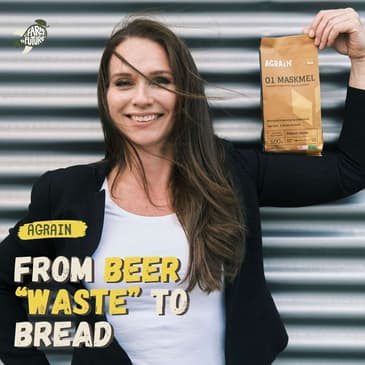
In this episode, we explore how Danish startup Agrain is revolutionizing food sustainability by upcycling spent grains from breweries into nutritious food ingredients. Aviaja Riemann-Andersen shares how these grains, far from being "waste," actually develop enhanced nutritional profiles and unique flavors through the brewing process. The conversation spans from the technical aspects of grain processing to broader themes of circular economy and sustainable food systems.
About Aviaja Riemann-Andersen
Aviaja is one of the pioneers of the Scandinavian food tech scene. In 2018 she co-founded Agrain by Circular Food Technology. Agrain’s mission is to change the food system to become circular, by developing delicious and nutritious ingredients made from upcycled spent grains. Agrain is working with unique and patented processes.
Circular economy and respect for our planet are the guiding principles for Aviaja, and through her work with Agrain and in several committees, she is promoting a more sustainable future. Aviaja is a Board member in the Danish Plantbased Food Association and a board member in The Danish Food and Drink Federation. From 2021-2022 she was a member of the Government’s Green Advisory Board. Agrain has since June 2022 been a proud member of the EIT Rising Food Star Programme.
Privately, she lives in Copenhagen with her two daughters, she is a hot yoga heavy user. She has a MSc in economic and Japanese from Copenhagen Business School and worked 15 years in cosmetics before she joined the food industry.
Connect with Agrain:
- Website: www.agrainproducts.com
- Instagram: @agrainproducts
- LinkedIn: Agrain by Circular Food Technology
Discounts
- Get 10% off delicious local farm-fresh food delivered to your door with my link for FarmMatch: https://farmmatch.com/jane
- Get 15% off high-quality Italian olive oil with code FARMTOFUTURE: https://shop.vignolifood.com/FARMTOFUTURE
- Get 40% the CircleDNA’s Premium DNA test with code JANEZHANG: https://circledna.com/premium
Connect with Jane Z.
- Instagram: @farm.to.future
- Email: jane@farmtofuture.co
- Website: farmtofuture.co
[00:00:00] You have to account for your byproducts. How are you going to utilize them better and move them up in the resource hierarchy?
[00:00:07] And I think this is going to be one of the most important foundations for the change in the food industry,
[00:00:12] because we cannot continue to just become more efficient by wasting more.
[00:00:16] When we're throwing out all these byproducts, we are putting them somewhere.
[00:00:21] Out and away doesn't exist. They're going somewhere.
[00:00:24] I'm Jane Z, and this is Farm to Future, the podcast all about eating better for the planet.
[00:00:32] Have you ever gone to a brewery and wondered what happens to all the grains after they brew the beer?
[00:00:38] Okay, well, maybe you haven't.
[00:00:40] But today's guest spends a lot of time thinking about that and how to upcycle these grains.
[00:00:46] Meet Aviaja Riemann-Andersen, or Abby.
[00:00:49] She discovered that if we could upcycle all of the spent grains from breweries worldwide,
[00:00:55] we could recover 10% of the global calorie deficit by 2027.
[00:01:00] That is a huge opportunity to turn what's otherwise treated as waste into valuable food.
[00:01:07] Abby spent 15 years working in the cosmetics industry with L'Oreal,
[00:01:11] and she made a bold career pivot to co-found Agrain,
[00:01:15] a company that's transforming these brewery byproducts into nutritious ingredients for breads,
[00:01:21] snacks, pasta, really any food product that has grains.
[00:01:25] Today, Abby pulls back the curtain on scaling a food startup and navigating new regulations
[00:01:30] and fundraising in a tough market, and we discuss trends we're seeing in the food tech space.
[00:01:35] If you're new here, welcome, welcome.
[00:01:38] Be sure to subscribe on Spotify, Apple Podcasts, or wherever you're listening.
[00:01:42] You can find me, Jane Z, on Instagram at farm.to.future.
[00:01:47] Let's dive in.
[00:01:49] Welcome to the podcast, Abby.
[00:01:51] Thank you.
[00:01:52] I'm so glad we made this happen.
[00:01:53] We met at the Thrive Summit in California, and I saw the description of Agrain.
[00:01:59] I was like, they're doing these upcycling grains.
[00:02:02] That sounds so relevant for the podcast.
[00:02:04] So I definitely want to dive into all things upcycling and what you're up to.
[00:02:08] So you're based in Copenhagen.
[00:02:10] Yes, Copenhagen, Denmark.
[00:02:11] I got a chance to visit over 10 years ago now.
[00:02:15] So I stayed with a friend, and she fed me a lot of rye bread, and I distinctly remember that.
[00:02:21] I actually like the taste.
[00:02:22] You know, we would put some almond butter on it, maybe have it with some fruit, and it was really good.
[00:02:26] But I got the sense that Danish people are into grains.
[00:02:30] Do you guys take grains seriously?
[00:02:33] I think we take grains quite seriously.
[00:02:36] But of course, we are also running on the very processed grain and bread trend here.
[00:02:42] But we have a tradition for the rye bread and for more heavy types of bread and sourdough and these more challenging types of bread, maybe, that are not just super soft and super wide.
[00:02:53] I like that you call it challenging.
[00:02:55] I like that you call it challenging.
[00:02:56] Sourdough has become all the rage in the last few years, though.
[00:02:59] So I feel like it's become more mainstream.
[00:03:01] I'm so curious to hear your origin story and how you started A-Grain.
[00:03:05] I was looking at your LinkedIn, and you spent many years working for L'Oreal in the skincare and cosmetics industry.
[00:03:11] How did you kind of transition into the food space?
[00:03:15] Well, it was a little bit of a coincidence, I would say.
[00:03:17] And for me personally, I have never been a big planner.
[00:03:20] I never had like a life plan that I had to do this and then this and then this.
[00:03:25] And so when I started L'Oreal, I came straight out of school where I had studied Japanese.
[00:03:31] So that was also a very big change for me to going from Japanese and economics to cosmetics.
[00:03:35] But I really enjoyed working in L'Oreal because it's a very, very strong place if you want to learn a lot.
[00:03:42] You learn a lot about business.
[00:03:44] You learn a lot about trade.
[00:03:45] You learn a lot about management.
[00:03:47] And then 15 years later, I was introduced to this project about spent grains
[00:03:53] and how to integrate these forgotten resources into our current sort of platform of food ingredients.
[00:04:02] And at first I was just helping a student make a very, very top line business plan
[00:04:07] and some slides for a startup competition.
[00:04:10] Then he won.
[00:04:12] Nice.
[00:04:13] Very nice.
[00:04:14] And I was thinking, okay, maybe there's something about this project and about the spent grains
[00:04:18] and the relevance of spent grains in the world's food economy.
[00:04:22] And then I took a leave of absence from my work.
[00:04:26] This student, did he just reach out to you randomly or someone you knew?
[00:04:29] No.
[00:04:31] His teacher for his thesis was one of my old classmates from university.
[00:04:36] Oh, okay.
[00:04:38] So she knew me and knew what I was doing and knew that I could probably help with what he needed.
[00:04:43] Then I took a leave of absence for three months to just recalibrate.
[00:04:48] I mean, if you have a very busy job, it's not the best place, mind message to make such a big decision.
[00:04:55] And then I kept talking to Emil about the project.
[00:04:57] And at the end of the three months, I decided, okay, I have to be part of this.
[00:05:01] And what really flipped the coin for me was that we made a calculation that showed that if we upcycle
[00:05:08] all the spent grain available worldwide, we could recover 10% of the calorie deficit
[00:05:13] that the WHO is forecasting for just 2027.
[00:05:17] So it's a massive resource that can really do an amazing impact on the food system as a whole.
[00:05:24] And I'm just that kind of person that if you know that you can be part of something as great as that,
[00:05:31] you cannot just sit on your hands and wait.
[00:05:33] Then you have to leap into it.
[00:05:35] I mean, what is the worst thing that can happen?
[00:05:38] Kudos to your friend, the professor who played math maker there.
[00:05:42] She knew there was something.
[00:05:43] Can you help us define spent grains?
[00:05:46] Like, what does that mean?
[00:05:47] Is it just grains coming from breweries?
[00:05:50] Like, what other sources are they coming from?
[00:05:51] And what kinds of grains are we talking about?
[00:05:55] Well, the term spent grain is an English term.
[00:05:58] In all other languages, this resource actually has a unique name.
[00:06:02] And it's a little bit of a challenge when we talk about a spent grain,
[00:06:07] because then people think that it's of less value than a grain because it's spent.
[00:06:11] And it has been already utilized in beer, for example, or in a malt drink, if it's a spent malt grain.
[00:06:19] But what is happening through the process is actually not only that you take something out of the grain,
[00:06:24] but you are also making what is left in the grain more valuable.
[00:06:28] So, for us, when we look at the grains from the brewing industry, which can be barley, it can be rice, it can be oats, rye, wheat, spelt, sorghum,
[00:06:39] every kind of grain that you use to maize, everything you use for beer goes into the category of spent grain.
[00:06:46] And when we look at it, the whole process from sprouting before the malt and roasting in the maltery,
[00:06:52] and soaking it in the brewery, all these steps adds a little bit of new characteristics to the grain.
[00:07:00] And what we do in a grain is that we are really trying to emphasize these new values that we see in the grain.
[00:07:07] So, we work very carefully not to destroy the aroma that is created through the process.
[00:07:12] We work very, very carefully not to change the colors that appear in the grains through the malting and the mashing in the brewery.
[00:07:20] So, if you treat these, what should I call them, these secondhand or spent resources with respect in the same way as you would treat virgin resources,
[00:07:31] then you have something that is of a very, very high value, both nutritional and culinary and economically as well.
[00:07:39] Could you call them enriched or fortified?
[00:07:42] What's sort of like the value add of that process?
[00:07:45] Is it mainly like a taste profile thing or is there kind of nutritional value that's added?
[00:07:51] It's actually both.
[00:07:51] If we take the barley as our sort of case study, if you make flour from barley, it's not the most pleasant taste.
[00:08:00] It's quite bitter and not very nice.
[00:08:02] But when it has been through the malting and the mashing, you will have a very unique sweetness to the grains.
[00:08:09] And you will even find some of them that has aromas of coffee and some that has aromas of vanilla or licorice.
[00:08:16] Some that have this kukomi or umami inside.
[00:08:20] And it comes because you are treating the grain in a lot of steps.
[00:08:25] You are, as I said, you are sprouting it, which also gives you an access to nutrition as you know it from sprouted wheat or from sprouted oat
[00:08:33] or whatever you buy that is sprouted in the supermarket, you know this has a higher nutritional value.
[00:08:39] It's exactly the same thing with the barley that goes through the first the malting and then the brewing process.
[00:08:44] So you have higher nutritional value because you have access to all these nutrients in the grain that you would normally not have if it's not sprouted.
[00:08:52] And you have a different culinary experience when you have these grains that have been through the process of first molting and then mashing.
[00:09:01] They're almost like artisanal grains.
[00:09:02] I could imagine you could brand them in a way that's like premium grains.
[00:09:07] Who are your customers and what's your business model?
[00:09:10] Our business model today is that we are producing ingredients for the food industry.
[00:09:14] But when we started before the COVID sort of destroyed the world, we were making retail products.
[00:09:22] So we had a full range of retail products that we had in supermarkets.
[00:09:25] But we decided a year and a half ago to pivot into becoming an ingredient provider instead.
[00:09:31] Simply because our DNA is to change the food system.
[00:09:35] And it's not easy, but it's probably a little bit less difficult to change the food system if we can work with some of the big incumbent food manufacturers that already have a presence in the market.
[00:09:48] Instead of we having to build our own brand and our own shelf space.
[00:09:52] I think I saw on your website you do still sell your own flowers and things like that?
[00:09:58] We do keep a few of our retail products on our webshop.
[00:10:03] Yeah.
[00:10:03] But that makes sense to go through existing food brands so that you're not building your own distribution channels and all of that.
[00:10:09] Yeah.
[00:10:10] Yeah.
[00:10:10] And it's also just a very, very competitive environment.
[00:10:14] So instead of spending our energy on developing the circular economy within food, we would spend our energy and our resources on marketing and pushing products,
[00:10:24] which is something that a small company will always have some limitations to compared to the Montelis and the General Mills and all these big companies.
[00:10:34] They have much more marketing power behind.
[00:10:37] So let's work together instead of trying to compete with them.
[00:10:40] Yeah, totally.
[00:10:41] I just heard a great podcast interview with Justin Mares.
[00:10:45] He's the CEO of three food brands, including Kettle and Fire, which is a bone broth.
[00:10:49] And he now runs a startup called TrueMed where you can purchase certain like health and wellness things tax free.
[00:10:56] But anyway, so he says he started three food brands himself.
[00:10:59] He's made dozens of investments, but only three of his investments are in food companies.
[00:11:04] And the reason for that is similar to what you said.
[00:11:07] The food industry is a very, very hard business to break into as a startup.
[00:11:12] Like you need a ton of capital just to get started.
[00:11:15] And then you're competing against these incumbents that have so much marketing dollars.
[00:11:20] And you're competing for shelf space and brand awareness and all of that.
[00:11:23] But he said the one sort of exception where he does see startups winning is if you can win a space or go somewhere that incumbents just simply cannot go.
[00:11:34] So in his case, it was, you know, Kettle and Fire bone broth.
[00:11:38] They use all regeneratively grown like grass fed, grass finished beef bones.
[00:11:42] And their main competitor is like Campbell's soup, which hasn't innovated in decades.
[00:11:47] Right. And Campbell's is not going to redo their entire supply chain to go compete with this like small niche corner of the market.
[00:11:55] And so that's where he sees a path.
[00:11:58] And when he looks at food companies, that's where it's like, OK, you have a specific niche, specific audience that wants this thing that the big food companies are not going to go after.
[00:12:08] No, I completely agree.
[00:12:09] I completely agree.
[00:12:10] I think the extra layer that we put on ourselves in the grain is that we really want to change the food system because we see that a lot of food is being wasted.
[00:12:19] And we see that our soil is being destroyed from food production.
[00:12:24] We see that the food industry is pouring out CO2 to the atmosphere.
[00:12:29] So we have a system that is fundamentally broken.
[00:12:31] And we believe that by reintroducing these spent raw materials into the food chain, we can actually take the foot off the gas pedal a little bit and repair the system without having to wait 10 or 15 years for some moonshot technology or some of these very, very ambitious and very, very important projects that we have in the industry.
[00:12:59] But repurchasing ingredients that are already grown, already sort of catered to in terms of making them the best that they can be.
[00:13:07] That is really a fast forward on the whole sustainability agenda for the food industry, I believe, at least.
[00:13:15] Yeah.
[00:13:16] I mean, it makes so much sense from a theoretical kind of systems perspective where you have inputs and outputs into every system at this brewery.
[00:13:23] You're going to put these grains into the system when they come out.
[00:13:27] Well, actually, we should talk about what they are being used for today.
[00:13:31] But, you know, this proposal of like, hey, they're these maybe let's say they're like lesser valued grains or they're like byproducts or waste products.
[00:13:39] And you're saying, actually, those can be valuable food products to go back into the supply chain.
[00:13:44] So from a sustainability kind of circular economy perspective, that makes total sense to me.
[00:13:49] How are breweries responding when you go to them?
[00:13:52] Like what's kind of the value props that they're like, oh, OK, this this is good for me, too?
[00:13:56] I think that different reactions.
[00:13:58] Some years back when we started, we were predominantly discussing with the brewmaster or the head of the brewery in terms of the production part of the brewery.
[00:14:08] They intuitively understand the value of the grain because they pick the best mold for that beer.
[00:14:15] And they know that they only use around 15 percent of the grain.
[00:14:18] They use the sugar and the starch and they can see the grain when it leaves the brewery.
[00:14:23] They can smell it.
[00:14:24] They can taste it.
[00:14:25] They have almost all of them taking spent grain back home and use it for bread.
[00:14:31] So they know the quality of the spent grain, but it's not their business.
[00:14:36] Their business is to brew beer.
[00:14:38] So most of them have satisfied themselves with selling or giving away the spent grain for farmers.
[00:14:45] Most of them sell the grains at a quite low price for farmers.
[00:14:49] And then we have seen an increase in biomass.
[00:14:52] Sorry, the farmers, this is for to feed the animals?
[00:14:54] It's for feed and maybe also a little bit for the field.
[00:14:58] And now we see an increase in energy companies or biomass companies looking for side streams or byproducts from the food industry that they can use to create energy, which is, of course, understandable.
[00:15:09] Looking just a few years back when we saw how energy prices would go up and with the sort of the political and also public demand to go more green in terms of energy.
[00:15:21] But there are other resources that we can use for green energy.
[00:15:25] And there are other resources that we can use for feed to the animals.
[00:15:29] So let's keep food food and use what is good for animals for animals and what is good for energy for energy.
[00:15:37] And maybe when the whole design of the plate that we consume changes to be more plant based, we will not have so many animals to feed with things that they would not normally eat.
[00:15:48] So let the cow have grass and people have greens.
[00:15:52] Are you running into this today as a challenge and like competing with farmers and energy companies for these products?
[00:15:59] I don't feel that we have that challenge.
[00:16:01] I think that people from outside of the ecosystem often worry about what about the cows and the pigs and the turkeys?
[00:16:09] What are they going to eat?
[00:16:10] What about energy?
[00:16:11] But within the ecosystem, I don't feel we have this challenge because there are so much spent grain available.
[00:16:17] I think there is a general understanding that we need to keep food resources within the food system.
[00:16:24] And over the last couple of years, three, four years, the dialogue with the breweries have moved from the brewmaster to the board.
[00:16:33] So we see that there's a much bigger concern and interest from a business perspective on what the brewery is doing with their side streams, with the byproducts.
[00:16:44] And we also see that legislation is beginning to support a more sustainable utilization of side streams or byproducts.
[00:16:54] So what does that regulation look like?
[00:16:57] Well, in Europe, we have a new legislation called the CSRD, which is a legislation on sustainability, I would say, without going into details.
[00:17:05] And part of this is about byproducts or side streams, how to manage that in your sustainability accounting.
[00:17:13] So now this is for very large companies, but it's affecting medium-sized and small companies a lot because they have to follow what their partners are doing.
[00:17:23] So you have to account for your byproducts in a different way, in a more detailed way.
[00:17:28] You have to strategize on your byproducts.
[00:17:32] How are you going to utilize them better and move them up in the resource hierarchy?
[00:17:37] And I think this is going to be one of the strongest and most important foundations for the change in the food industry,
[00:17:44] because we cannot continue to just become more efficient by wasting more.
[00:17:49] Because when we're throwing out all these byproducts, we are putting them somewhere.
[00:17:55] Out and away doesn't exist. It is somewhere. They're going somewhere.
[00:17:59] I just quickly Googled it, CSRD, just for listeners.
[00:18:02] It stands for the Corporate Sustainability Reporting Directive.
[00:18:05] And this applies to both EU and non-EU companies with significant EU business.
[00:18:09] I feel like Europe is always ahead of the game with these things when it comes to sustainability.
[00:18:13] No, but I think also in California, you have some very, very strict regulation on byproducts.
[00:18:18] Yes. Yeah.
[00:18:19] Is it like a similar reporting regulation or?
[00:18:23] It's the SB 1383, Education and Outreach Resources.
[00:18:28] It's a regulation that requires that you take care of your byproducts or side streams.
[00:18:32] So I think a lot of things is happening everywhere because it's like a very clear issue that we have,
[00:18:37] that the food industry is a huge polluter and that we are running out of resources
[00:18:42] if we don't change the way we manage our resources.
[00:18:45] So when the boards of the breweries come into the conversation,
[00:18:49] are they interested more so from the compliance side of making sure this is checked off?
[00:18:56] Are they also interested in this as a revenue stream for the business?
[00:19:00] Both.
[00:19:01] Okay.
[00:19:02] Where does the conversation start?
[00:19:04] The conversation normally would start on a sustainability point
[00:19:08] and it will very quickly go into a financial discussion
[00:19:13] and then it will most often end in a partnership model
[00:19:17] where the whole circularity becomes part of the corporate narrative
[00:19:23] because the consumers are also looking for responsible companies and responsible products.
[00:19:27] And I think it's something, and even, I mean, to recruit employees,
[00:19:32] you need to show that you are a responsible company.
[00:19:35] Young generation, they don't want to work for you if you're not a responsible company.
[00:19:39] So I think it's a full circle change that is happening.
[00:19:43] And I think upcycling can really, really drive this change.
[00:19:46] So I imagine like one of the challenges for Agrane as a smaller company
[00:19:50] or like an upstart company is building a network of logistics, essentially.
[00:19:55] Like I imagine most of what y'all do is logistics, right?
[00:19:58] Is like matching the right outputs.
[00:20:00] Like, oh, this brewery has, you know, this amount of malt.
[00:20:04] You know, this producer needs this amount.
[00:20:06] Is that kind of the bulk of your work, would you say?
[00:20:09] It's a big part of our work, especially with the model that we have
[00:20:12] where we're working with several breweries.
[00:20:16] We see a really strong advantage in working with several breweries
[00:20:21] and a broad portfolio of, for example, spent grain
[00:20:24] or a broad portfolio of a pulp from fruit or whatever your raw material is.
[00:20:30] Because we struggle with the same sort of natural fluctuations
[00:20:35] that all other food companies are struggling with.
[00:20:39] We have seasonality also affecting the quality of the spent grain.
[00:20:43] We have terroir affecting the quality of spent grain.
[00:20:47] And the brewery, after they have done the mashing,
[00:20:50] they have several steps before they finish the beer
[00:20:53] so they can adjust for these things.
[00:20:55] But as our product is 100% spent grain,
[00:20:58] we don't have any other things that we can do.
[00:21:01] In our model, we blend the spent grains.
[00:21:05] Every product we bring to market
[00:21:06] and every product we deliver to a customer
[00:21:08] is always blended carefully to match the recipe
[00:21:13] that we have sold to the customer.
[00:21:15] So you will always have the same quality,
[00:21:18] you will always have the same nutritional profile,
[00:21:20] aroma profile, polar profile,
[00:21:22] all these things that are important for a food manufacturer.
[00:21:26] You will always have that because we can blend.
[00:21:27] So we have 200 or even more maybe different spent grains
[00:21:32] that we can source from
[00:21:34] and make sure that our customers will always have the same product.
[00:21:39] And that's 200 different varieties
[00:21:41] in terms of like aroma profile and the variety?
[00:21:45] Yeah, correct.
[00:21:46] What do your facilities look like?
[00:21:48] Have you ever seen any of these American Food Factory TV shows?
[00:21:52] Yeah.
[00:21:53] Where you see how they start with making soup in a small kitchen
[00:21:56] and then it builds and builds and builds
[00:21:57] and they have conveyor belts and they have silos
[00:22:00] and they have all these things.
[00:22:01] It's the same for us.
[00:22:02] It starts out very small and then year on year
[00:22:05] we extend and we build something next to
[00:22:09] and on top of and beneath.
[00:22:11] So it's, yeah, I think it's very typical.
[00:22:14] We're looking now to scale a lot,
[00:22:17] to scale our capacity with more than 30%
[00:22:20] and that will mean that we will have to also find a new facility.
[00:22:23] So maybe we can have a little more space
[00:22:26] around the individual machines in the next coming years.
[00:22:30] Can you talk about your customers?
[00:22:31] Who are they and what kind of products do the egg grain grains go into?
[00:22:36] Well, our products can go into basically every food product in the world
[00:22:42] because it has the texture of flour
[00:22:43] and it's a composition of protein and fiber predominantly.
[00:22:47] And then we have a lot of other nutritional elements in our products.
[00:22:53] But mostly our customers are in bread and baked goods,
[00:22:58] in snacks like snack bars and cookies and things like this.
[00:23:02] And then of course pasta.
[00:23:04] So everywhere where you have grain as part of the recipe
[00:23:09] you can find a spot for a grain ingredient
[00:23:12] because we can replace some of the wheat flour,
[00:23:15] we can replace some of the malt,
[00:23:17] we can replace some of the fiber, some of the proteins,
[00:23:20] we can replace a little bit of the sugar, all these things.
[00:23:23] So you can use our ingredient to clean up
[00:23:25] your ingredients list a little bit
[00:23:27] and maybe remove some of the things that you have to add
[00:23:31] because you have something that has a bad flavor.
[00:23:35] Yeah.
[00:23:36] Interesting.
[00:23:37] Have any of your customers created new products with egg grain products?
[00:23:41] New products, yes, but within the categories of food we know.
[00:23:46] I guess I'm curious, like,
[00:23:47] are they allowed to label their products as contains,
[00:23:50] upcycled, food materials?
[00:23:57] Are you ready to unlock your full potential?
[00:24:00] I want to introduce you to the Fit, Healthy and Happy podcast,
[00:24:04] a powerful resource to transform your life today.
[00:24:07] With expert interviews, practical tips and inspiring stories,
[00:24:11] this podcast is your roadmap to lasting wellness.
[00:24:14] Here's what a listener has to say.
[00:24:16] I used to struggle with my health,
[00:24:18] but this podcast changed everything.
[00:24:20] It's like having a personal trainer,
[00:24:22] nutritionist and life coach totally for free.
[00:24:25] With over 2,000 five-star reviews,
[00:24:28] we're a podcast you can trust.
[00:24:30] The Fit, Healthy and Happy podcast,
[00:24:32] available now wherever you get your podcasts.
[00:24:38] It's something that we are struggling a little bit with in the industry,
[00:24:42] I would say,
[00:24:43] because we don't have sort of legal regulation on how to label
[00:24:48] or build claims around upcycling yet.
[00:24:52] In the U.S., six years ago or so,
[00:24:55] the Upcycle Food Association was created,
[00:24:57] and they created a certification program for upcycling
[00:25:01] that they have sold now to where food comes from.
[00:25:04] And they have opened it up to the rest of the world,
[00:25:07] I think, to get this certification.
[00:25:09] In my opinion,
[00:25:10] this is the best alternative we have globally
[00:25:13] for sort of framing upcycling.
[00:25:16] And it's extremely important that the food manufacturers
[00:25:21] using upcycled ingredients can market this on their products
[00:25:24] because the consumers are very interested in it.
[00:25:26] I saw a survey from one of the big survey companies
[00:25:29] maybe a year ago or so where they said that
[00:25:32] almost 50% of millennials actually believe
[00:25:35] that upcycled ingredients have a higher quality
[00:25:39] than virgin materials.
[00:25:41] So you want to tap into this sentiment in the consumer base
[00:25:45] if you are a food producer or food manufacturer.
[00:25:48] But right now,
[00:25:48] you don't have any regulation to lean up against.
[00:25:51] So everyone can basically claim upcycled ingredients
[00:25:55] and there are no rules.
[00:25:56] So we need, I think,
[00:25:58] a legislative framework
[00:26:00] that ideally would follow
[00:26:02] what the upcycled certificate has established
[00:26:05] as sort of rules of the game.
[00:26:07] There's now regulation on the upstream
[00:26:11] of where y'all are sourcing from
[00:26:13] with the breweries needing to do the reporting
[00:26:15] and figure out their sidestreams.
[00:26:17] But then on the downstream end
[00:26:19] with the food producers you're selling to,
[00:26:21] there's missing regulation around
[00:26:24] how you label upcycled ingredients.
[00:26:28] Exactly.
[00:26:29] How do you position yourselves
[00:26:30] against conventional grain producers
[00:26:32] and how do you compete against them?
[00:26:34] Because I'm sure they win by volume
[00:26:36] and by having existing relationships
[00:26:38] with the food world.
[00:26:39] How do you break into that?
[00:26:41] I think we complement each other.
[00:26:43] We are not a 100% replacement
[00:26:45] of wheat flour, for example,
[00:26:47] because wheat flour have certain functionalities
[00:26:49] and technical benefits in the product.
[00:26:52] And our ingredient has a different set
[00:26:55] of functional and technical benefits
[00:26:57] in the product.
[00:26:58] You would never bake a bread 100%
[00:27:01] with upcycled spent grain
[00:27:03] because the fiber level is so high
[00:27:05] that you will be baking bricks, basically.
[00:27:09] So we need to use these new upcycled ingredients
[00:27:13] together with the existing ingredients.
[00:27:16] And by matching them right,
[00:27:18] you will have better results
[00:27:20] in your applications.
[00:27:21] So I think we cannot replace the industry
[00:27:24] as it is, but we can complement
[00:27:26] and we can improve
[00:27:27] and we can work together
[00:27:29] to make better products for the consumers.
[00:27:31] And I think the industry
[00:27:32] is quite keen on this,
[00:27:34] but they need to see more companies
[00:27:36] working with upcycling.
[00:27:37] They need to see good pricing,
[00:27:39] which is a challenge, of course,
[00:27:41] when you are building a business
[00:27:43] and you have small volumes,
[00:27:45] your cost of good will be very, very high.
[00:27:47] And that's also why it's important to scale,
[00:27:49] to have a certain volume
[00:27:51] in order to meet the price point
[00:27:53] that is relevant in the market
[00:27:55] and that is financially sustainable
[00:27:57] for your own business.
[00:27:59] You all work internationally, right?
[00:28:00] Like where are the breweries you work with
[00:28:02] and where are your customers located?
[00:28:04] Right now we work with Danish breweries
[00:28:06] because the spent grain
[00:28:07] has this quite short shelf life
[00:28:09] when it's not treated.
[00:28:11] And we are not treating the spent grain
[00:28:12] in any way.
[00:28:13] We're drying it.
[00:28:14] We're not adding anything to it.
[00:28:16] It's a super clean label product that we do.
[00:28:18] So we work with breweries
[00:28:19] that are within a certain geography.
[00:28:22] Denmark is a very small country,
[00:28:23] so we can source from all over the country
[00:28:25] without any challenges.
[00:28:27] And our customers are all over Europe.
[00:28:29] We also have customers in the US.
[00:28:31] We have projects going on in South America.
[00:28:33] We have one project in New Zealand.
[00:28:36] But we have a lot of things going on
[00:28:38] because we have a really,
[00:28:39] really nice product portfolio
[00:28:41] that appeals to all types of diets basically
[00:28:45] because we all have grain
[00:28:46] as part of what we eat.
[00:28:49] Whether it's in America or Europe
[00:28:51] or Asia or Africa or everywhere,
[00:28:54] we have grain as part of our diet.
[00:28:56] And because we have this very gentle
[00:28:59] and unique way of processing the grains
[00:29:02] and the blending that we can do
[00:29:04] makes it very attractive
[00:29:06] for the food industry
[00:29:08] because we can target exactly what they need.
[00:29:10] And I imagine once you've sold
[00:29:11] to a customer once for a product,
[00:29:13] they're going to want to keep pushing out
[00:29:14] the same recipe, right?
[00:29:17] And so do you find that's the case
[00:29:18] where once you land a customer,
[00:29:20] they're a repeat customer
[00:29:21] and they keep coming back?
[00:29:23] Yes, to some extent.
[00:29:24] Of course, there are also customers
[00:29:25] that change their strategy
[00:29:26] and where the volume is too small or whatever.
[00:29:29] But we see that for our ingredient business,
[00:29:31] three out of four customers
[00:29:33] in the last year and a half,
[00:29:34] which is where we have been focusing
[00:29:36] on ingredients,
[00:29:37] are continuously buying.
[00:29:39] So I think that's quite strong
[00:29:40] and there will always be somewhere
[00:29:42] where the product doesn't really work.
[00:29:44] But we also spend quite a lot of energy
[00:29:46] and time with our customers
[00:29:48] to develop the right application
[00:29:50] and to understand how our ingredients
[00:29:53] can enhance their application.
[00:29:56] So it's not just a product sale
[00:29:58] what we do with our customers.
[00:29:59] It's very much a project
[00:30:00] that we enter into.
[00:30:01] Last time we chatted,
[00:30:03] you mentioned you have a customer
[00:30:04] in Saudi Arabia that's looking to...
[00:30:07] Well, so they have customers
[00:30:09] who are Muslim
[00:30:09] who are not able to consume alcohol.
[00:30:12] Is there anything you can do
[00:30:14] with the product
[00:30:15] to remove alcohol content?
[00:30:17] Our product is never in touch
[00:30:19] with alcohol.
[00:30:20] The spent grain is removed
[00:30:21] from the brewery
[00:30:22] before you brew the beer,
[00:30:24] before the fermentation,
[00:30:25] before the yeast and all this.
[00:30:27] But it's a common challenge
[00:30:29] that being a Muslim,
[00:30:30] you cannot drink alcohol
[00:30:32] and you cannot consume alcohol,
[00:30:33] of course.
[00:30:34] Since this is a byproduct
[00:30:35] from the alcohol industry,
[00:30:37] it's a challenge.
[00:30:38] So for us,
[00:30:39] the way we deal with it is,
[00:30:40] first of all,
[00:30:41] that we have
[00:30:41] kosher certificate.
[00:30:44] We can also provide
[00:30:45] a halal certificate
[00:30:46] if the customer needs it.
[00:30:48] It's just very expensive,
[00:30:49] so we only do it
[00:30:50] when we have a request for it
[00:30:51] and normally
[00:30:52] the kosher would cover.
[00:30:53] And then we also invite
[00:30:54] our customers
[00:30:55] to audit our facility
[00:30:57] so they can see
[00:30:58] what is going on
[00:30:59] and we explain the process.
[00:31:01] But we are not allowed
[00:31:03] to put on our products
[00:31:04] no alcohol
[00:31:05] because normally
[00:31:07] a flour product
[00:31:08] would not have alcohol in it.
[00:31:10] So that's one of these
[00:31:11] weird things
[00:31:12] with regulation
[00:31:13] that is done
[00:31:15] in a way
[00:31:16] because it makes sense
[00:31:17] but then when we invent
[00:31:18] and when we expand
[00:31:20] the way we produce food
[00:31:22] then there can be
[00:31:23] some challenges
[00:31:24] but it's perfectly safe
[00:31:26] for Muslims
[00:31:27] to have spent grain.
[00:31:28] Okay, good to know.
[00:31:29] Both from breweries
[00:31:30] and from distilleries.
[00:31:31] No, that's interesting.
[00:31:32] Y'all are charting
[00:31:33] new territory here
[00:31:34] and like merging
[00:31:35] categories together
[00:31:37] so I can see that
[00:31:38] being challenging
[00:31:39] for the regulation side.
[00:31:40] And you all are
[00:31:41] fundraising right now
[00:31:42] and looking to expand.
[00:31:44] What are your plans
[00:31:44] for the future?
[00:31:45] Well, we're going to
[00:31:46] build a new factory
[00:31:48] and hopefully
[00:31:49] we will start
[00:31:50] in the end of 2025.
[00:31:52] So right now
[00:31:53] we're fundraising
[00:31:54] to this new factory
[00:31:55] which is very exciting
[00:31:56] and it's an interesting time
[00:31:58] to be fundraising
[00:31:59] because everyone
[00:31:59] is saying that
[00:32:00] it's an awful time
[00:32:01] to fundraise
[00:32:02] and that it's
[00:32:03] the window
[00:32:04] of venture capital
[00:32:05] and there are
[00:32:06] no money there
[00:32:06] and you have to have
[00:32:08] super high revenues
[00:32:09] to fundraise
[00:32:10] and I think
[00:32:12] it's true
[00:32:12] but it's also
[00:32:13] not true
[00:32:14] because we also see
[00:32:16] that a lot of funds
[00:32:17] and family offices
[00:32:18] and even private equity
[00:32:20] they have started
[00:32:22] to really
[00:32:24] institutionalize
[00:32:24] sustainability
[00:32:26] as part of their
[00:32:27] why they are
[00:32:28] and these are
[00:32:29] the kind of funds
[00:32:30] and the kind of
[00:32:31] resources
[00:32:32] that we are looking to
[00:32:33] and they do understand
[00:32:34] that there is
[00:32:35] a future
[00:32:36] with a new food system.
[00:32:38] I've seen a lot
[00:32:39] of food startups
[00:32:39] also do crowdfunding
[00:32:41] like equity crowdfunding
[00:32:42] for this type of thing.
[00:32:43] Is that something
[00:32:43] you've looked into?
[00:32:44] Equity crowdfunding
[00:32:46] has only just
[00:32:47] been legalized
[00:32:48] in Denmark
[00:32:49] actually
[00:32:49] so the Danish
[00:32:50] companies
[00:32:51] from whatever
[00:32:52] vertical
[00:32:53] that have been
[00:32:54] doing equity
[00:32:55] fundraising
[00:32:55] have been doing
[00:32:56] it out of
[00:32:57] mostly out of
[00:32:57] the UK
[00:32:58] or Baltic countries.
[00:33:00] We did reward
[00:33:00] crowdfunding twice
[00:33:02] when we started
[00:33:03] the company
[00:33:03] which was a really
[00:33:04] good way for us
[00:33:05] to start
[00:33:05] because it gave us
[00:33:06] a lot of feedback
[00:33:07] from consumers
[00:33:08] and it went
[00:33:10] really well.
[00:33:10] We are not
[00:33:11] going to equity
[00:33:12] crowdfund
[00:33:13] because we already
[00:33:14] have a little bit
[00:33:14] of a busy cap table
[00:33:15] because we went
[00:33:17] through fundraising
[00:33:17] during COVID
[00:33:18] which wasn't easy
[00:33:20] I can tell.
[00:33:21] So bringing in
[00:33:23] equity
[00:33:24] through crowdfunding
[00:33:26] can be quite
[00:33:27] difficult
[00:33:27] on a cap table
[00:33:28] so it's not
[00:33:29] something that
[00:33:30] we are looking
[00:33:30] into doing.
[00:33:31] And I also think
[00:33:32] Denmark is maybe
[00:33:33] too small a country
[00:33:34] to do it.
[00:33:35] We are only
[00:33:35] 6 million people
[00:33:36] and if we are
[00:33:37] going to raise
[00:33:38] 10 million euros
[00:33:38] which is what
[00:33:39] we're looking at
[00:33:42] they would all
[00:33:43] have to participate.
[00:33:44] So you wouldn't
[00:33:44] be able to do
[00:33:45] it internationally?
[00:33:46] You can do it
[00:33:47] internationally
[00:33:47] but I think
[00:33:48] food is a very
[00:33:49] local thing
[00:33:49] and it's also
[00:33:50] what we're seeing
[00:33:51] we're seeing
[00:33:52] a need for
[00:33:54] production of
[00:33:55] these ingredients
[00:33:56] to be quite local
[00:33:57] so the factory
[00:33:58] that we are building
[00:33:59] now will be
[00:33:59] the first of
[00:34:00] plenty factories
[00:34:01] or several factories
[00:34:02] the next one
[00:34:03] will most likely
[00:34:04] be in Spain
[00:34:05] together with
[00:34:06] a big customer
[00:34:06] there
[00:34:07] then there will
[00:34:07] be one maybe
[00:34:08] in the Netherlands
[00:34:09] and Benelux
[00:34:10] and maybe
[00:34:10] Aude de France
[00:34:11] and these areas
[00:34:12] so I think
[00:34:13] food is very
[00:34:15] very local
[00:34:16] and I think
[00:34:17] an international
[00:34:18] crowdfunding
[00:34:19] would be
[00:34:20] challenging.
[00:34:21] How long have you
[00:34:22] been in the
[00:34:22] food space now?
[00:34:23] Since 18
[00:34:24] since 2018
[00:34:25] 6 years
[00:34:26] what are the
[00:34:27] biggest kind of
[00:34:28] differences you
[00:34:29] notice in the
[00:34:29] food industry
[00:34:30] versus the
[00:34:31] cosmetics industry?
[00:34:32] I think one of
[00:34:33] the things that
[00:34:34] surprised me
[00:34:35] in the beginning
[00:34:36] was that I
[00:34:37] felt that
[00:34:38] cosmetics was
[00:34:39] much more
[00:34:39] regulated
[00:34:40] than food
[00:34:41] now we are
[00:34:42] organic
[00:34:43] so we are
[00:34:44] very regulated
[00:34:45] but in general
[00:34:46] I think
[00:34:46] cosmetics is so
[00:34:47] close to
[00:34:48] pharma and
[00:34:49] medicine
[00:34:49] so there are
[00:34:50] a lot of
[00:34:51] rules there
[00:34:51] and I think
[00:34:53] it's a little bit
[00:34:54] more trial and
[00:34:54] error actually
[00:34:55] in food
[00:34:55] oh
[00:34:56] that's a little
[00:34:57] concerning
[00:34:58] yeah but
[00:34:59] you know
[00:35:00] it's within
[00:35:00] boundaries
[00:35:01] so you cannot
[00:35:03] just launch
[00:35:04] a totally new
[00:35:05] product and you
[00:35:06] have to go through
[00:35:06] the novel food
[00:35:07] and all these
[00:35:08] regulations or the
[00:35:09] grass in the
[00:35:10] US but
[00:35:11] if you are
[00:35:12] within sort of
[00:35:13] what we know
[00:35:14] then it's a
[00:35:16] little bit
[00:35:16] more
[00:35:17] at least in
[00:35:18] Denmark I feel
[00:35:18] it's very much
[00:35:19] built on trust
[00:35:20] basically
[00:35:21] I see a lot of
[00:35:22] similarities between
[00:35:23] the two industries
[00:35:24] I see that it's
[00:35:25] people that are
[00:35:26] very highly
[00:35:27] professional
[00:35:28] in the cosmetics
[00:35:29] industry you have
[00:35:30] really high level
[00:35:31] of skill
[00:35:32] because you have
[00:35:33] hairdressers and
[00:35:34] you have
[00:35:34] estheticians
[00:35:35] and that type of
[00:35:36] professionalism I
[00:35:38] recognize in the
[00:35:39] food industry where
[00:35:40] we have chefs and
[00:35:41] we have bakers and
[00:35:42] we have food
[00:35:44] scientists that are
[00:35:45] all working to
[00:35:46] deliver the best
[00:35:47] result all the
[00:35:48] time they're very
[00:35:49] proud people and
[00:35:50] they're very
[00:35:50] passionate people and
[00:35:51] that's something that
[00:35:53] I really truly enjoy
[00:35:54] working with people
[00:35:56] that are so engaged
[00:35:57] in what they are
[00:35:58] doing
[00:35:58] it sounds like
[00:35:59] people are very
[00:36:00] focused on craft
[00:36:01] they're very proud
[00:36:02] of the outcome
[00:36:03] of what they're
[00:36:04] putting together
[00:36:04] what was your
[00:36:05] role at L'Oreal?
[00:36:06] well I was there
[00:36:07] for many years
[00:36:08] so I did a lot of
[00:36:09] different things
[00:36:09] I was working in
[00:36:10] the Nordic
[00:36:11] organization
[00:36:11] so all the
[00:36:13] Nordic countries
[00:36:13] and to begin with
[00:36:14] in sales and
[00:36:15] marketing and then
[00:36:16] more and more
[00:36:16] general management
[00:36:17] and in the last
[00:36:18] four years I was
[00:36:19] responsible for
[00:36:20] sort of a new
[00:36:22] business unit
[00:36:23] that we had
[00:36:24] acquired
[00:36:24] trying to make
[00:36:25] that part of
[00:36:26] the L'Oreal
[00:36:27] family
[00:36:27] in the Nordics
[00:36:29] and in some of
[00:36:30] the popular
[00:36:30] holiday destinations
[00:36:32] for Nordic people
[00:36:33] in Spain and
[00:36:33] Greece
[00:36:34] so it was very
[00:36:35] interesting
[00:36:36] I had an amazing
[00:36:37] job
[00:36:37] I was traveling
[00:36:38] around visiting
[00:36:39] hotel spas
[00:36:40] and having
[00:36:41] wow
[00:36:41] oh my gosh
[00:36:43] talk about a
[00:36:43] dream job
[00:36:44] it was a very
[00:36:45] nice job
[00:36:45] oh that's amazing
[00:36:46] I really enjoyed
[00:36:47] working in L'Oreal
[00:36:48] it was a nice
[00:36:48] place to work
[00:36:49] but also a big
[00:36:51] company and
[00:36:51] with all the
[00:36:52] challenges that
[00:36:54] that can bring
[00:36:54] so it's been a
[00:36:55] big change
[00:36:56] coming to
[00:36:57] being at first
[00:36:58] just three people
[00:36:59] and now we
[00:37:00] are 18
[00:37:01] but it's still
[00:37:02] quite small
[00:37:03] and there's a lot
[00:37:04] of things that we
[00:37:05] have to build
[00:37:05] from scratch
[00:37:06] it sounds like
[00:37:07] maybe in your
[00:37:08] last in
[00:37:08] D'Oreal you had
[00:37:09] a bit of that
[00:37:10] startup experience
[00:37:11] in bringing in
[00:37:12] a new business
[00:37:12] unit
[00:37:13] do you see
[00:37:14] any of your
[00:37:15] products that
[00:37:16] A-Green products
[00:37:17] go into
[00:37:17] on the shelves
[00:37:18] or do you
[00:37:19] buy any of them
[00:37:20] yourself
[00:37:20] we do see
[00:37:21] them in
[00:37:22] Denmark
[00:37:22] already yes
[00:37:23] and I hope
[00:37:24] we will start
[00:37:24] seeing them
[00:37:25] in Europe
[00:37:26] in the beginning
[00:37:26] of 25
[00:37:27] we have a very
[00:37:28] very exciting
[00:37:29] project that we
[00:37:30] will launch
[00:37:30] with a big
[00:37:31] international
[00:37:31] company
[00:37:32] so yeah
[00:37:33] it's beginning
[00:37:34] to take shape
[00:37:35] cool
[00:37:36] if we visit
[00:37:37] Denmark
[00:37:37] like what
[00:37:38] brands should
[00:37:38] we look for
[00:37:39] you can look
[00:37:40] for example
[00:37:41] for a brand
[00:37:42] called
[00:37:42] Bisca
[00:37:43] where they're
[00:37:43] making some
[00:37:44] biscuits
[00:37:44] with the
[00:37:45] spent grains
[00:37:46] with a special
[00:37:47] recipe that we
[00:37:47] developed to them
[00:37:48] oh very fun
[00:37:49] okay we'll look
[00:37:50] out for that
[00:37:51] I think that's
[00:37:52] all the questions
[00:37:52] I had for you
[00:37:53] but is there
[00:37:53] anything else
[00:37:54] you wanted to
[00:37:54] share
[00:37:55] only that I
[00:37:56] think we have
[00:37:56] a very very
[00:37:58] big opportunity
[00:37:58] in front of us
[00:38:00] working with
[00:38:01] upcycling across
[00:38:02] the full food
[00:38:03] industry
[00:38:04] we see that
[00:38:05] the technologies
[00:38:07] are available
[00:38:07] we see the
[00:38:08] resources are
[00:38:09] available
[00:38:10] we see that
[00:38:10] the consumer
[00:38:11] is becoming
[00:38:11] more and more
[00:38:12] interested
[00:38:13] and enthusiastic
[00:38:15] about upcycling
[00:38:16] and sustainability
[00:38:17] and we actually
[00:38:18] also see that
[00:38:19] the food
[00:38:19] manufacturers
[00:38:20] are returning
[00:38:21] to a more
[00:38:22] normal level
[00:38:23] of innovation
[00:38:24] after the
[00:38:25] couple of
[00:38:25] years now
[00:38:26] where it's
[00:38:26] been a little
[00:38:27] bit tough
[00:38:27] the link
[00:38:28] in the chain
[00:38:29] that I would
[00:38:29] like to be
[00:38:30] more on their
[00:38:32] toes is actually
[00:38:33] the retail
[00:38:33] part I think
[00:38:34] that the
[00:38:35] retailers they
[00:38:36] have a very
[00:38:36] very big
[00:38:37] task ahead
[00:38:38] of them
[00:38:38] in being part
[00:38:39] of changing
[00:38:40] the food
[00:38:40] system
[00:38:41] the rest
[00:38:41] of the
[00:38:42] players are
[00:38:43] you know
[00:38:43] getting into
[00:38:45] formation
[00:38:46] so we are
[00:38:47] ready to
[00:38:48] change
[00:38:48] and if we
[00:38:49] change through
[00:38:50] upcycled
[00:38:51] ingredients
[00:38:52] we can do
[00:38:52] the change
[00:38:53] very very
[00:38:53] fast
[00:38:54] because if
[00:38:54] coming back
[00:38:55] to my
[00:38:55] initial
[00:38:56] sort of
[00:38:56] reason
[00:38:57] for joining
[00:38:58] this company
[00:38:58] is that
[00:38:59] with just
[00:39:00] SpentGrain
[00:39:00] which is
[00:39:01] one of
[00:39:01] many many
[00:39:02] many side
[00:39:03] streams
[00:39:03] we can
[00:39:04] cover 10%
[00:39:05] of the calorie
[00:39:05] deficit
[00:39:06] in the world
[00:39:06] so if we
[00:39:08] manage to
[00:39:08] engage
[00:39:09] this resource
[00:39:10] we will
[00:39:11] make the
[00:39:12] dent
[00:39:12] in the system
[00:39:13] that will
[00:39:14] make things
[00:39:14] find a new
[00:39:15] system
[00:39:16] what do
[00:39:17] you see
[00:39:17] as the role
[00:39:17] of retailers
[00:39:18] in this
[00:39:19] new system
[00:39:19] they have
[00:39:20] to make
[00:39:20] the products
[00:39:21] available
[00:39:21] and they
[00:39:22] have to
[00:39:23] revisit
[00:39:23] the whole
[00:39:24] structure
[00:39:24] behind
[00:39:25] how they
[00:39:26] procure
[00:39:27] how they
[00:39:29] incentivize
[00:39:29] people
[00:39:30] in the
[00:39:31] buying
[00:39:31] departments
[00:39:32] and how
[00:39:32] they manage
[00:39:33] the shelf
[00:39:34] space
[00:39:34] in their
[00:39:34] stores
[00:39:35] in Denmark
[00:39:36] for example
[00:39:37] if we look
[00:39:37] at vegan
[00:39:38] products
[00:39:38] which is
[00:39:38] also a
[00:39:39] new
[00:39:39] category
[00:39:40] they are
[00:39:40] more or
[00:39:41] always
[00:39:41] in the
[00:39:42] corner
[00:39:42] on the
[00:39:43] lowest
[00:39:43] shelf
[00:39:44] maybe
[00:39:45] behind
[00:39:46] all the
[00:39:46] cleaning
[00:39:48] equipment
[00:39:48] so you
[00:39:49] really have
[00:39:50] to want
[00:39:51] it to
[00:39:51] find it
[00:39:51] and it's
[00:39:52] priced high
[00:39:53] and maybe
[00:39:54] the retailers
[00:39:55] have to
[00:39:55] change a
[00:39:56] little bit
[00:39:56] how they
[00:39:57] work with
[00:39:58] the margins
[00:39:58] how they
[00:39:59] work with
[00:40:01] incentivizing
[00:40:02] the people
[00:40:02] who are
[00:40:03] buying
[00:40:03] products
[00:40:03] for the
[00:40:04] supermarkets
[00:40:04] and I
[00:40:05] also think
[00:40:05] one part
[00:40:06] of the
[00:40:07] chain
[00:40:07] that I
[00:40:07] forgot
[00:40:07] which is
[00:40:08] super
[00:40:08] important
[00:40:08] is the
[00:40:09] politicians
[00:40:09] because they
[00:40:10] are the
[00:40:11] conductor
[00:40:11] of the
[00:40:12] auction
[00:40:12] they have
[00:40:13] to push
[00:40:13] forward
[00:40:14] the things
[00:40:14] that can
[00:40:15] actually
[00:40:15] change
[00:40:15] our
[00:40:16] system
[00:40:16] they have
[00:40:17] to stop
[00:40:17] being afraid
[00:40:18] of making
[00:40:18] small parts
[00:40:20] of the
[00:40:20] population
[00:40:21] angry
[00:40:22] yeah
[00:40:22] they have
[00:40:23] to take
[00:40:23] a stance
[00:40:24] they have
[00:40:24] to
[00:40:25] there was
[00:40:25] a big
[00:40:26] debate
[00:40:26] in Denmark
[00:40:26] some years
[00:40:27] back
[00:40:27] in Copenhagen
[00:40:28] the municipal
[00:40:29] of Denmark
[00:40:29] it was
[00:40:30] decided
[00:40:31] that all
[00:40:31] public
[00:40:32] canteens
[00:40:32] should
[00:40:33] have one
[00:40:33] vegetarian
[00:40:34] day
[00:40:35] per week
[00:40:35] and
[00:40:36] a group
[00:40:37] of people
[00:40:37] just went
[00:40:38] haywire
[00:40:39] because they
[00:40:39] want their
[00:40:40] meat
[00:40:40] and the
[00:40:41] politicians
[00:40:41] gave up
[00:40:42] on it
[00:40:42] and they
[00:40:43] should not
[00:40:43] give up
[00:40:44] on it
[00:40:44] they should
[00:40:45] continue
[00:40:45] the
[00:40:46] right
[00:40:47] path
[00:40:47] they should
[00:40:48] look at
[00:40:48] the official
[00:40:49] advice
[00:40:50] on how
[00:40:50] we should
[00:40:51] eat
[00:40:51] and vegetables
[00:40:52] and grains
[00:40:53] and these
[00:40:54] things
[00:40:54] they should
[00:40:55] be a bigger
[00:40:55] part of
[00:40:56] our diet
[00:40:57] and that
[00:40:58] should be
[00:40:58] reflected in
[00:40:59] the public
[00:40:59] canteens
[00:41:00] and in the
[00:41:00] supermarket
[00:41:01] yeah there's
[00:41:02] definitely ways
[00:41:02] to eat a whole
[00:41:03] balanced diet
[00:41:04] plant based
[00:41:05] and I remember
[00:41:06] in New York
[00:41:06] City schools
[00:41:07] they rolled out
[00:41:08] something like
[00:41:09] meatless Mondays
[00:41:10] in their schools
[00:41:11] but I'm
[00:41:12] not sure
[00:41:12] if they
[00:41:12] rolled it
[00:41:13] back
[00:41:13] because
[00:41:13] there was
[00:41:14] a big
[00:41:15] backlash
[00:41:15] against it
[00:41:16] but the
[00:41:16] thing is
[00:41:17] they did
[00:41:17] not implement
[00:41:18] it right
[00:41:18] I don't know
[00:41:19] how accurate
[00:41:19] this is
[00:41:20] but some
[00:41:20] of it's
[00:41:20] just like
[00:41:21] mac and
[00:41:21] cheese
[00:41:21] and like
[00:41:22] peas and
[00:41:23] carrots
[00:41:23] sometimes an
[00:41:24] apple
[00:41:24] I think
[00:41:25] the point
[00:41:26] was the
[00:41:26] intention
[00:41:27] was there
[00:41:27] but the
[00:41:28] execution
[00:41:29] was not
[00:41:30] and yeah
[00:41:31] actually bringing
[00:41:32] in some
[00:41:32] food experts
[00:41:33] and nutritionists
[00:41:34] to make
[00:41:34] sure you provide
[00:41:35] whole balanced
[00:41:36] meals I think
[00:41:36] is a thing
[00:41:37] because I used
[00:41:38] to be vegetarian
[00:41:38] and I lived
[00:41:39] in France
[00:41:39] for a year
[00:41:40] and it was
[00:41:41] a time
[00:41:41] where nobody
[00:41:42] understood
[00:41:43] why would
[00:41:43] you be
[00:41:43] vegetarian
[00:41:44] especially
[00:41:45] in France
[00:41:46] especially
[00:41:48] in France
[00:41:48] yeah
[00:41:49] and I had
[00:41:50] a roommate
[00:41:50] who was
[00:41:51] Algerian
[00:41:52] and he'd
[00:41:52] make fun
[00:41:52] of me
[00:41:53] and he was
[00:41:53] like what
[00:41:53] do you
[00:41:53] eat
[00:41:54] carrots
[00:41:55] all the
[00:41:55] time
[00:41:56] because when
[00:41:57] you are
[00:41:57] used to
[00:41:58] eating a
[00:41:58] meat forward
[00:41:59] diet
[00:41:59] it can
[00:41:59] feel like
[00:42:00] oh you're
[00:42:01] taking out
[00:42:01] majority
[00:42:02] of the food
[00:42:03] but no
[00:42:04] there's
[00:42:04] tofu
[00:42:05] beans
[00:42:05] there's
[00:42:05] legumes
[00:42:06] there's
[00:42:06] all different
[00:42:07] ways to
[00:42:07] supplement
[00:42:08] but I
[00:42:09] think the
[00:42:09] mistake
[00:42:09] that we
[00:42:10] often do
[00:42:10] is that
[00:42:10] we are
[00:42:11] not
[00:42:11] including
[00:42:11] the
[00:42:12] culinary
[00:42:13] experts
[00:42:13] the chefs
[00:42:14] and the
[00:42:15] bakers
[00:42:15] and people
[00:42:17] who understand
[00:42:18] flavor
[00:42:19] and texture
[00:42:20] and all
[00:42:21] these things
[00:42:21] and it's a
[00:42:22] big mistake
[00:42:23] yeah
[00:42:23] that's a
[00:42:24] great point
[00:42:24] I'm like
[00:42:24] 99% sure
[00:42:25] New York
[00:42:26] City public
[00:42:26] schools did
[00:42:27] not hire
[00:42:27] a chef
[00:42:27] to come
[00:42:28] up with
[00:42:29] this plan
[00:42:29] but in
[00:42:30] Denmark
[00:42:30] for example
[00:42:31] we have an
[00:42:31] example of
[00:42:32] a children's
[00:42:33] hospital
[00:42:34] where one
[00:42:34] of the
[00:42:35] really high
[00:42:36] end chefs
[00:42:36] is part
[00:42:37] of building
[00:42:38] the whole
[00:42:39] structure
[00:42:40] around the
[00:42:40] diet
[00:42:41] for the
[00:42:41] children
[00:42:41] because
[00:42:42] it's so
[00:42:43] clear that
[00:42:43] if it tastes
[00:42:44] good
[00:42:44] if it feels
[00:42:45] good in
[00:42:45] your mouth
[00:42:46] then you
[00:42:47] will have
[00:42:47] much more
[00:42:48] incentive
[00:42:48] to eat
[00:42:48] it than
[00:42:49] if it
[00:42:49] tastes
[00:42:49] like
[00:42:50] cardboard
[00:42:51] and it's
[00:42:52] disgusting
[00:42:52] in your mouth
[00:42:53] so I think
[00:42:54] this is really
[00:42:54] something that
[00:42:55] everyone should
[00:42:56] learn from
[00:42:57] also startups
[00:42:58] that launch
[00:42:59] new products
[00:43:00] to the market
[00:43:00] they have to
[00:43:01] launch products
[00:43:02] that taste
[00:43:02] well
[00:43:03] last time
[00:43:03] we talked
[00:43:04] you had
[00:43:04] mentioned
[00:43:04] the food
[00:43:05] venture
[00:43:06] world
[00:43:06] is a
[00:43:06] little bit
[00:43:07] on edge
[00:43:07] right now
[00:43:08] partly
[00:43:08] because
[00:43:09] we've seen
[00:43:10] a lot of
[00:43:11] these plant
[00:43:11] based
[00:43:12] mega
[00:43:12] startups
[00:43:13] like
[00:43:13] Impossible
[00:43:14] Foods
[00:43:14] Beyond Burgers
[00:43:15] they IPO'd
[00:43:16] and then
[00:43:17] kind of
[00:43:17] flopped
[00:43:17] right
[00:43:18] and so
[00:43:18] we're
[00:43:18] kind of
[00:43:18] waiting
[00:43:19] on the
[00:43:19] next
[00:43:20] big
[00:43:20] breakthrough
[00:43:20] but
[00:43:21] what do
[00:43:21] you
[00:43:21] make
[00:43:22] of
[00:43:22] that
[00:43:22] whole
[00:43:22] arc
[00:43:23] of
[00:43:23] those
[00:43:23] companies
[00:43:24] I think
[00:43:25] it's
[00:43:25] a two
[00:43:25] sided
[00:43:26] sort
[00:43:26] in a way
[00:43:27] because
[00:43:27] what
[00:43:27] Impossible
[00:43:28] and Beyond
[00:43:29] has done
[00:43:29] really well
[00:43:30] is that
[00:43:30] they have
[00:43:30] captured
[00:43:31] taste
[00:43:31] really
[00:43:32] really
[00:43:32] well
[00:43:33] and they
[00:43:33] have
[00:43:33] captured
[00:43:34] also
[00:43:34] the
[00:43:35] texture
[00:43:35] and
[00:43:35] sort
[00:43:36] of
[00:43:36] all
[00:43:36] these
[00:43:36] sensorial
[00:43:37] parts
[00:43:38] of
[00:43:39] the meat
[00:43:40] analog
[00:43:40] they have
[00:43:41] understood
[00:43:42] and
[00:43:42] implemented
[00:43:42] but
[00:43:43] they
[00:43:43] have
[00:43:43] also
[00:43:43] used
[00:43:43] a
[00:43:44] lot
[00:43:44] of
[00:43:44] helpers
[00:43:45] in the
[00:43:46] product
[00:43:46] that are
[00:43:47] maybe
[00:43:47] not
[00:43:47] supernatural
[00:43:48] and I
[00:43:49] think
[00:43:49] the whole
[00:43:50] narrative
[00:43:51] and the
[00:43:51] whole
[00:43:51] sort
[00:43:52] of
[00:43:52] anxiety
[00:43:53] around
[00:43:54] the
[00:43:54] ultra
[00:43:55] processed
[00:43:55] food
[00:43:56] is
[00:43:56] something
[00:43:56] that
[00:44:01] is
[00:44:01] ultra
[00:44:01] processed
[00:44:02] food
[00:44:02] and we
[00:44:02] need
[00:44:03] to
[00:44:03] deliver
[00:44:03] products
[00:44:04] in the
[00:44:05] plant
[00:44:05] base
[00:44:05] that
[00:44:06] are
[00:44:06] not
[00:44:07] only
[00:44:07] plant
[00:44:08] based
[00:44:08] and
[00:44:09] taste
[00:44:09] good
[00:44:09] but
[00:44:09] that
[00:44:10] are
[00:44:10] also
[00:44:11] healthy
[00:44:11] and
[00:44:11] nutritious
[00:44:12] I
[00:44:12] think
[00:44:13] it's
[00:44:13] not
[00:44:13] that
[00:44:13] easy
[00:44:14] because
[00:44:14] we
[00:44:15] are
[00:44:15] also
[00:44:15] in
[00:44:16] an
[00:44:16] industry
[00:44:16] where
[00:44:17] we
[00:44:17] are
[00:44:17] trying
[00:44:17] to
[00:44:17] compete
[00:44:18] on
[00:44:18] price
[00:44:20] and
[00:44:20] we
[00:44:20] are
[00:44:20] trying
[00:44:21] to
[00:44:21] make
[00:44:21] big
[00:44:22] volumes
[00:44:22] at
[00:44:22] low
[00:44:23] prices
[00:44:23] and
[00:44:24] yeah
[00:44:24] it's
[00:44:24] not
[00:44:25] that
[00:44:25] easy
[00:44:25] to
[00:44:26] do
[00:44:26] right
[00:44:27] on
[00:44:27] all
[00:44:27] the
[00:44:27] points
[00:44:28] but
[00:44:28] I
[00:44:28] think
[00:44:28] we
[00:44:28] see
[00:44:29] a lot
[00:44:29] of
[00:44:29] smaller
[00:44:30] and
[00:44:30] medium
[00:44:30] sized
[00:44:31] companies
[00:44:31] that
[00:44:31] have
[00:44:32] learned
[00:44:32] a lot
[00:44:32] from
[00:44:33] companies
[00:44:33] like
[00:44:33] Impossible
[00:44:34] and
[00:44:34] beyond
[00:44:35] and
[00:44:35] are
[00:44:35] creating
[00:44:36] really
[00:44:37] good
[00:44:37] products
[00:44:37] that
[00:44:38] are
[00:44:38] more
[00:44:38] clean
[00:44:39] so
[00:44:39] I
[00:44:39] think
[00:44:39] the
[00:44:40] future
[00:44:40] looks
[00:44:40] good
[00:44:41] with
[00:44:41] regards
[00:44:42] to
[00:44:42] this
[00:44:42] but
[00:44:42] it's
[00:44:43] not
[00:44:43] easy
[00:44:43] and
[00:44:44] also
[00:44:44] maybe
[00:44:44] we
[00:44:44] have
[00:44:45] to
[00:44:45] think
[00:44:45] sometimes
[00:44:46] I'm
[00:44:46] wondering
[00:44:46] why
[00:44:47] are
[00:44:57] of
[00:44:58] course
[00:44:58] it's
[00:44:58] a
[00:44:58] transition
[00:44:59] for
[00:44:59] people
[00:44:59] that
[00:45:00] are
[00:45:00] meat
[00:45:00] forward
[00:45:01] and
[00:45:01] that
[00:45:01] really
[00:45:01] wants
[00:45:02] to
[00:45:02] change
[00:45:02] to
[00:45:02] a
[00:45:03] more
[00:45:03] plant
[00:45:03] based
[00:45:04] but
[00:45:04] I
[00:45:05] think
[00:45:05] some
[00:45:05] of
[00:45:05] the
[00:45:05] really
[00:45:05] intelligent
[00:45:06] chefs
[00:45:06] have
[00:45:07] the
[00:45:07] answers
[00:45:08] there
[00:45:08] are
[00:45:09] chefs
[00:45:09] in
[00:45:09] Denmark
[00:45:10] like
[00:45:10] Rasmus Mok
[00:45:11] from
[00:45:11] The Alchemist
[00:45:12] that are
[00:45:13] really
[00:45:13] pushing
[00:45:14] the
[00:45:14] boundaries
[00:45:15] and
[00:45:15] he
[00:45:16] created
[00:45:16] a
[00:45:16] whole
[00:45:16] innovation
[00:45:17] company
[00:45:18] just
[00:45:18] to
[00:45:18] look
[00:45:19] into
[00:45:19] the
[00:45:20] future
[00:45:20] of
[00:45:20] food
[00:45:21] and
[00:45:22] among
[00:45:22] this
[00:45:22] the
[00:45:23] plant
[00:45:23] based
[00:45:23] so
[00:45:23] I
[00:45:27] you
[00:45:28] have
[00:45:28] companies
[00:45:28] like
[00:45:29] Beyond
[00:45:30] and
[00:45:30] Impossible
[00:45:30] and
[00:45:31] if
[00:45:31] you
[00:45:31] can
[00:45:31] combine
[00:45:32] these
[00:45:32] two
[00:45:32] then
[00:45:33] you
[00:45:33] have
[00:45:33] a
[00:45:33] winning
[00:45:34] recipe
[00:45:34] for
[00:45:34] the
[00:45:34] consumer
[00:45:35] products
[00:45:35] I
[00:45:57] and
[00:45:58] also
[00:45:58] our
[00:45:59] website
[00:45:59] is
[00:45:59] a
[00:45:59] green
[00:45:59] products
[00:46:00] and
[00:46:00] me
[00:46:00] they
[00:46:01] can
[00:46:01] find
[00:46:01] on
[00:46:01] LinkedIn
[00:46:01] there's
[00:46:02] not
[00:46:02] so
[00:46:02] many
[00:46:02] people
[00:46:03] call
[00:46:03] Debbie
[00:46:03] I
[00:46:04] thank
[00:46:05] you
[00:46:05] so
[00:46:05] much
[00:46:06] this
[00:46:06] has
[00:46:06] been
[00:46:06] so
[00:46:06] much
[00:46:06] fun
[00:46:07] thank
[00:46:07] you
[00:46:08] and
[00:46:08] that's
[00:46:09] a
[00:46:09] wrap
[00:46:09] thank
[00:46:09] you
[00:46:10] so
[00:46:10] much
[00:46:10] for
[00:46:10] tuning
[00:46:11] in
[00:46:11] remember
[00:46:12] to