My grandmother was one of those rare, special humans to live to 100 years old. And she actually lived up until earlier this year in February, 2024. In a way, this episode is in her honor because she was one of the more plant forward people in my life. My grandma was a Buddhist and she had the utmost respect for food, whether it came from animal or plants or fungi.
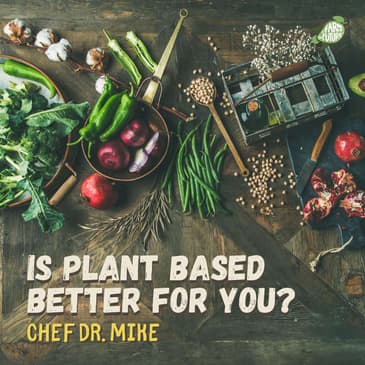
Today's topic is all about plant-based and plant-forward diets. There's been a huge shift in food trends where about 10 years ago, being vegan and vegetarian was all the rage. And now, we've swung the pendulum to carnivore and animal-based diets. But when it comes to real scientific evidence around health outcomes, what do the studies say? Are plant-based diets actually healthier for us? And who better to speak on this topic than Chef Dr. Mike, our resident culinary medicine expert.
Links
- Chef Dr. Mike's article: Plant-based Meat Alternatives Study Spotlight Take-Away
- Study: Plant-Based Meat Analogs and Their Effects on Cardiometabolic Health
- Study findings: Adventist Health Studies fact sheet
- Study: Blue Zones
- Article: Gratitude before meals
- Article: Galaxy's centre tastes of raspberries and smells of rum, say astronomers
Connect with Chef Dr. Mike
Discounts
- Get 10% off delicious local farm-fresh food delivered to your door with my link for FarmMatch: https://farmmatch.com/jane
- Get 15% off high-quality Italian olive oil with code FARMTOFUTURE: https://shop.vignolifood.com/FARMTOFUTURE
- Get 40% the CircleDNA’s Premium DNA test with code JANEZHANG: https://circledna.com/premium
Connect with Jane Z.
- Instagram: @farm.to.future
- Email: jane@farmtofuture.co
- Website: farmtofuture.co
[00:00:00] What we're really looking at is not that its plants are better than animals, which maybe it is,
[00:00:07] that that's a hypothesis. But an alternative hypothesis is with plant-based and plant-forward
[00:00:14] diets you're actually eating less ultra-processed food and that's translating into real health benefits.
[00:00:22] I'm Jane Z. And this is Farm to Future, the podcast all about eating better for the planet.
[00:00:30] So my grandmother was one of those rare special human specimens to live to a hundred years old.
[00:00:36] Yes, 100. I have a centenarian in the family. And she actually lived up until earlier this year
[00:00:43] in February 2024. My grandma was a very special person to me and in a way this episode is
[00:00:49] in her honor because she was one of the more plant-forward people in my life. And she did it
[00:00:54] way before it was cool to post your air wand buffalo cauliflower on social with a vegan hashtag.
[00:01:01] Not to judge if you're into that, I'm sure it's very delicious. My grandma was a Buddhist and she
[00:01:06] had the utmost respect for food whether it came from animal or plants or fungi. She's also the
[00:01:12] reason I wrote a children's book about acorns and foraging which is a story for another time
[00:01:17] and if you're interested I can share more. I bring up my grandmother because today's topic
[00:01:21] is all about plant-based and plant-forward diets. There's been a huge shift in food trends where I
[00:01:27] feel like about 10 years ago being vegan and vegetarian was all the rage and now we've swung
[00:01:33] the pendulum to carnivore and animal-based diets. But when it comes to real scientific evidence
[00:01:41] around health outcomes what do the studies really say? Are plant-based diets actually
[00:01:46] healthier for us? And who better to speak on this topic than Chef Dr. Mike, our resident culinary
[00:01:52] medicine expert. You can find him at real chef Dr. Mike on Instagram and myself, Jane Zee,
[00:01:58] at farm.to.future. Welcome back to the podcast Chef Dr. Mike. Thank you Jane. Always a pleasure
[00:02:06] to be with you. So I wanted to start with this article that you put out recently around
[00:02:13] a study that came out around plant-based meat alternatives and health outcomes. Do you want
[00:02:18] to just give us an overview of the study and kind of what you wrote about? Sure. So I write a weekly
[00:02:24] column for the Center for Food as Medicine dot org which is a long URL but it's there
[00:02:31] and folks they have a newsletter of which my article is included on that. It's a great
[00:02:36] resource so I just encourage all your listeners to sign up for their newsletter and then they'll
[00:02:43] get my weekly articles and I've been doing this for about six months now with them. So
[00:02:47] there's a whole host of information. What you're referencing is actually the most recent
[00:02:51] article and I thought this was just really interesting because you and I have talked about
[00:02:57] plant-based meat alternatives before and the reasons behind them are people talk about
[00:03:03] sort of environmental sustainability etc as one component of the decision making.
[00:03:09] They talk about animal welfare etc as another component of the decision making and I think
[00:03:15] what's really pushed forward in the media is hey you're really doing something good for yourself
[00:03:20] by eating plant-based meat alternatives because there's all this plethora of health benefits
[00:03:25] that you're going to receive. And like a lot of promises that was made really without any
[00:03:33] evidence behind it because they're a new type of food. So you know I've been around in medicine
[00:03:39] long enough to see a lot of things come out with a lot of hype and a lot of promise only to be
[00:03:45] destroyed by reality. This promise that came out and this really pushed I found on a little
[00:03:51] disconcerting at the beginning because there was a huge economic investment. They were really
[00:03:56] selling these health benefits and there was this rage here. I think a lot of the fast
[00:04:02] food chains picked up on it and started offering these sorts of things to consumers
[00:04:07] all predicated on there's going to be these incredible health benefits for you for eating this
[00:04:12] stuff. And what we had were those promises based on really a house of cards or there was no data.
[00:04:20] All hypothesis and supposition extrapolation assumption etc but no real data. And this
[00:04:28] study is really one of the first studies to come back and take a look at this. Now
[00:04:35] caveats in hand it's not a huge study. It looked at just over 80 people but it was a fairly well
[00:04:42] done study I think it was done in Singapore so because of that you do have a fairly ethnically
[00:04:49] homogeneous population. So those are some of the caveats in the extrapolation of data
[00:04:56] but with that being said what they did was I thought very well done so they took two groups
[00:05:03] so there was a little over 40 people in each group and they put them on these four week blocks
[00:05:09] where the only protein in their diet for one group came from plant-based meat alternatives.
[00:05:16] And for the other group they were allowed animal based proteins and they were really good
[00:05:22] about delivering the foods and making them available. What that results in is a high compliance rate
[00:05:29] because the other way to do a study is to say hey Jane go out and just eat plant-based meat
[00:05:34] alternatives I don't give you money to buy them if they're more expensive I don't give you them
[00:05:40] if I'm telling you to eat them and just kind of hopefully you comply and maybe I measure it
[00:05:45] with a dietary survey after the fact but these folks were very proactive so they provided I
[00:05:51] think it was like eight different types of plant-based meat alternatives made from like beyond meat to
[00:05:57] the vegetarian butcher and you know all those sorts of products and the other folks were allowed to eat
[00:06:03] regular types of animal proteins that were provided by local butchery sources and they measured
[00:06:09] stuff at the beginning and what they really focused on were really what a lot of the promise
[00:06:15] of these plant-based meat alternatives was which is we're going to improve your
[00:06:19] cardiovascular, cardiometabolic risk profile right your cholesterol is going to get better,
[00:06:25] your lipid profile is going to get better you'll be at less risk for diabetes, your blood pressure
[00:06:30] get better again another cardiovascular risk factor. I mean long story short to really sum it up
[00:06:36] and I plowed the journal that published them was it was Zippo. Absolute you know difference
[00:06:42] between the two. If you read the study you'll see that the one benefit that was attributed to the
[00:06:49] plant-based meat alternatives was in a reduction in diastolic blood pressure however when you look
[00:06:55] more closely what you find is the people who had plant-based meat alternatives started at a blood
[00:07:02] pressure of 78 millimeters mercury at the end of the study it was at 76 millimeters of mercury
[00:07:08] and that turned out to be a statistically significant difference in terms of where they
[00:07:12] started and where they ended. The animal-based group was at 77 millimeters of mercury and it
[00:07:20] didn't change so although you may see that spun as oh we lowered blood pressure it really isn't
[00:07:27] meaningful when you look at the real numbers so in terms of the overall benefits there simply
[00:07:34] wasn't any I think that really should give people pause about jumping on board with this
[00:07:40] particularly you know if it costs more I'm not really familiar with the price points
[00:07:45] but I know when they first came out that they were significantly more expensive than alternatives
[00:07:50] so one of the things I think this study also does is really force us to look at why is that
[00:07:58] why isn't there a difference it's one thing to sort of take that information say okay no difference
[00:08:04] we'll wait for more studies like as I said this is one study and not a huge one but I think from my
[00:08:10] perspective it really makes me want to think about well what are the mechanisms that that could
[00:08:14] be and kind of explore those. Yeah and I think um what a lot of people don't realize when it
[00:08:21] comes to these plant-based meats is that when you eat plant-based it doesn't mean
[00:08:26] you're only eating whole fruits and vegetables right like these impossible burgers and beyond
[00:08:32] burgers they're chock full of GMO corn and soy and seed oils right which we've talked about on the
[00:08:39] show before and how they're linked to different health issues and so you're essentially eating
[00:08:45] these like industrial food products and that's definitely not better and from the meat standpoint
[00:08:51] I think this is why I focus so much on sourcing yeah and I'm actually curious if you've seen
[00:08:58] studies that compare the health impacts of meat sourced from different grown in different ways
[00:09:04] whether it's factory farmed versus regenerative I think that would be a really interesting place
[00:09:09] to explore to you know really validate is regeneratively grown meat you know healthier for us
[00:09:16] than factory farmed. Well you bring up several good points so and I agree with you I think that
[00:09:22] is really kind of the next frontier is to look at is it making a difference in how we raise our food
[00:09:29] regenerative wholesome not ultra processed alternatives versus sort of the commercial
[00:09:36] standard that's in the the mega mark so that's one thing and to my knowledge that's not been
[00:09:41] looked at but I think is very important because if it turns out to be washed that that's an important
[00:09:46] data point to acknowledge as well in terms of looking at different types of of meats that has been
[00:09:52] done so there are studies looking at what they call not ultra processed red meat now again that
[00:10:01] it can be a steak from or hamburger from your local mega mart without really paying attention
[00:10:08] to how it was raised versus you know beef jerky or you know dinty more beef stew you know or some of
[00:10:16] those ultra processed things and there's a huge difference between health outcomes when we look
[00:10:22] at it when we divide it out into you know ultra processed meat products versus not so there's
[00:10:28] clearly a health differential there within the ultra processing at the conclusion of the
[00:10:34] article we're kind of giving it away here but I hope people still go and read it really addresses
[00:10:38] what you said which is in my mind I would want to look at a study that looked at the sourcing
[00:10:45] of whole authentic meat products that the G reference versus the ultra processed
[00:10:52] plant-based meat alternatives because if that is actually better than the plant base I think
[00:10:58] that would be an intriguing data point I think things that get conflated in our discussion of
[00:11:03] health benefits and plant-based alternatives and plant forward diets etc particularly in studies where
[00:11:12] people are put on a plant forward or plant based diet what you find is that they often do consume
[00:11:20] more whole fruits and vegetables kind of makes sense right we're asking you more but what that
[00:11:25] does is you know diet particularly in the studies is when most studies a zero-sum game
[00:11:31] meaning they're watching the amount of food that you're eating in terms of calories or energy
[00:11:36] which was actually controlled for in this study as well so the energy levels were similar between
[00:11:42] the two groups which differentiates it from some of the previous studies when you look at that
[00:11:48] you're giving people not only more plants but also more whole foods and less ultra processed foods
[00:11:55] so now we're introducing multiple variables and it becomes well what is it that's really
[00:12:00] the key is it all these variables is it really that we're just moving away from ultra processed
[00:12:06] foods and that's really where the bang for the buck is from so that's what we should focus on
[00:12:10] it's something that's been a pet peeve of mine and I know you and I've talked about it before
[00:12:15] which is this harping on sodium you know I've got to reduce the sodium got to reduce the sodium
[00:12:21] I think one of the the trials that put a nail in that coffin was a publication from
[00:12:27] Lancet I think it was a year maybe a year and a half ago the heart failure sodium trial which
[00:12:33] looked at patients with heart failure which the gospel is that these are the people who are really
[00:12:39] sensitive to salt you know they're going to have a bad outcome they're going to come into
[00:12:44] the hospital with heart failure worsening heart failure etc if their salt isn't a low sodium diet
[00:12:52] and what they found is that there was no difference so regular sodium low salt no benefits and it's
[00:12:59] very vulnerable population that we thought was you know so vulnerable to high sodium intake
[00:13:07] when we look more closely one of the things that we find that correlates sort of what I call red
[00:13:13] herring for salt is the fact that when you eat a lot of salt what you're also really eating
[00:13:19] is a lot of ultra processed food because that's high in sodium so high sodium intake also
[00:13:26] is like a surrogate marker for ultra processed food consumption one group of native peoples it's a
[00:13:34] indigenous indian tribe in central america has a sodium consumption higher than what we
[00:13:41] ingest in the united states yet there's no renal disease no hypertension
[00:13:46] none of the chronic diseases and disabilities but they have that high sodium intake that correlates
[00:13:53] with eating a lot of natural food then what's interesting is when the indigenous peoples
[00:13:59] leave the island and go to the mainland and consume a more western diet if you will
[00:14:05] then they become vulnerable and develop all the same diabetes obesity etc so clearly it's not
[00:14:12] a genetic protection because when they change locations they become vulnerable it's not really
[00:14:18] the salt because salt makes our food delicious and particularly when we use natural ingredients
[00:14:23] the daily sodium intake from adding salt to season food is 10% or less so it's very very little
[00:14:30] it's about 70% comes from the sodium that is added to ultra processed foods that's where most
[00:14:36] of the u.s. intake comes from and it's not just in the form of salt that you taste but
[00:14:41] you know they're the additives the preservatives they're all if you look sodium benzoate for example
[00:14:46] sodium modiglutamate so they're attached to sodium that's added to the foods and that's
[00:14:53] where that high sodium intake comes from so i think that it really could be quite analogous that
[00:15:00] what we're really looking at is not that it's particularly plants are better than animals
[00:15:07] which maybe it is that that's a hypothesis but an alternative hypothesis is that with plant based
[00:15:15] on plant for diets are actually eating less ultra processed food and that's translating into
[00:15:22] real health benefits so i think it would be important for people to have that bit of knowledge
[00:15:28] to guide what they want to do and to make those decisions particularly because so many
[00:15:33] ultra processed foods that are marketed as healthful really rely on hey we're plant based
[00:15:40] we're plant forward you know we don't have saturated animal fat etc and using that to convince
[00:15:48] people that they're helpful when in fact they may be quite the opposite yeah it's almost like a
[00:15:53] false dichotomy of comparing these plant based quote unquote meats with meats because it's not
[00:16:00] really about the plants versus animals it's about the processing but in the camp of plant based
[00:16:07] there was that documentary that came out about the blue zones have you heard about the well
[00:16:14] versed in all the literature for the blue zones and uh dan butner's original work and i think
[00:16:20] we've talked about how the blue zones got their name before did have we it's a great story
[00:16:24] remind me i forget yeah tell us because you hear blue zone you're like oh blue like the ocean
[00:16:30] that's so clean and hopefully you know etc yeah they probably live by the ocean yeah you know when
[00:16:37] you get this idea of sort of a tropical paradise and you know carefree existence drinking
[00:16:43] pina coladas on the beach every day with no stress right and um how how they came about
[00:16:50] as dan tells the story they were together working on this and coming up with the the
[00:16:55] project and so they had a big map across the table and they had to identify where these areas of the
[00:17:03] people who lived to be over 100 uh were in very good health in concentration is much higher than
[00:17:09] you sort of find in the general population in other areas of the world where were they and
[00:17:14] and how did you delineate them and the only thing they had on the table was a blue highlighter
[00:17:20] so they circled them in blue and that's how they got the name blue zone that is so funny so just by
[00:17:28] happenstance just by happenstance yeah i'm quite quite familiar with the blue zones data and
[00:17:36] what i find compelling is that really when it comes to food there's no magic boy people eat an
[00:17:43] omnivorous diet in all of the blue zones areas even one of the blue zones in the united states is the
[00:17:50] loma linda group which has a high percentage of vegetarians but it's not a hundred percent
[00:17:56] and there's an interesting follow-up on that group which is the eventus health study two
[00:18:02] which looked at that particular population of seventh day eventus and the eventus health
[00:18:10] study one to talk about this specific group from the blue zone was one of the few early
[00:18:16] vegetarian studies to suggest that you know there really is a health benefit in terms of
[00:18:22] less morbidity and mortality in pursuing a vegetarian diet a lot of the other studies
[00:18:27] that we've talked about really don't show any difference but this one doesn't always well done
[00:18:31] i was done many years ago but one of the things that they never looked at was what we just talked
[00:18:36] about is it that you're eating more plants and its plants that make the difference or is it a degree
[00:18:42] of ultra processing and it's the ultra processing that makes the difference or is it a combination
[00:18:46] of the two both variables being important they redid what was called the eventus health study two
[00:18:53] which came out i think two maybe three years ago or so uh another well done study i believe over
[00:18:57] 70 000 patients and what was fascinating in that is they did the same study but now they
[00:19:03] look at ultra processing and said now we're going to sort it out by ultra processing and see if there's
[00:19:07] a different in a plant-based approach versus an animal-based approach and there was no difference
[00:19:13] it was strictly the ultra processing that made the the difference uh in terms of your mortality
[00:19:20] risk in this group which again is one of the original blue zone areas the other thing that i
[00:19:28] think is really striking about Dan's work about the blue zone's work is that there's so much that goes
[00:19:35] into the eating beyond just the ingredients so what i teach in culinary medicine we refer to it
[00:19:42] as the the food experience and so often you and i talk about this ingredient or that ingredient
[00:19:47] but truth and point and some of my articles that i've written for food is medicine.org deal
[00:19:53] with chrono nutrition so that's a variable that says we don't really care about what you eat
[00:19:58] we care about when you eat or the effects of timing of your meals etc and does that make a difference if
[00:20:05] we don't even look at the nutrients or things we're just looking at that does that sort out as a variable
[00:20:10] when we just for diet quality etc and the short answer is yes in a fascinating way because when we
[00:20:18] can actually affect our gene expression that environmental input because our body has a rhythm
[00:20:24] right and we often talk about the circadian rhythm in terms of you know a simple thing in medicine is
[00:20:30] cortisol secretion your body secretes it every day it's on a your own sort of rhythm they found
[00:20:36] there's actually genes that code for whether we're sort of night people or early morning people
[00:20:42] and then they kind of lump everybody else in between so there's actually genotypes genes that
[00:20:47] are associated with sort of our natural biorhythms and these biorhythms increasingly impact or being
[00:20:55] shown to impact our epigenetic expression meaning that that environmental input that variable will
[00:21:03] ultimately affect our health and well-being our wellness when you look at at these blue zones
[00:21:09] Dan did a really good job and his whole crew there sorting out you know what are some of
[00:21:14] these other things because there's a lot of social constructs and social inputs that go into their
[00:21:20] analysis and really what they come away with which I thought was a fascinating piece and correlated
[00:21:26] really really well to the Harvard Happiness study it showed that the people who lived a long time
[00:21:34] and not just existed in years but were functional you know these are 100 and something years old
[00:21:40] people you know walking around working in their garden participating in the activities of community
[00:21:47] was these important social impacts that they felt needed they were needed they were respected
[00:21:52] and many times as given sort of that reverence of elders of the village so they were important to
[00:21:59] family and friends and there was a communal aspect to eating you know it kind of remained
[00:22:07] that shared experience as opposed to you know eating alone in front of your in a cubicle you
[00:22:13] know doing your work till eight o'clock at night is as we saw often do you know in this country
[00:22:19] there's a lot more that goes into that than just this ingredients that ingredient are they
[00:22:25] you know drinking alcohol or they're not drinking alcohol because every group except the the low
[00:22:30] Melinda group for example had some sort of alcoholic beverage that they consume now what it was
[00:22:36] varied wildly from a native type of red wine you know in Sicily to a different rice-based
[00:22:44] composition in in Okinawa the Harvard Happiness study another well done and ongoing study
[00:22:50] asked a very simple question when we follow people for many years they've been following
[00:22:54] people for over 80 years now and ask a very simple question what are the variables that stand
[00:22:59] out in the people that are healthy and happy and live a long time who doesn't want to know that
[00:23:06] well and it's not it's an amazingly simple secret right he comes in it's like it's about the quality
[00:23:12] of the human relationships you have in your life it's not your cholesterol number it's not
[00:23:16] how many likes you get on facebook it's now how hard you work quite frankly even socio-economic
[00:23:22] things it don't pan out it's simply the quality of our relationships with each other as human beings
[00:23:30] that at the end of the day is the most important thing in the quality of the life we have in terms
[00:23:37] of our health our wellness and our longevity as as angry sometimes as as society can be these days
[00:23:44] that's kind of a nice and reassuring thing you know it's like surround yourself with people
[00:23:49] you love who love you and kind of hang out and have a good time and that's probably the you know
[00:23:54] the best medicine that anyone can can prescribe in our approach to culinary medicine which is really
[00:24:01] based on information theory and information theory tends to look at things in terms of a complex
[00:24:06] biological systems analyses which is kind of a fancy way for saying that we look at it like
[00:24:12] the internet right so there's lots of these nodes that you'll have that in fact an easier way
[00:24:18] to visualize it is you are you're just traveling so when you were looking and you had to fly from
[00:24:23] one airport to another catch a connecting flight that's kind of how things are arranged there's
[00:24:27] not a direct flight necessarily from every single place you want to go and so all these airports
[00:24:33] and and flight patterns are connected and the nodes are the airports we look at that as
[00:24:39] terms of inputs but what's really important like for you right is your flight it's that
[00:24:44] relationship between one place and another and how do you get from A to B in our pursuit of culinary
[00:24:51] medicine what we really look at is what are these relationships between things because it's the
[00:24:58] relationship between things that define the things not the other way around in a beautiful sort of
[00:25:05] universal bit of happenstance and good fortune what quantum mechanics tells us is that's actually
[00:25:11] the way the universe works it's not about an electron because you can't even ever really
[00:25:17] identify there's an electron you only identify an electron because it bangs into something and it
[00:25:22] causes a reaction so it's that interaction that relationship that identifies it and allows us
[00:25:30] to explore it and know about it and turn our light switch on and have light come out
[00:25:35] the treasure if you will is all about in the relationships of things not just things in isolation
[00:25:43] because if we believe quantum mechanics which I do quantum theory because it's held out for over
[00:25:48] you know 50 years now and every time we've tested the theory which I want to back up because one
[00:25:54] of the beautiful things about quantum mechanics and the genius of Einstein is that it's a theory
[00:26:00] right he made a theory and then there's predictions based on the theory and then we test those
[00:26:04] predictions and say is this for real does it hold up and in 50 years it's held up I mean everything
[00:26:11] that Einstein has predicted and others based on on his knowledge that they've written and predicted
[00:26:18] it continues to hold up and that's as many theories as I've seen go to pot in medicine
[00:26:24] in my short lifetime that's an amazing thing coming back to those human relationships what
[00:26:29] it tells us about the construction of the universe is absolutely nothing exists in isolation
[00:26:35] nothing exists unto itself it's always impacted by our relationships and where that manifests for us
[00:26:43] is what we've learned about epigenetic phenomena meaning how we interact with our environment
[00:26:49] the food that we eat how we eat it when we eat it etc what we're finding is all those little
[00:26:55] bits are affecting our gene expression so literally our genome is what it's information it's DNA and
[00:27:05] how we interpret that information personally to us based on our genome and the environment
[00:27:11] is what gives us an output or what we would call an epigenetic phenomena I think that's
[00:27:17] pretty amazing pretty cool and really circles back to the importance of all the relationships
[00:27:22] in our lives whatever they be so I'm reminded of my grandmother who actually did live to 100
[00:27:29] she actually just passed a couple months ago may she rest in peace but our family is always talking
[00:27:36] about oh you know like what was it that made her live this long and there's so much you could
[00:27:42] break down but the one thing everybody knew about her was she just had the most positive attitude
[00:27:49] and she always had positive things to say about other people whether it was a neighbor or relative
[00:27:54] or like a random person on the street and I think that played a huge role in her ability to stay
[00:28:02] healthy for so long like she was still you know with it till the very end but she was you
[00:28:07] know pretty active into her 90s it's pretty amazing and so that piece definitely resonates
[00:28:12] of like you know she had very strong positive human relationships and when I think about her
[00:28:19] habits around food she was a Buddhist and so there were certain things she didn't eat but I think
[00:28:25] she always approached food with a sense of respect but also because she grew up during the communist
[00:28:31] revolution she always had a sense of resourcefulness around food and like what can we make with
[00:28:39] what we have I remember there's a dish from my home town in China made from acorns and when my
[00:28:46] grandma moved to Canada to live with us she would walk me home from school and there would be oak
[00:28:52] trees on the way and when the fall she would like pick acorns and bring them back home
[00:28:58] they were a different species so she wasn't able to process them the same as the original acorns
[00:29:04] but yeah I just remember she was very resourceful around food very respectful she also didn't eat a
[00:29:11] lot and I remember seeing a study around longevity like one of the biggest predictors for longevity
[00:29:20] is the quantity of food you eat and essentially not overeating is that something that you've
[00:29:26] looked at or come across as well yeah and so in the blue zones in the okadao on blue zones
[00:29:31] they talk about that and there's actually a no-canaline saying that is you stop when you're 80% full so
[00:29:38] you want to leave a little bit of hunger when you get up and walk away from the table and
[00:29:43] physiologically that makes sense because the way our signaling mechanisms work it takes about
[00:29:50] at least about 15 20 minutes for your stomach to tell your brain hey we're all good down
[00:29:56] here we've had enough to eat you should stop when we're sort of mindlessly just shoveling lots of food
[00:30:02] in our face you know shorter amount of time we tend then to overeat in my youth many decades ago I spent
[00:30:10] time in a buddhist temple in the mountains of japan and that forever changed my outlook and
[00:30:16] relationship with food which sort of then manifested many decades later as I developed our
[00:30:22] culinary medicine program much like your grandmother were impacted by those experiences that impact us
[00:30:28] I spent a lot of time not recognizing anything I was eating but it was beautiful absolutely
[00:30:35] beautiful food obviously vegetarian absolutely delicious I've got to say and one thing that
[00:30:42] I walked away from that experience with was one vegetarian food can be and is absolutely
[00:30:49] delicious when prepared in the right hands and two was the gratitude because at the beginning of every
[00:30:56] meal we ate with the monks was moments not necessarily to say a prayer anything but to have respect for
[00:31:04] your food to give thanks to the food and that was carried over I was over there sort of as a detour
[00:31:11] from martial arts training that I was doing there and I remember a similar experience with our our
[00:31:18] sokei sort of the teacher grand teacher when we'd gone out to eat after training and we had some sashimi
[00:31:26] one of the westerners was doing something typically western which was inappropriate in terms of
[00:31:32] the social graces at the table shall we say and I remember you know soki just looking over and
[00:31:38] saying you know you need to be respectful before you even start eating because this fish has given
[00:31:45] its life for you and that's a wonderful and a noble thing for the fish to do but acknowledge it
[00:31:51] you know don't be disrespectful and I think it's that type of attitude along with the other things
[00:31:58] that you were saying that does translate into health benefits there was one study done
[00:32:04] they basically looked at gratitude surrounding eating and it didn't matter what you did whether it
[00:32:10] was kind of as I said you know just a thinking of the food and a respect for the food some people
[00:32:16] who were more religious would actually say prayer thanking the lord for it and the end result was
[00:32:22] it didn't matter what you did as long as you did it as long as you took those moments
[00:32:27] that translated into measurable benefits in terms of markers of health which really
[00:32:32] makes sense because it goes back to what you say which is we know that mindset is very important
[00:32:39] to our overall health and as I mentioned we're learning how these things may start to manifest
[00:32:45] in epigenetic phenomenon that are expressed a simple one I'm sure everyone in the audience
[00:32:50] is familiar with his placebo effect right and I think we've talked about that before
[00:32:55] but I'll remind folks that it's often poo poo and we say oh well that's you know placebo
[00:33:00] effect doesn't mean anything but there's a distinction between placebo effect and what we
[00:33:04] call a null effect right a null effect means there's zero effect it didn't have any effect at all
[00:33:10] the placebo effect is not a null effect a placebo effect is a positive effect of varying degrees
[00:33:17] up to about 30 percent in different disease states depending on the intervention but it means that
[00:33:23] that group of people who underwent the placebo effect got better they were cured they healed themselves
[00:33:30] by no means that we can determine by our current measurements and interventions of health
[00:33:38] that's what that means sort of they believed it and they got better that is a very important
[00:33:43] difference from a null effect where we're saying it didn't make any difference nobody got better
[00:33:49] because the opposite is true too there's something called called a no-cebo effect
[00:33:53] where giving somebody negative feedback or planting negative thoughts causes a negative
[00:34:00] reaction it's basically the placebo reaction in reverse so that the common way I look at it is
[00:34:06] a voodoo right if you put a hex on someone and then they die a week later from no discernible
[00:34:12] cause one would say that's a no-cebo effect literally you planted in their brain that
[00:34:17] they were cursed and they were going to die and they did and we can't measure how you know a voodoo
[00:34:22] curse there's a lot of talk of it these days in medical circles because of AI and the idea is
[00:34:28] there is a value to a human physician-patient relationship and that is part of the healing
[00:34:34] process that is part of why people get better I think a lot of doctors like to think so
[00:34:40] okay but you know there is some evidence to that and the question is if you just have AI
[00:34:46] that does diagnoses because there was a study that came out this week that actually showed AI was
[00:34:51] better than a bunch of doctors including a bunch of Harvard doctors in making diagnoses so AI
[00:34:58] can take all those inputs and come up with diagnoses better than human physicians can
[00:35:04] but can they heal people better I don't know the answer to that I think it's something we'll
[00:35:08] see but it is intriguing maybe it will result in those holographic type doctors that they had on
[00:35:15] Star Trek beyond next generation remember the doctor was like this computer because it was smart AI
[00:35:21] and it was a hologram as a human being to interact but it wasn't a real human being and so maybe
[00:35:27] that you know is the future of medicine I don't know if they'll heal better they're being a
[00:35:32] better diagnostician doesn't mean that you can heal people better necessarily because there's that
[00:35:38] human-to-human interaction but there may be innovations or changes in the way healthcare is
[00:35:44] delivered you know because of that because AI doesn't get tired it's on call 24-7 it's a very
[00:35:49] interesting to see where this will go and maybe the human-to-AI relationship continues to develop
[00:35:56] out of this yeah I mean I'm optimistic about it I could see AI playing a huge role in that
[00:36:02] kind of first response especially for things that are urgent but also like more common like
[00:36:08] you know I have a cold or UTI or something that's like pretty common and you just need
[00:36:13] someone to write a prescription for you or you know tell you you're not dying I think also
[00:36:19] with how expensive healthcare can be and how convoluted the whole insurance system can be
[00:36:25] I think AI can alleviate a lot of pain there for simple office visits but then I do think there is
[00:36:32] still a role in that human connection with maybe more long-term therapies or more severe diseases
[00:36:40] and things like that well in one way too you know it's talking about our culinary medicine
[00:36:45] approach and what we focus on what we call the food relationship it's that relationship we have
[00:36:49] with food and fortunately for people like me in culinary medicine now that can't be replaced by AI
[00:36:56] right a human being will always have to eat and we will always have our personal interaction
[00:37:03] with our food and so that relationship from my perspective then will always remain sort of a
[00:37:08] sacred relationship in that it's something that as long as we have human bodies can never really
[00:37:14] be replaced as I mean that physician patient relationship if not replace certainly maybe adjusted
[00:37:22] or changed through technology at least as of right now in the foreseeable future you know AI is not
[00:37:29] going to be able to eat for you although it may be able to fix food for you. You have an AI chef.
[00:37:36] That could be cool. That could be cool. Everyone gets their own personal chef.
[00:37:40] Yeah I think we're a ways out from that but chat GPT you can write recipes for you already.
[00:37:46] I know we're getting close but I want to wrap up with something to leave your audience with we
[00:37:51] talked about the center of the universe and we were talking about quantum theory and quantum
[00:37:55] mechanics at the center of the universe there really is food because in looking at the creation
[00:38:04] of life they've looked for the different kind of molecules that exist in space bits of DNA or proto
[00:38:12] DNA or RNA do they exist in space which would suggest you know how life kind of came about
[00:38:18] because you get to this question it kind of dovetails on to us talking about AI and at
[00:38:24] some point people are like well AI can it become alive can it become a sentient thing what is
[00:38:30] life so to speak and certainly you know in the quest for the origins of organic life we've
[00:38:35] peered deep into the cosmos but to me one of the most fascinating things is some of the compounds
[00:38:41] that they found one of them is I believe it's either an alcohol or a ketone but it's basically
[00:38:48] what gives raspberries their smell and taste so at the center of the universe our universe
[00:38:54] smells like raspberries and I just want to leave that thought there it actually does because a compound
[00:39:02] that you would if you were molecular gastronomies and you wanted to put raspberry flavor into something
[00:39:07] you could put you know a couple drops in this and you and I would smell and taste raspberries
[00:39:12] and that's what's at the heart of the universe is food you mean they found that compound in
[00:39:18] space floating around in space yeah wow raspberries are not half bad I wouldn't be mad at it
[00:39:25] I think it's great it's like you know at the heart of the universe is delicious food yeah
[00:39:30] and what I also thought it was like I was like a raspberries for dessert so I think the universe
[00:39:34] is kind of saying chocolate cake for dessert is okay once in a while there we go I mean if the
[00:39:40] universe says it it's gotta be true telling us I mean we have to pay attention right
[00:39:46] yeah yeah exactly well this has been awesome is there anything else you want to leave with
[00:39:51] listeners otherwise I think we can wrap there yeah I just say if as always if there's any
[00:39:57] questions or comments or whatever feel free to have them send it to you and we're always delighted
[00:40:02] to answer those whenever we get back together and again if folks want to visit the center for
[00:40:08] food as medicine.org make sure you type in the center because there's a food at medicine.org
[00:40:13] that's different so it's the center for food as medicine.org and just subscribe to their
[00:40:20] mailing list they give you tons of references and articles and you can find my column there each week
[00:40:27] awesome yeah I'll be sure to link that in the show notes so great I can just click through
[00:40:31] always a pleasure having you on Chef Dr Mike I always learned something from you and I did
[00:40:36] not expect to talk about quantum mechanics but hey I'm Raspberry. That was a good time
[00:40:42] and raspberries yes at the center of the universe
[00:40:47] and that's a wrap thank you so much for tuning in remember to nourish your body and I'll talk to you next time